

Key Takeaways
What Mise en Place Actually Means
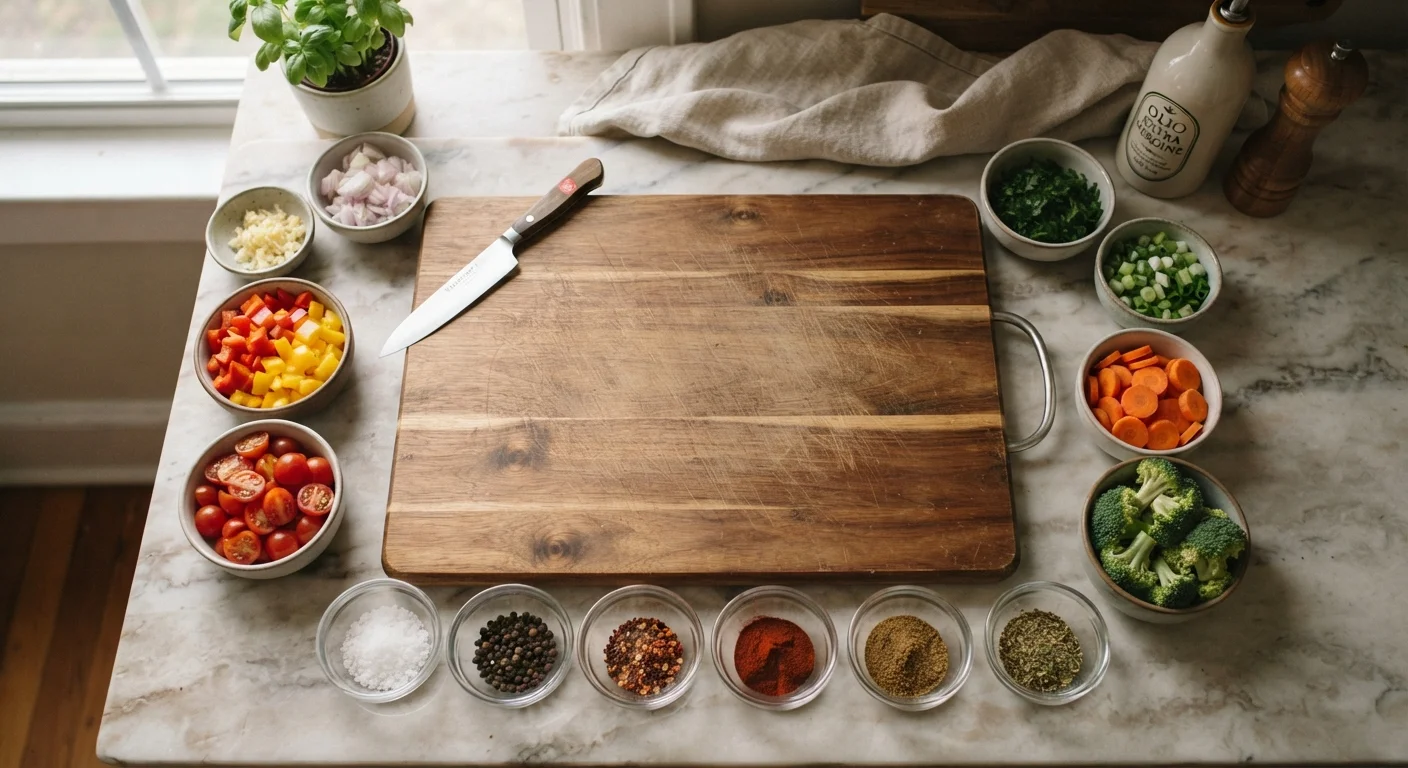
The French phrase mise en place (pronounced meez-ahn-plass) literally means "everything in its place." In professional kitchens, it's not a suggestion - it's the operating standard. Every ingredient is measured, chopped, and portioned before a single burner ignites. The result is a cook who moves deliberately rather than frantically.
For home cooks, the concept is just as valuable. Most kitchen stress doesn't happen because a recipe is too hard - it happens because a cook is simultaneously reading, chopping, measuring, and monitoring heat all at once. Mise en place collapses that multitasking into two cleaner phases: prepare, then cook.
This isn't about perfection or professional theater. It's a practical habit that anyone - regardless of skill level - can adopt tonight.
Core Practices That Make It Work
Building a reliable mise en place routine comes down to a handful of consistent actions that compound quickly into confidence.
Read the entire recipe before touching a single ingredient.
A full read-through surfaces equipment needs, timing dependencies, and technique warnings before they become emergencies. It also reveals which steps can overlap and where you need to concentrate most.
Measure and portion every ingredient into individual prep bowls before cooking begins.
Pre-portioning eliminates the pause-and-measure cycle that disrupts cooking flow, especially for techniques like stir-frying or sautéing where timing is critical. It also catches measurement errors before they're irreversible.
Chop all vegetables and aromatics to consistent sizes before heat is applied.
Uniform cuts ensure even cooking - an inconsistently chopped onion produces pieces that are simultaneously raw and burnt. Doing it ahead removes the pressure of cutting while managing a hot pan.
Group ingredients by the order they enter the dish.
Organizing your prep bowls in cooking sequence - aromatics first, proteins second, finishing sauces last - removes guesswork and prevents the wrong ingredient from going in at the wrong moment.
Clear your workspace and have a discard bowl ready before you begin.
Clutter is the enemy of calm cooking. A bowl for peels, wrappers, and trimmings - positioned within arm's reach - keeps the cutting board clear and prevents the cycle of wiping counters mid-prep.
Once the habit is established, it naturally integrates with broader kitchen skills. Confident prep, for example, depends heavily on efficient cutting technique - see knife skills every home cook should know for the foundational moves that make prep faster and safer. And when your pantry is well-stocked, mise en place becomes even easier - pantry staples that make last-minute meals possible means fewer last-minute ingredient hunts derail your setup.
Quick Wins to Start Today
You don't need to overhaul your entire kitchen routine at once. These immediate actions will make a noticeable difference in your next cooking session.
Once you're cooking with everything prepped, your attention shifts entirely to the pan - which is where tasting as you cook becomes far more effective. You can actually focus on flavor when you're not also scrambling to mince the garlic.
Why the Habit Sticks - and Compounds
Unlike one-time kitchen projects, mise en place is a repeating loop that gets faster and more intuitive with every meal. The first time through a recipe with full prep may feel slow. By the third or fourth time, the setup is nearly automatic.
~70%
Of home cooking errors traced to prep issues
Culinary educators broadly estimate that the majority of recipe failures - burning, over-salting, missed steps - stem from disorganized preparation rather than technique deficiency.
2-phase
Structure of professional kitchen workflow
Classical culinary training divides all cooking into discrete preparation and execution phases - a structure that home cooks can replicate with the same organizational benefits.
The habit also reduces food waste. When ingredients are prepped and visible, you're far less likely to over-add, forget a component, or burn something while searching for the next item. This connects directly to better food safety practices, too - food safety rules home cooks quietly ignore are much easier to follow when your workflow is organized rather than reactive.
If meal prep is part of your weekly routine, mise en place is the micro-habit that makes it sustainable. Why meal prep falls apart often traces back to disorganized execution - solving that at the session level changes the entire outcome. The same organizational mindset that keeps kitchens functional applies broadly: habits that keep organized homes organized share the same underlying logic - small, consistent actions prevent large, chaotic scrambles.