

Key Takeaways
Summary
22 items · 20-40 minutes to audit and restock your pantry
Why Your Pantry Is Your Most Important Kitchen Tool
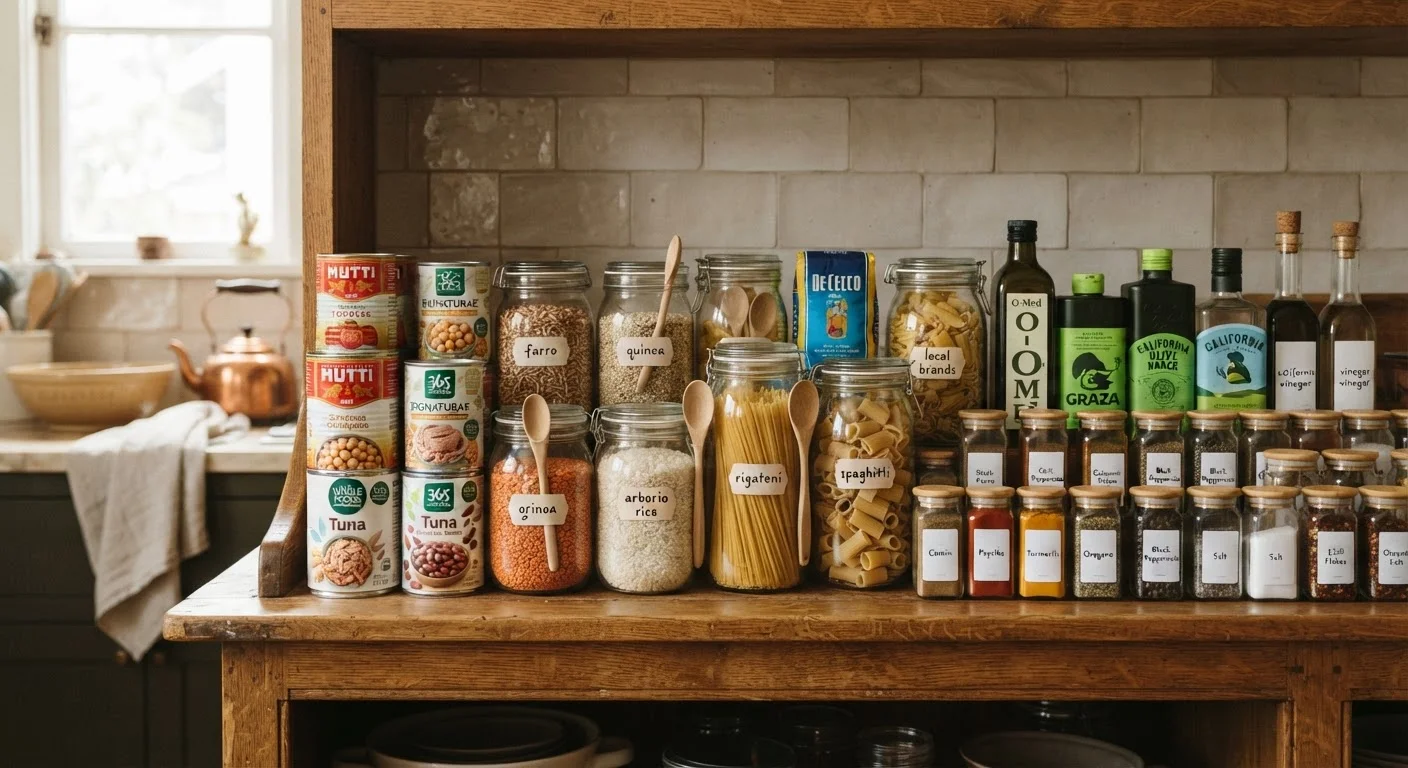
A well-stocked pantry isn't a luxury - it's infrastructure. The difference between ordering takeout at 7 p.m. and cooking a satisfying meal often comes down to what's already on the shelf. Unlike fresh ingredients that demand planning around their shelf life, pantry staples sit ready without pressure.
The goal isn't to stockpile everything imaginable. It's to curate a focused collection of versatile, shelf-stable ingredients that combine reliably across dozens of meal scenarios. Beans become soup, salad toppers, or taco filling. Canned tomatoes anchor pasta sauces, shakshuka, and braised proteins. The principles behind healthy everyday eating often point to whole foods - and many of those translate directly to pantry staples.
This checklist covers the categories and specific items that consistently earn their shelf space. Use it to audit what you already have, identify the gaps, and build the pantry that makes weeknight cooking genuinely manageable.
Airtight storage containers
Preserve the quality of opened dried grains, legumes, and spices and prevent moisture damage.
Pantry inventory list (app or notepad)
Track what you have and what needs restocking so you never realize a staple is missing mid-recipe.
Can opener
A reliable manual or electric can opener is essential for accessing canned proteins, tomatoes, and legumes.
How to Use This Checklist
Work through the checklist below in groups. Start with proteins and grains - these are the anchors of most last-minute meals - then layer in aromatics, condiments, and vegetables. The priority system is straightforward: must items are non-negotiable foundations; should items significantly expand what you can cook; nice to have items are worth adding once the basics are solid.
If you're also working toward cooking more economically, a well-maintained pantry is foundational to that goal. Our guide on eating well on a tight budget pairs directly with this checklist - many of the staples below are among the most cost-effective foods available per serving.
Expiration Dates Matter More Than You Think
Canned goods are shelf-stable, but they're not immortal. Most retain peak quality for one to two years; beyond that, texture, flavor, and in some cases safety can degrade. Discard any cans that are bulging, rusted, or deeply dented, as these are signs of potential spoilage. When in doubt, throw it out.
Once your pantry is stocked, pairing it with basic organizational habits pays off. The mise en place habit - prepping and arranging ingredients before you cook - works even better when your pantry is already sorted and accessible.
Proteins & Legumes
Grains & Starches
Canned & Jarred Vegetables
Aromatics & Flavor Builders
Condiments & Sauces
Pantry Maintenance
Keeping Your Pantry Working for You
A stocked pantry only stays useful if it's maintained. The most common failure point isn't building the pantry - it's letting it go stale, literally and figuratively. Ingredients accumulate, expiration dates pass unnoticed, and before long the pantry becomes a source of uncertainty rather than confidence.
Don't Confuse Variety With Excess
A large pantry isn't automatically a useful one. Buying specialty ingredients you use once leads to clutter and waste. Build your pantry around staples that appear across multiple recipes, and add niche items only when a dish genuinely calls for them regularly.
Watch Sodium in Canned Goods
Many canned beans, tomatoes, and broths carry significant added sodium. Where possible, choose low-sodium or no-salt-added versions and season dishes yourself - this gives you more control over flavor and supports cardiovascular health over time.
Monthly maintenance takes about ten minutes: scan expiration dates, pull older stock forward, and note what needs replacing. Treat restocking as a routine grocery task rather than a separate project. This connects naturally to why structured cooking habits fall apart - small, consistent actions beat periodic overhauls every time.
And if you want to put these pantry staples to best use, make sure your kitchen is equipped to handle them. A few well-chosen pieces of cookware and equipment, outlined in our guide to kitchen tools worth owning first, will help you cook faster and more confidently with whatever the pantry offers.
This article is for general informational and educational purposes only. It is not a substitute for advice from a qualified nutrition or healthcare professional regarding your individual dietary needs.