

Key Takeaways
Why Kitchen Safety Rules Get Quietly Skipped
Food safety guidance exists for a reason: the CDC estimates that roughly 48 million Americans experience foodborne illness each year. Yet many of the practices most likely to reduce that risk are also the ones home cooks most consistently overlook - not out of carelessness, but because kitchen habits form early, pass through families, and rarely get formally corrected.
The rules aren't complicated. They're just easy to rationalize around, especially when nothing seems to go wrong immediately. The problem is that foodborne illness has a delayed onset - symptoms often appear 12 to 72 hours after exposure - making it hard to connect cause and effect. The myths below represent the gaps between what food safety guidelines consistently recommend and what actually happens in most American kitchens.
Myth
If food smells fine, it's safe to eat - even if it's been sitting out for a while.
Fact
Odor is not a reliable safety indicator. Many dangerous bacteria, including Salmonella and E. coli, produce no detectable smell.
The USDA's Food Safety and Inspection Service (FSIS) uses the phrase "when in doubt, throw it out" for good reason. Harmful bacteria can multiply to dangerous levels long before food looks, smells, or tastes spoiled. The danger zone - temperatures between 40°F and 140°F - is where bacterial growth accelerates rapidly. Perishable food left in this range for more than two hours should be discarded, regardless of how it appears.
Myth
Rinsing raw chicken under the tap before cooking removes bacteria and makes it safer.
Fact
The CDC and USDA advise against washing raw poultry. Water splatter spreads bacteria up to three feet onto counters, utensils, and other foods.
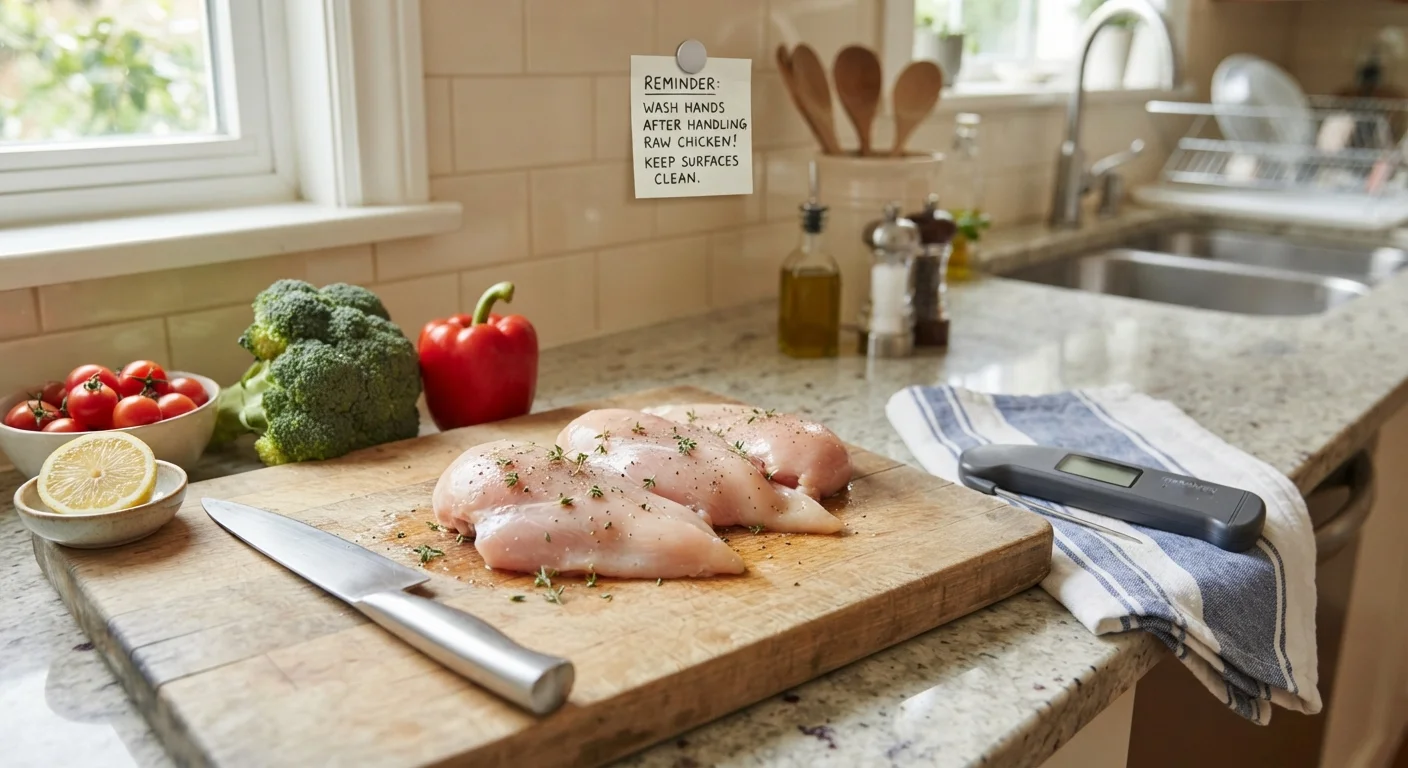
This is one of the most persistent kitchen myths in American households. Cooking chicken to a safe internal temperature of 165°F - verified with a food thermometer - is what eliminates pathogens. Rinsing only distributes them. Studies have documented bacterial contamination on sink basins, faucet handles, and adjacent surfaces after washing poultry. The safest approach is to go straight from package to pan.
Myth
Meat is done when it looks brown all the way through.
Fact
Color is not a dependable measure of doneness. A food thermometer is the only reliable way to confirm safe internal temperatures.
Ground beef can turn brown before reaching a safe temperature due to the oxidation of myoglobin - a protein unrelated to bacterial activity. Conversely, poultry can remain pink even when fully cooked. The USDA publishes minimum safe internal temperatures: 145°F for whole cuts of beef, pork, lamb, and veal (with a three-minute rest); 160°F for ground beef; and 165°F for poultry. Insert a food thermometer into the thickest part, away from bone, for an accurate read. Pan temperature plays a role too - see our guide to pan temperature for how heat management affects cooking outcomes.
Myth
Thawing meat on the counter overnight is a time-saving shortcut that works fine.
Fact
Counter thawing allows the outer layers of food to reach unsafe temperatures well before the center has thawed, creating conditions ideal for bacterial growth.
The FSIS recommends three safe thawing methods: in the refrigerator, in cold water (changing the water every 30 minutes), or in the microwave followed immediately by cooking. Refrigerator thawing is the most hands-off option, though it requires planning ahead. If you're using the cold-water method, keep the food in a leak-proof bag to prevent cross-contamination and cook it immediately after thawing. Room-temperature thawing is never considered safe by food safety authorities, regardless of how cold the kitchen feels.
Myth
One cutting board works fine for everything - just give it a rinse between uses.
Fact
A quick rinse does not remove pathogens. Using separate cutting boards for raw meat and produce is a core cross-contamination prevention strategy.
Raw meat, poultry, and seafood can harbor bacteria that transfer easily to ready-to-eat foods like salad vegetables or fruit. Designating separate boards - and washing used boards with hot soapy water, or running them through the dishwasher - breaks the contamination chain. Deep grooves in plastic or wooden boards can harbor bacteria even after rinsing, making periodic replacement important. If you're building organized prep habits, the mise en place approach naturally supports keeping raw and ready-to-eat items in separate, clearly designated zones.
Myth
Leftovers keep in the refrigerator as long as they still look okay - sometimes a week or more.
Fact
The USDA recommends consuming most cooked leftovers within three to four days when stored at or below 40°F.
Even properly refrigerated food eventually becomes unsafe as certain bacteria continue to grow slowly at cold temperatures. Cooked proteins, rice, pasta, and mixed dishes all fall under the three-to-four-day guideline. Foods kept beyond this window should be frozen or discarded. Labeling containers with a date is a simple habit that removes the guesswork. For longer storage, freezing is effective - our food preservation methods comparison covers how different approaches affect safety and quality.
Building Safer Habits Without Overhauling Your Kitchen
Food safety doesn't require an expensive setup or a professional kitchen. A calibrated food thermometer, a second cutting board, and awareness of the two-hour rule cover the majority of everyday risk. Small procedural changes - like moving leftovers into the refrigerator promptly and planning thawing the night before - have an outsized effect on safety outcomes.
The Two-Hour Rule Applies Even When It's Inconvenient
Buffet-style meals, holiday gatherings, and outdoor cookouts are the situations where the two-hour window most often gets ignored. Once perishable food - including cooked proteins, dairy-based dishes, and cut fruit - has been at room temperature for two hours (or one hour if the ambient temperature exceeds 90°F), it should be discarded. Refrigerating it afterward does not make it safe again.
If you're working on building broader kitchen competence, these safety habits integrate naturally with foundational skills. Reading a recipe thoroughly before you start is one opportunity to mentally flag thawing times, cross-contamination risks, and temperature checkpoints before they become in-the-moment decisions. The more you treat food safety as part of normal prep - not a separate checklist - the easier it becomes to follow consistently.
This article is for general informational purposes only and is not a substitute for professional food safety guidance. Consult your local health authority or a registered dietitian for specific concerns related to food handling and foodborne illness prevention.