

Key Takeaways
Why Plate Composition Matters
Nutrition science can feel overwhelming - macros, micronutrients, glycemic indices. Yet one of the most effective strategies for eating well is also one of the most visual: thinking deliberately about how your plate is composed. Rather than counting every calorie or eliminating entire food groups, proportional eating focuses on the relative amounts of different food types in a single meal.
This approach is backed by nutrition researchers and public health bodies alike. The Harvard T.H. Chan School of Public Health's Healthy Eating Plate, along with frameworks like the USDA's MyPlate, both emphasize distribution over restriction. The underlying logic is sound: when you consistently crowd your plate with nutrient-dense foods in sensible proportions, you naturally displace less nutritious options without strict rules or calorie math.
If you're just beginning to eat healthier, the plate method offers an accessible entry point. It works across cuisines, budgets, and lifestyles - and it scales gracefully as your nutritional knowledge grows. For a broader view of how plate composition fits into overall eating patterns, see the guide to food groups and eating patterns.
The Core Proportions: A Section-by-Section Breakdown
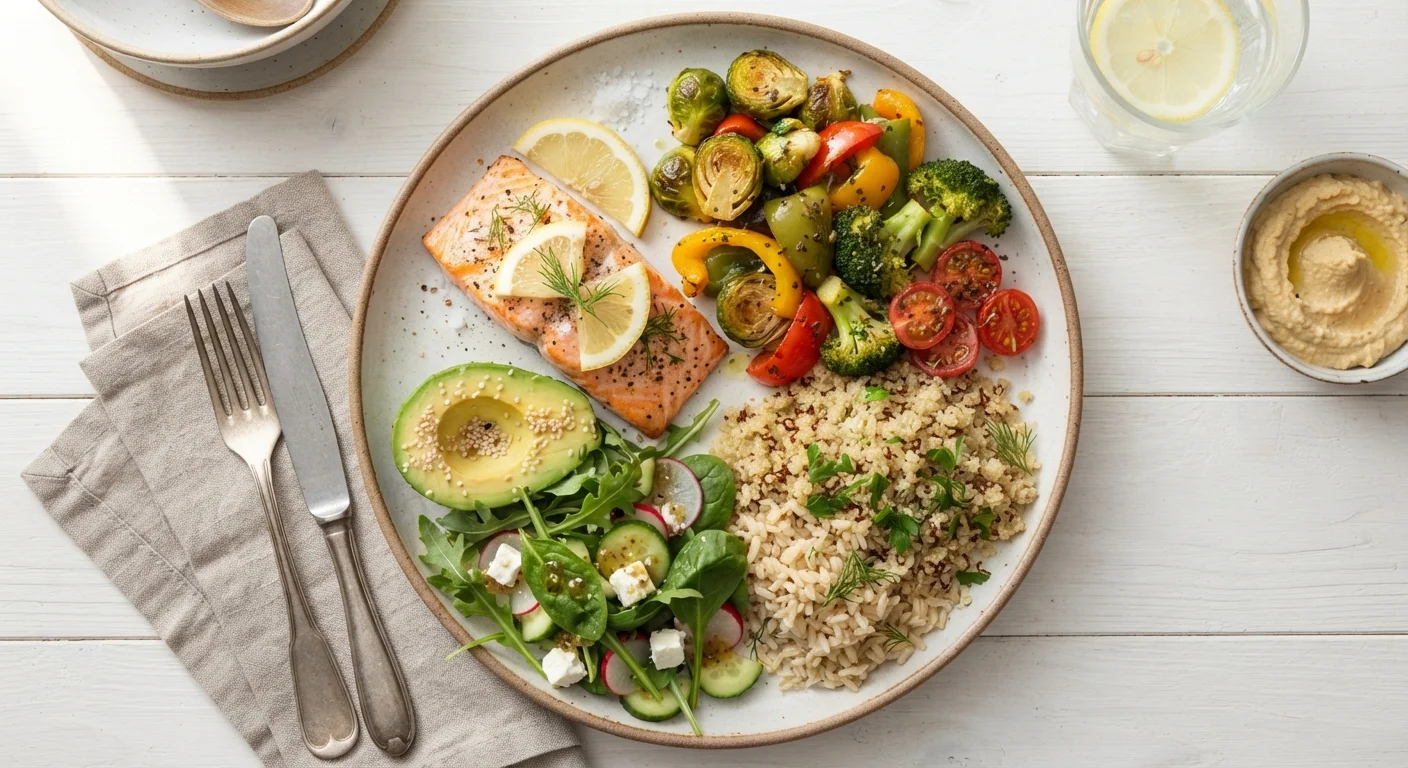
Think of a standard dinner plate divided into four areas. The goal isn't geometric precision - it's a mental model you can apply at the stove, at a restaurant, or when ordering takeout.
Fill half your plate with non-starchy vegetables
Non-starchy vegetables - leafy greens, broccoli, peppers, cucumbers, tomatoes - are high in fiber, water, vitamins, and minerals while being relatively low in calories. A generous vegetable portion supports digestive health, helps regulate blood sugar, and creates meal volume that promotes fullness. This is the most consistent recommendation across major nutrition frameworks globally.
Reserve one quarter of the plate for quality protein
Protein is essential for muscle repair, immune function, enzyme production, and sustained satiety. Distributing a moderate protein portion at each meal - rather than relying on one large serving - supports consistent amino acid availability throughout the day. Quality sources include lean meats, fish, eggs, legumes, tofu, and low-fat dairy.
Use the remaining quarter for whole or minimally processed grains
Whole grains - such as brown rice, quinoa, farro, whole-wheat bread, or oats - retain fiber, B vitamins, and minerals that are stripped in refined processing. They digest more slowly than their refined counterparts, contributing to more stable blood glucose levels and longer-lasting energy. Limiting grains to one quarter of the plate prevents them from crowding out vegetables.
Include a small amount of healthy fat at each meal
Fats from sources like olive oil, avocado, nuts, and seeds are not the dietary villains they were once portrayed as. Unsaturated fats support cardiovascular health, aid absorption of fat-soluble vitamins, and contribute to meal satisfaction. The key is keeping the portion modest - a drizzle, a small handful, a thin slice - rather than making fat the plate's dominant element.
Limit added sugars and heavily processed items to occasional additions
Ultra-processed foods and foods high in added sugars tend to be calorie-dense and nutrient-poor. While no single food is inherently forbidden in a balanced diet, building meals primarily around whole or minimally processed ingredients leaves more room on the plate - and in the diet overall - for foods that deliver genuine nutritional value.
Understanding how these food categories interact also deepens the value of proportional eating. Dietary fat, for example, is essential for absorbing fat-soluble vitamins (A, D, E, and K) found in many vegetables - which is one reason a plate that includes some healthy fat is nutritionally superior to a fat-free one. For a closer look at what makes a meal feel filling, including the roles of fiber and protein, the food science behind satiety is worth exploring.
Adapting the Framework to Your Life
One common concern is that proportional eating seems designed around a Western dinner-plate model. In practice, the principles translate across food cultures. A stir-fry served over a small amount of rice, loaded with bok choy, snap peas, and tofu, already follows the proportional logic. A grain bowl built on a base of farro, topped generously with roasted vegetables and a protein, does the same.
The plate method also integrates naturally with popular evidence-based eating patterns. If you're curious how proportional eating maps onto structured diets, Mediterranean, DASH, and plant-based approaches all share a similar underlying geometry - vegetables prominent, protein moderate, refined grains minimized.
For those eating more plants, plant-forward and vegetarian approaches can fill the protein quarter of the plate with legumes, tofu, tempeh, or eggs just as effectively as animal proteins. And if you're working on the vegetable half of the plate, practical strategies for eating more vegetables can make that shift genuinely sustainable.
1 in 10
U.S. adults meeting vegetable intake recommendations
According to CDC data, only about 1 in 10 American adults consumes the recommended amount of vegetables daily, highlighting how large a gap exists between guidelines and practice.
~25%
Reduction in cardiovascular risk linked to whole-grain intake
A meta-analysis published in the BMJ found that higher whole-grain consumption was associated with a roughly 25% lower risk of cardiovascular disease compared to low intake.
For protein specifically, distributing protein across meals - rather than concentrating it at dinner - is associated with better muscle maintenance, particularly as we age.
This article provides general nutrition information and is not a substitute for personalized advice from a registered dietitian or qualified healthcare professional. Individual nutritional needs vary; consult a professional before making significant changes to your diet.