

Key Takeaways
Why Recipes Can't Do the Tasting for You
Every recipe is written under a specific set of conditions: the author's stove, their brand of salt, their idea of "medium heat," and the particular batch of tomatoes or chicken they used that day. When you cook the same dish, almost none of those variables match exactly. That's not a flaw in the recipe - it's just the nature of cooking with real ingredients in a real kitchen.
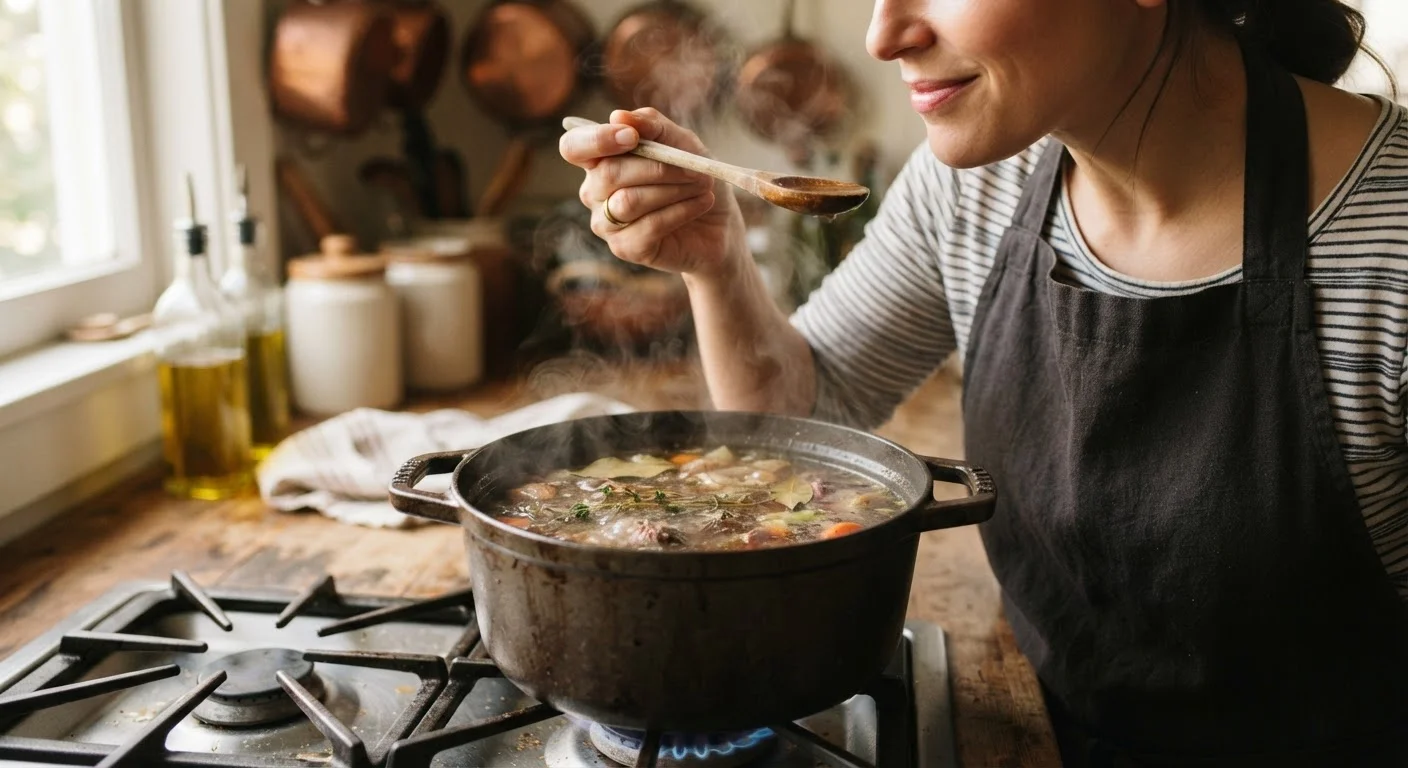
This is why tasting as you cook isn't optional. It's the mechanism that closes the gap between what a recipe promises and what ends up on your plate. Professional cooks taste constantly - not because they're insecure, but because they understand that every adjustment has to happen during cooking, not after.
If you want to sharpen your broader kitchen toolkit, pairing this habit with solid foundational techniques - like those covered in our knife skills guide - makes the whole cooking process more intuitive.
The Four Levers of Flavor Adjustment
Before you can taste critically, you need a mental framework for what you're tasting for. Most seasoning problems fall into four categories:
- Salt: The most fundamental seasoning. Insufficient salt makes food taste muted and one-dimensional, not just unsalty. It suppresses sweetness and dulls savory depth. Salt's timing matters enormously - see our guide to salting at the right moment for why adding it early versus late produces very different results.
- Acid: Lemon juice, vinegar, wine, and citrus zest brighten flavors and create contrast. A dish that tastes heavy or flat after adequate salting almost always needs a splash of acid to lift it.
- Fat: Fat carries flavor and creates richness. If a dish tastes sharp or thin, a small amount of butter, olive oil, or cream can round it out.
- Heat (spice): Chili flakes, black pepper, or fresh chili add energy and complexity. Use these last - their impact can be immediate and hard to walk back.
Understanding these four tools gives you a vocabulary for what your palate is telling you, transforming "something's off" into a specific, fixable diagnosis.
~75%
Of flavor perception linked to smell
Research in sensory science consistently shows that the majority of what we perceive as taste is actually driven by aroma, underscoring why tasting warm food mid-cook - when volatile compounds are active - gives the clearest read.
4
Core flavor levers every cook should know
Salt, acid, fat, and heat are widely recognized in culinary education as the primary tools for diagnosing and correcting seasoning imbalances in cooked food.
Best Practices for Tasting Intelligently
Taste your ingredients before you start cooking
The baseline flavor of your ingredients shapes every adjustment you'll need to make. A very salty broth, an unusually tart lemon, or a bitter batch of greens will throw off recipe amounts that were calibrated differently.
Use a dedicated tasting spoon and taste in small sips
Tasting from the cooking spoon introduces contamination and makes portion control harder. A small, clean spoon lets you take a measured sample, cool it slightly, and evaluate without influencing the dish.
Add salt and acid in small increments, then wait
Overcorrecting is the most common seasoning mistake. Salt and acid both need a moment to integrate into a dish, especially in sauces and soups. Adding too much at once is easy; removing it is not.
Distinguish between "needs salt" and "needs acid"
Both salt and acid make food taste more vibrant, but they do different things. Salt enhances overall depth; acid adds brightness and contrast. Confusing the two leads to over-salted food that still tastes dull.
Taste the dish as a whole, not just one component
Individual components - a grain, a protein, a sauce - are each seasoned for what they are. But when plated together, their flavors interact. A lightly seasoned grain paired with a boldly seasoned protein may balance perfectly.
Consistent tasting habits are the difference between cooks who nervously follow recipes and those who cook with genuine confidence. Like building flavor through technique rather than complexity, tasting critically is a skill that compounds over time - the more deliberately you practice it, the more instinctive it becomes.
Start Building the Habit Today
You don't need culinary school to develop this skill - you need repetition and attention. Set a mental rule: taste at the beginning (to understand your raw ingredients), in the middle (to track how flavors develop), and just before serving (to make final corrections). Keep a small spoon or tasting spoon nearby as a physical reminder.
This article is for general informational and educational purposes. It is not a substitute for professional culinary training. Individual results in cooking will vary based on ingredients, equipment, and personal taste preferences.