

Key Takeaways
The Gap Between a Great Idea and a Habit That Sticks
Meal prep has genuine, research-supported benefits: it's linked to greater dietary variety, lower food costs, and reduced reliance on fast food on busy weeknights. Yet countless people try it, hit friction in the second or third week, and quietly stop. The problem is rarely motivation - it's the specific, avoidable mistakes that make the whole system feel harder than it needs to be.
Understanding why prep falls apart is the fastest route to making it work. The mistakes below are the ones that most consistently derail otherwise well-intentioned routines - and each one has a concrete fix. For a useful foundation of kitchen organization that complements any prep habit, see the mise en place habit that professional cooks rely on.
Trying to prep every meal for the entire week on the first attempt.
Why it happens: Enthusiasm is high at the start, and batch-cooking everything at once feels efficient in theory. In practice, it turns a manageable task into an exhausting multi-hour project.
Ignoring realistic shelf life and storing everything the same way.
Why it happens: Most home cooks underestimate how quickly certain prepped foods deteriorate. Dressed salads, cut avocado, and cooked fish all have very different fridge lifespans than roasted root vegetables or cooked legumes.
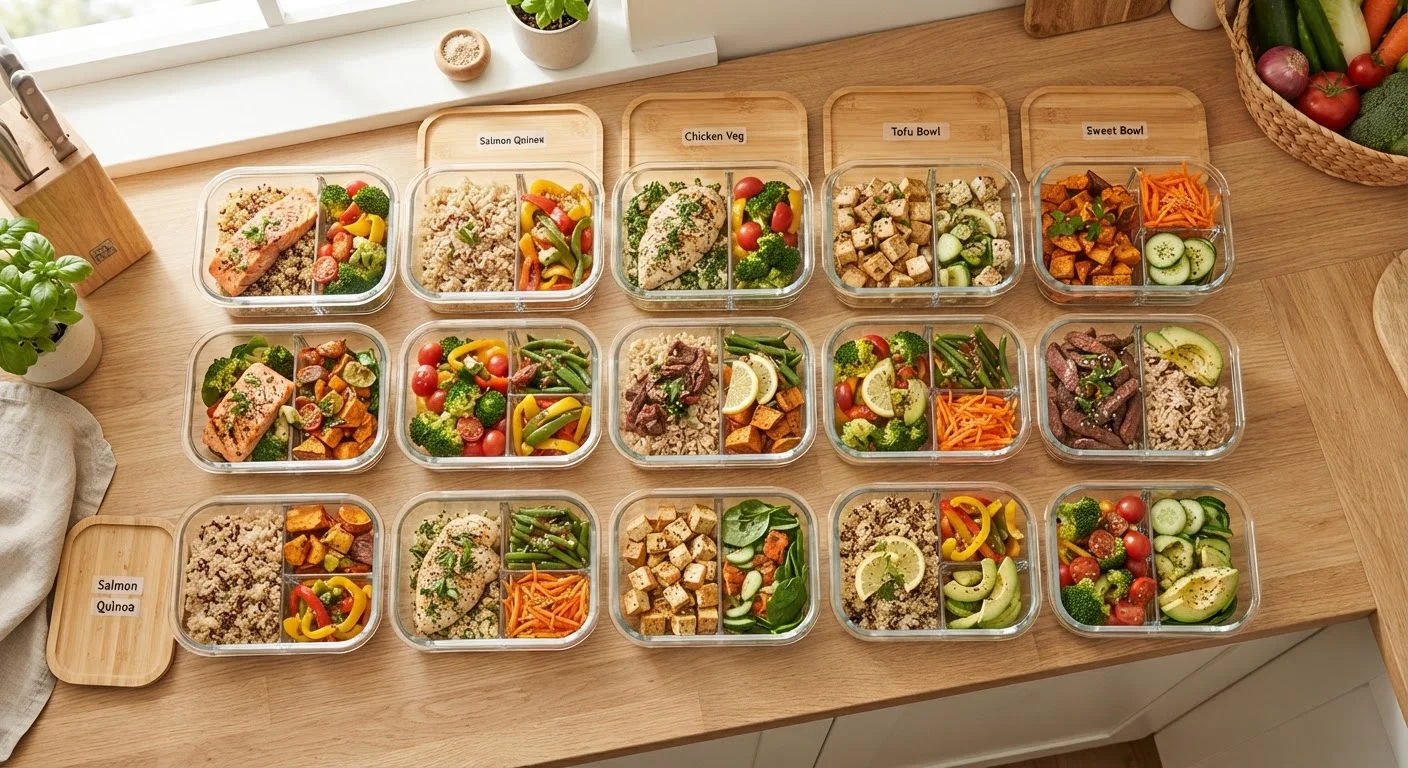
Prepping full meals instead of flexible components.
Why it happens: Complete recipes feel more satisfying to cook and look organized in the fridge. But eating the same assembled dish four nights running leads to flavor fatigue - and leftovers get abandoned.
Underestimating active prep time and skipping a dedicated schedule.
Why it happens: People assume they'll fit prep in whenever there's a free moment. Without a specific time block, it gets pushed aside by competing demands all week.
Choosing unfamiliar or overly complex recipes for prep sessions.
Why it happens: It's tempting to use prep day to try ambitious new dishes. But troubleshooting an unfamiliar recipe while also managing multiple components creates stress and extends prep time unpredictably.
What Actually Sustains a Prep Routine
The habits that make meal prep durable share a common thread: they reduce decision fatigue without eliminating flexibility. Choosing a standing prep window - even 45 minutes on Sunday afternoon - removes the weekly deliberation of when to do it. Keeping a running list of go-to components (a roasted grain, a versatile protein, two or three cut vegetables) means you're not reinventing the wheel each week.
~2x
Diet quality advantage for meal planners
A study published in the International Journal of Behavioral Nutrition and Physical Activity found that people who planned their meals had higher diet quality scores and greater food variety than non-planners.
3-4 days
Safe fridge life for most cooked proteins
The USDA advises that most cooked meats, poultry, and legumes remain safe to eat for three to four days when stored properly at or below 40°F.
Pairing your prep with a well-stocked pantry closes the gap on nights when prep runs short. A reliable set of shelf-stable staples means that prepped components can become complete meals quickly - see pantry staples that make last-minute meals possible for a practical inventory. If you're building out other health routines alongside this one, the structural thinking behind a sustainable weekly exercise schedule applies equally here: consistency beats perfection every time.
Avoid Prepping Foods You Rarely Actually Eat
A common but underappreciated trap is prepping ingredients based on what seems healthy rather than what you genuinely enjoy eating. Food that sits unloved in the fridge through the week creates waste, frustration, and erodes confidence in the system. Stick to a core of ingredients you already cook regularly, and introduce one new component at a time. For broader patterns behind healthy-eating intentions stalling, see why healthy eating intentions stall.
This article is for general informational and educational purposes only and is not a substitute for advice from a qualified nutrition professional.