

Key Takeaways
Our Verdict
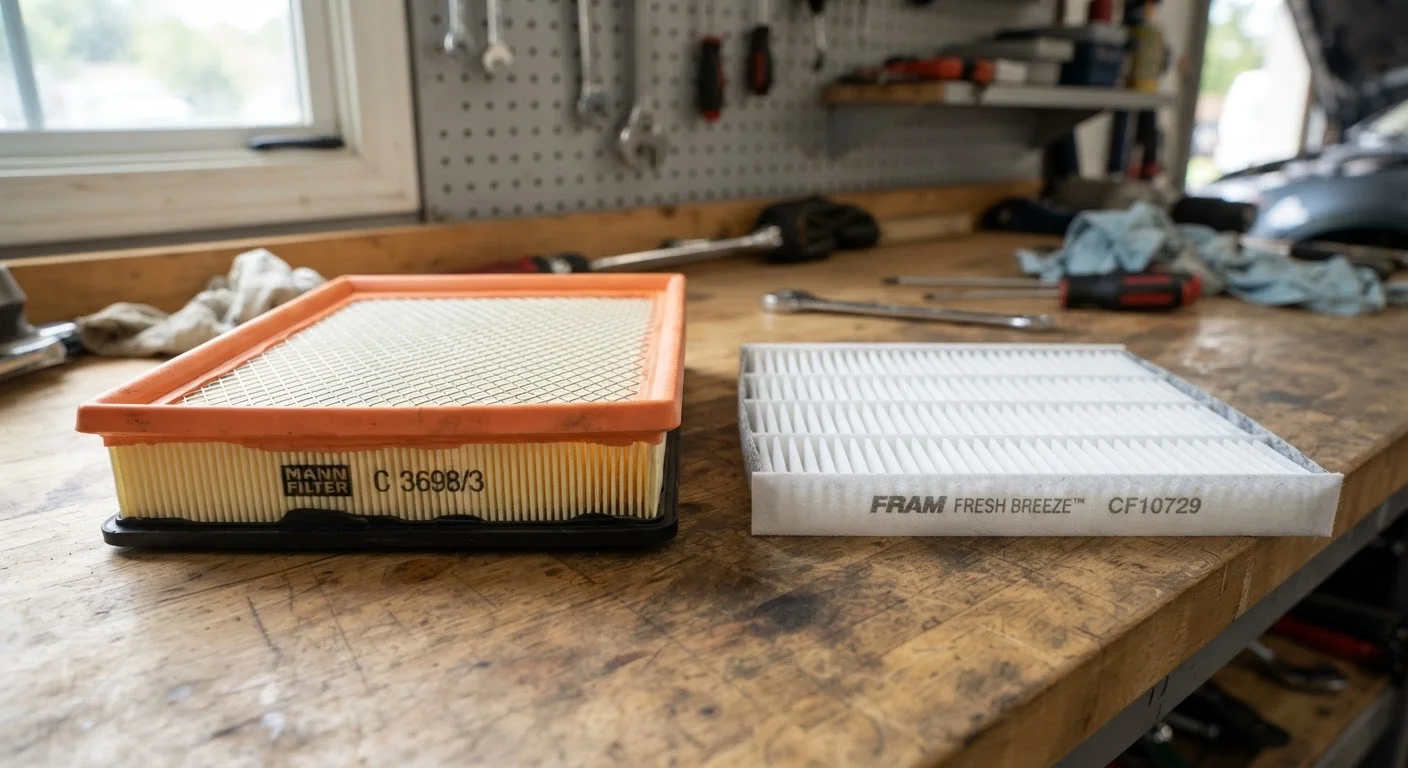
Engine air filters and cabin air filters are not interchangeable - they protect two entirely separate systems and require independent maintenance schedules. Knowing which is which helps you ask the right questions at your next service appointment and avoid paying for work you don't need while catching work you do.
| Best for | Recommended |
|---|---|
| Drivers focused on engine performance and fuel efficiency | Engine Air Filter |
| Drivers with allergies or who spend significant time in city traffic | Cabin Air Filter |
| Drivers who want complete peace of mind | Both filters on their recommended schedules |
Two Filters, Two Jobs
Walk into any auto parts store and you'll find engine air filters and cabin air filters sitting on adjacent shelves, often looking deceptively similar. Many drivers assume they're basically the same thing - or worse, assume their vehicle only has one. In reality, these filters serve completely different systems, and mixing them up is one of the most common sources of confusion during routine maintenance.
Understanding the difference isn't just trivia. It affects how your engine runs, what you're breathing inside your car, and how intelligently you can have a conversation with a service technician. Think of it the way you'd think about home HVAC filters - the filter protecting your furnace blower is not the same as the filter cleaning the air in your living room, even if both live inside the same system.
| Engine Air Filter | Cabin Air Filter | |
|---|---|---|
| What it protects | Engine and combustion system | Passenger compartment air quality |
| Location | Engine bay intake housing | Behind glove box or under dashboard |
| Typical replacement interval | 15,000-30,000 miles | 12,000-15,000 miles |
| Signs it needs changing | Reduced power, poor fuel economy | Weak airflow, musty odors, dusty interior |
| Vehicles that have it | Virtually all gasoline-powered cars | Most vehicles built after late 1990s |
| Consequence of neglect | Engine wear, failed emissions | Poor air quality, HVAC strain |
The Engine Air Filter: Protecting What's Under the Hood
Your engine needs a precise mixture of air and fuel to combust properly. The engine air filter sits at the entrance of the intake system - typically housed in a plastic box near the top of the engine bay - and its job is to keep contaminants out of that process. Dust, pollen, insects, and debris can all damage engine components or disrupt combustion if they get pulled into the cylinders.
When the engine air filter becomes clogged, the engine has to work harder to draw in enough air. This can reduce throttle response, lower fuel efficiency, and in severe cases contribute to rough idling or failed emissions tests. Most manufacturers recommend replacing it every 15,000 to 30,000 miles, though drivers in dusty or rural environments may need to check it more frequently.
Check Your Owner's Manual First
Replacement intervals vary significantly by manufacturer and driving conditions. Your owner's manual lists the recommended schedule for your specific vehicle. Dusty, rural, or high-pollen environments can shorten the useful life of both filters considerably, so adjust accordingly.
Checking your engine air filter is usually straightforward - the housing is designed to be opened without tools in most modern vehicles. A heavily soiled filter will be visibly grey or brown and may have debris trapped in the folds. When in doubt, a mechanic can inspect it during any routine service visit.
The Cabin Air Filter: What You're Actually Breathing
The cabin air filter is a more recent addition to mainstream vehicles - most models built after the late 1990s have one. It filters the air entering your car's passenger compartment through the heating, ventilation, and air conditioning (HVAC) system. Its purpose has nothing to do with engine performance; it's entirely about the air you and your passengers breathe.
A functioning cabin filter captures pollen, dust, mold spores, exhaust particles, and other airborne contaminants before they reach the vents. When it's clogged, you may notice reduced airflow from your vents, musty odors when the HVAC runs, or increased dust buildup on the dashboard. Drivers with seasonal allergies often notice the difference most acutely.
Don't Confuse a Clogged Filter for an HVAC Problem
Weak airflow from your car's vents is frequently blamed on the HVAC blower motor or refrigerant levels, but a blocked cabin air filter is often the actual culprit. Before authorizing more expensive HVAC diagnostics, confirm that the cabin filter has been inspected. It's a simple, inexpensive check that's easy to overlook.
The cabin filter is typically located behind the glove compartment or under the dashboard on the passenger side, though the exact location varies by vehicle. Replacement intervals generally fall between 12,000 and 15,000 miles, or roughly once a year for average drivers.
Maintenance Intervals and What to Watch For
Because neither filter is directly visible during normal driving, it's easy to let both slide. Service shops sometimes recommend replacing them during oil changes regardless of actual condition - which can be appropriate or premature depending on your driving environment. Asking to see the filter before agreeing to replace it is entirely reasonable.
Your vehicle's owner's manual is the most reliable source for manufacturer-recommended intervals. Deviating significantly from those guidelines - in either direction - is worth discussing with a qualified mechanic who knows your specific vehicle and driving habits.
1 in 4
Drivers unaware their car has a cabin filter
Industry surveys have consistently found a significant portion of drivers do not know their vehicle has a dedicated cabin air filter separate from the engine filter.
15,000-30,000 mi
Typical engine air filter lifespan
Most vehicle manufacturers recommend inspecting or replacing the engine air filter within this mileage range under normal driving conditions.
Neither filter is a high-cost item on its own. The expense typically comes from labor if the filter is awkwardly positioned, or from bundling replacements into a larger service package. Knowing which filter is being discussed and why puts you in a much stronger position to evaluate any service recommendation.