

Travel & Outdoors

Before You Book: A Pre-Trip Planning Checklist for Any Destination

Share
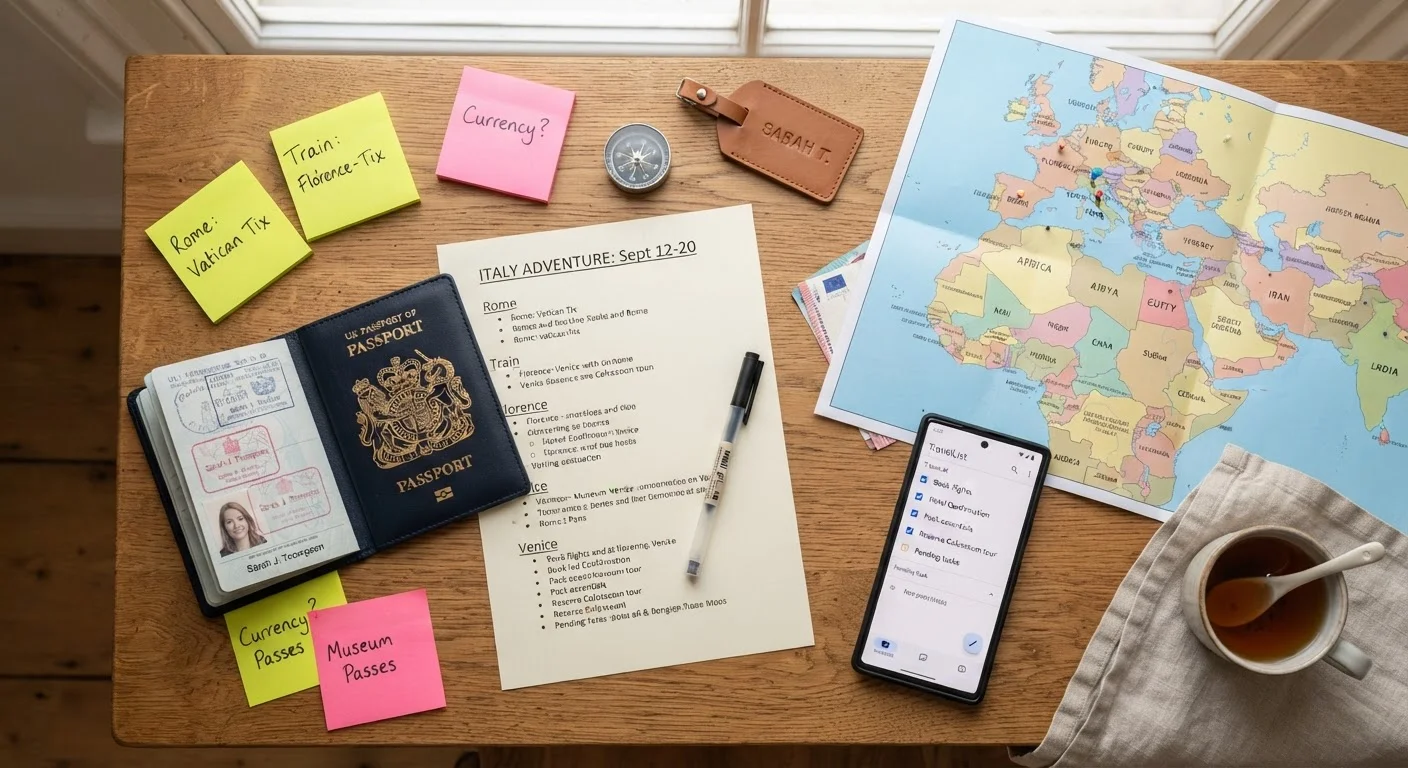
Overhead view of travel planning items including passport, map, itinerary, and checklist on a desk.

Key Takeaways

Check passport validity and visa requirements well before your departure date — processing can take weeks.
Travel insurance should be arranged at booking, not as an afterthought before departure.
Health precautions including vaccinations may require appointments weeks or months in advance.
Confirm all accommodation and transport bookings with printed or offline backups.
Always verify entry requirements directly with official government sources, as rules change frequently.
45–90 min

Summary

22 items · 45–90 minutes

Why a Pre-Trip Checklist Changes How You Travel

Even experienced travelers get caught out. A forgotten visa application, a passport expiring within six months of return, or a missing travel insurance policy can derail a trip before it begins — or create serious problems once you're abroad. Working through a structured checklist before you confirm any bookings turns those potential crises into non-events.

This checklist is built around the sequence that matters: address the hardest-to-reverse items first (travel documents, health prep), then layer in bookings, logistics, and home prep. For a deeper look at how these steps fit into a broader planning framework, see our complete trip-planning guide.

If your trip involves a long drive to the airport or a road trip leg, pair this checklist with a pre-road trip vehicle inspection so both you and your car are ready.

Travel Documents

Check that your passport is valid for at least six months beyond your return date — many countries enforce this requirement strictly at the border. Must
Research visa requirements for every country on your itinerary using official government or embassy sources, and apply well ahead of any posted processing times. Must
Make physical and digital copies of your passport, visa, driver's license, and key reservations, and store them separately from the originals. Must
Register your trip with the U.S. Department of State's Smart Traveler Enrollment Program (STEP) if traveling internationally. Should

Health & Safety Preparation

Consult a travel medicine clinic or your healthcare provider about destination-specific vaccinations and health precautions — schedule this at least 4–6 weeks before departure. Must
Check the CDC and WHO travel health notices for your destination and verify whether any medications or preventive treatments are recommended. Must
Carry a sufficient supply of any prescription medications in original labeled containers, along with a letter from your prescribing provider. Must
Pack a basic travel health kit including over-the-counter pain relief, antidiarrheal medication, bandages, and any personal medical supplies. Should

Travel Insurance

Purchase a travel insurance policy that covers trip cancellation, medical emergencies, and emergency evacuation before or at the time of booking. Must
Review policy exclusions carefully — confirm coverage applies to your planned activities, particularly adventure sports or remote travel. Must
Save your policy number and the 24-hour emergency assistance number in an accessible location separate from your main documents. Should

Accommodations & Transportation

Confirm all accommodation reservations and save written confirmation with addresses, check-in times, and cancellation policies. Must
Book and confirm all major transport legs — flights, trains, ferries — and download or print boarding passes and tickets. Must
Research ground transportation options from each arrival point to your accommodation and have a backup plan for delays. Should
Notify your bank and credit card issuers of your travel dates and destinations to avoid fraud holds on your accounts. Must
Arrange for local currency or confirm where you can access ATMs at your destination, noting any international withdrawal fees. Should

Home & Digital Prep

Arrange for mail, packages, and any time-sensitive home responsibilities (plant watering, pet care, security checks) to be handled while you're away. Must
Set up an out-of-office reply for email and voicemail and share your emergency contact information with a trusted person at home. Should
Check your phone plan for international coverage options or arrange a local SIM, and download offline maps and translation apps for your destination. Should
Back up photos and important data from your devices before departure and enable remote-wipe capability as a security precaution. Nice to have

What to Have Ready Before You Start

Before working through the checklist, gather a few key resources so you're not hunting for information mid-process. You'll want your current passport, any existing travel insurance policy details, your destination country's official government entry page, and the U.S. Department of State's travel advisory page for your destination.

Required

U.S. Department of State Travel Site (travel.state.gov)

Look up passport requirements, visa information, country-specific advisories, and register your trip through STEP.

Required

CDC Travelers' Health Page (wwwnc.cdc.gov/travel)

Access destination-specific health notices, recommended vaccinations, and food and water safety guidance.

Required

Travel Medicine Clinic or Primary Care Provider

Obtain personalized vaccination recommendations, prescriptions for travel medications, and health clearance for your destination.

Optional

Digital Document Storage App or Cloud Service

Securely store copies of your passport, visas, insurance policy, and itinerary for offline and online access while traveling.

Optional

Offline Maps Application

Download destination maps for use without a data connection, useful when navigating airports, transit systems, or unfamiliar cities.

Once you've confirmed your documents and health prep are in order, you can move through accommodation, transport, and logistics with confidence. For a full reference on what documents to carry and how to organize them, see our guide to essential travel documents.

Verify Entry Requirements Directly With Official Sources

Visa rules, vaccination requirements, and border policies change without much public notice. Third-party travel sites may not reflect the most current requirements. Always confirm entry conditions through the official embassy or consulate website of your destination country, and cross-reference with the U.S. Department of State's country information pages. Arriving without the correct documentation can result in denied boarding or entry — there is no workaround at the border.

After the Checklist: Final Steps Before You Leave

Once every item is checked off, do a final sweep 48 hours before departure. Confirm all bookings via email, ensure your phone is set up for international use or a local SIM, and let a trusted contact at home know your full itinerary.

Consider how much structure you want once you arrive — our comparison of structured versus spontaneous travel can help you decide how tightly to plan your days. If you're heading somewhere remote or wilderness-adjacent, also review the trail-ready safety checklist for outdoor-specific preparation. And for destination inspiration once your logistics are locked in, browse our destination guides.

Don't Leave Insurance Until the Last Minute

Many travel insurance policies only cover pre-existing conditions or trip cancellation for events that occur after the policy purchase date. Buying insurance days before departure significantly limits your protection. Arrange coverage at the time you make your first non-refundable booking — not the week before you fly.

Travel & Outdoors Editorial Team is the collective byline for our editorial team and contributor network. Articles published under this byline or an editorial pen name are researched, written, and reviewed according to our editorial standards for clarity, consistency, and independence before publication.

View all articles by Travel & Outdoors Editorial Team →
Disclaimer: The content on this site is for informational purposes only and is not a substitute for professional advice. Always consult a qualified professional for guidance specific to your situation.