

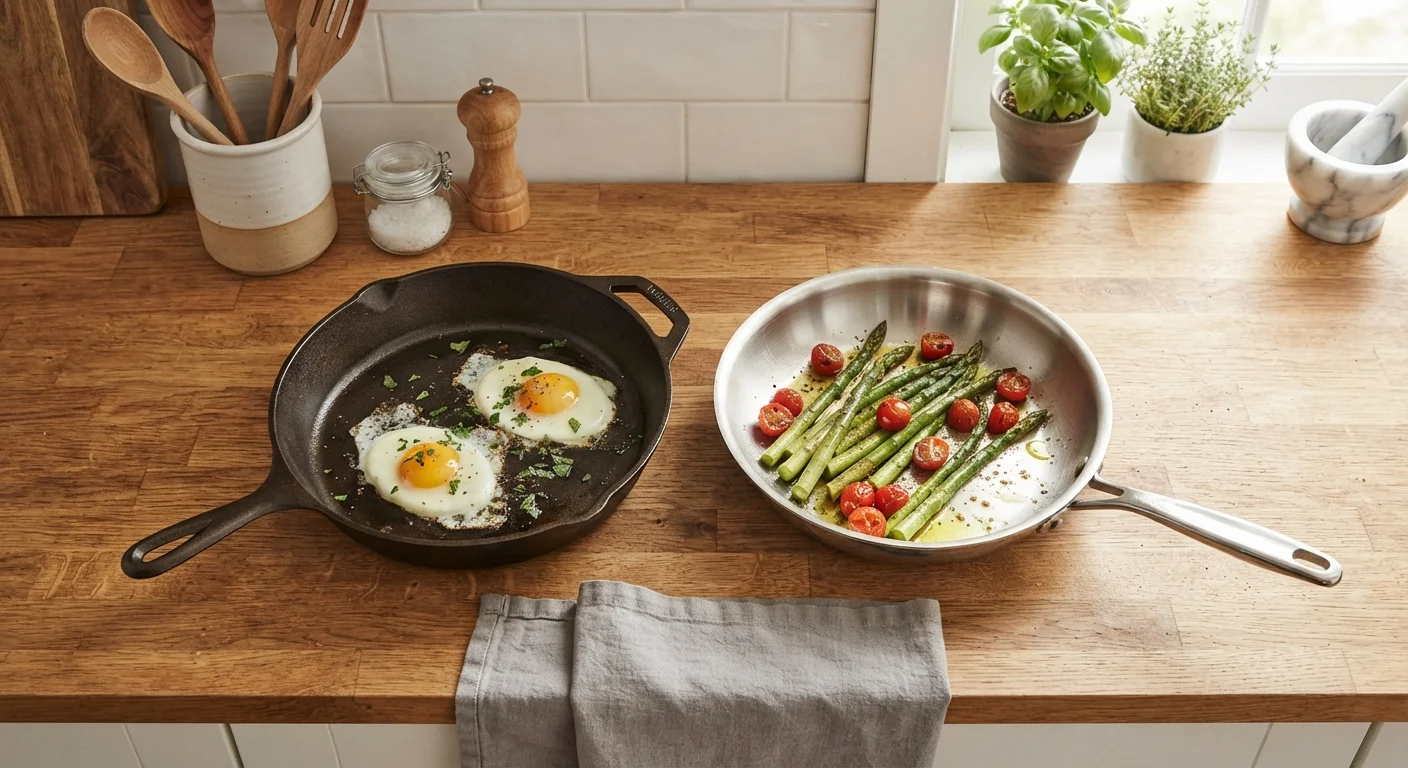
Key Takeaways
Option A
Cast Iron
The durable, heat-retaining classic.
Best for: Best for cooks who want consistent high-heat searing, oven versatility, and a pan that improves over decades of use.
Option B
Stainless Steel
The responsive, low-maintenance workhorse.
Best for: Best for cooks who want quick temperature control, easy cleanup, and a pan that handles acidic ingredients without concern.
If you sear meats, bake cornbread, or cook over open flame
Cast Iron
Cast iron's superior heat retention produces an even, deep sear and handles the transition from stovetop to oven with ease.
If you cook delicate proteins, pan sauces, or acidic dishes regularly
Stainless Steel
Stainless steel responds quickly to temperature changes and won't react with acids, making it ideal for deglazing and simmering tomato-based sauces.
If you want a low-maintenance pan that goes in the dishwasher
Stainless Steel
Stainless steel requires virtually no special care - no seasoning, no hand-drying - making it the practical choice for busy households.
If you cook outdoors, camp, or want a pan that lasts generations
Cast Iron
Cast iron is virtually indestructible, works on any heat source including campfire or grill, and only improves with age and regular use.
If you're building your first serious kitchen from scratch
Stainless Steel
A 10- or 12-inch stainless skillet covers the widest range of everyday tasks and teaches fundamental heat-management skills that transfer to any cookware.
How Each Material Actually Behaves on Heat
Understanding cookware starts with physics. Cast iron is a dense metal that absorbs heat slowly but holds it with remarkable consistency. Once it reaches temperature, it doesn't fluctuate - which is exactly why it excels at searing steaks, frying chicken, or baking a skillet cookie. The trade-off is that it takes 5-10 minutes to preheat properly, and adding cold food will drop the surface temperature less dramatically than with thinner pans.
Stainless steel, by contrast, is a much thinner conductor. Quality stainless pans typically have an aluminum or copper core bonded between steel layers - a construction called tri-ply or multi-clad - which spreads heat efficiently across the cooking surface. The result is faster preheating and quicker response when you turn the burner down. For heat-sensitive techniques like pan sauces, that responsiveness is a real advantage.
| Criterion | Cast Iron | Stainless Steel |
|---|---|---|
| Heat retention | Excellent - holds steady heat | Moderate - responds to changes quickly |
| Preheat time | 5-10 minutes | 2-4 minutes |
| Oven-safe temperature | Unlimited (no upper limit) | Typically up to 500-600°F |
| Acidic food compatibility | Poor - damages seasoning | Excellent - fully non-reactive |
| Maintenance required | Yes - seasoning, hand-drying | Minimal - dishwasher-safe |
| Weight (12-inch pan) | ~8-10 lbs | ~3-4 lbs |
| Natural non-stick surface | Yes, with seasoning | No - requires fat and technique |
| Lifespan | Generations (near-indestructible) | Decades with proper care |
Maintenance, Seasoning, and Day-to-Day Care
Cast iron's reputation for being high-maintenance is somewhat overstated - but it does require consistent habits. After each use, the pan should be rinsed while still warm (soap is acceptable in moderation, despite old-school advice against it), dried thoroughly, and lightly oiled before storage. Skipping the drying step is the fastest route to rust. Seasoning - the polymerized layer of oil baked onto the surface - builds over time with regular use and gives cast iron its naturally non-stick qualities.
Stainless steel asks very little of you. It's dishwasher-safe, tolerates metal utensils, and can be scrubbed aggressively without damage. Discoloration and stuck-on food (common after high-heat cooking) wipe away with a paste of baking soda and water or a dedicated stainless cleaner. If eggs or delicate proteins keep sticking to your stainless pan, the issue is almost always technique rather than the pan itself - proper preheating and fat placement resolve the majority of sticking problems.
A Note on 'Pre-Seasoned' Cast Iron
Most cast iron sold today comes labeled as pre-seasoned, which means a base layer of oil has been applied at the factory. This is a starting point, not a fully developed seasoning. Expect the surface to improve noticeably over the first 10-15 uses as you cook with fats and build up additional polymerized layers. Cooking bacon, sautéing vegetables in oil, and pan-frying are among the fastest ways to develop a strong seasoning naturally.
What Each Pan Does Best - and Where It Struggles
Cast iron genuinely shines for tasks that benefit from sustained, even heat: searing thick cuts of meat, frying, baking in the oven (it's oven-safe at any temperature), and cooking over a campfire or grill. It's also an excellent heat retainer at the table - food stays warm longer. Where cast iron struggles: acidic ingredients like tomatoes, wine, or citrus will leach small amounts of iron and erode seasoning over repeated contact. Occasional acidic cooking is fine; braising a tomato sauce for an hour is better suited to stainless.
Stainless steel handles the full range of everyday stovetop tasks - sautéing vegetables, building pan sauces, poaching, and cooking egg dishes with enough fat and the right temperature. It handles acidic foods without any concern, and fond (the browned bits left after searing) develops beautifully in stainless, making it ideal for deglazing. Weight is stainless steel's less-discussed advantage: a 12-inch stainless skillet is significantly lighter than its cast iron equivalent, which matters for wrist comfort over years of daily cooking.
For a broader picture of which kitchen tools earn their place, see our guide to essential kitchen tools.
~8-10 lbs
Typical weight of a 12-inch cast iron skillet
Compared to roughly 3-4 lbs for a comparable stainless steel pan - a meaningful difference for daily handling.
500°F+
Common oven-safe limit for stainless steel
Cast iron has no practical upper temperature limit, making it suitable for broiling and high-heat oven tasks that would stress other pans.
3-5 min
Preheat time advantage for stainless steel
Stainless pans with aluminum cores typically reach cooking temperature in about half the time of an equivalent cast iron skillet.
The Verdict: Do You Actually Need Both?
For most American home cooks, the most practical answer is yes - eventually. The two pans cover different ground without significant overlap. A well-seasoned cast iron skillet handles weekend sears, frittatas, and oven bakes; a stainless skillet manages weeknight sautés, pasta sauces, and anything acidic. Together, they form the backbone of a capable, durable kitchen without any reliance on non-stick coatings that degrade over time.
If you're starting with one, think honestly about your cooking habits. Do you cook acidic dishes often? Do you prefer low-maintenance gear? Start with stainless. Do you love a good sear and don't mind a five-minute maintenance routine? Cast iron will reward you for decades. And as you refine your skills - understanding how oven heat differs from stovetop heat or how to build a well-stocked pantry that supports everyday cooking - the right pan will make every technique easier to execute.