

Key Takeaways
Why the Right Toolkit Changes Everything
Walk into any kitchen store and the sheer number of gadgets on display can feel overwhelming - spiralizers, avocado slicers, egg separators. Most of these tools solve problems you don't actually have, or solve them barely better than the basics already would. The cooks who turn out consistently good meals aren't the ones with the most equipment. They're the ones who know a handful of tools deeply and use them constantly.
This list covers the foundational items that pull genuine weight across every cooking task: slicing, sautéing, roasting, mixing, measuring, and everything in between. Once these are in your kitchen, you'll find that most recipes - from weeknight dinners to weekend projects - are well within reach. Pair this with a thoughtfully stocked pantry (see our guide to pantry staples that make last-minute meals possible) and you've built genuine cooking infrastructure.
An 8-Inch Chef's Knife
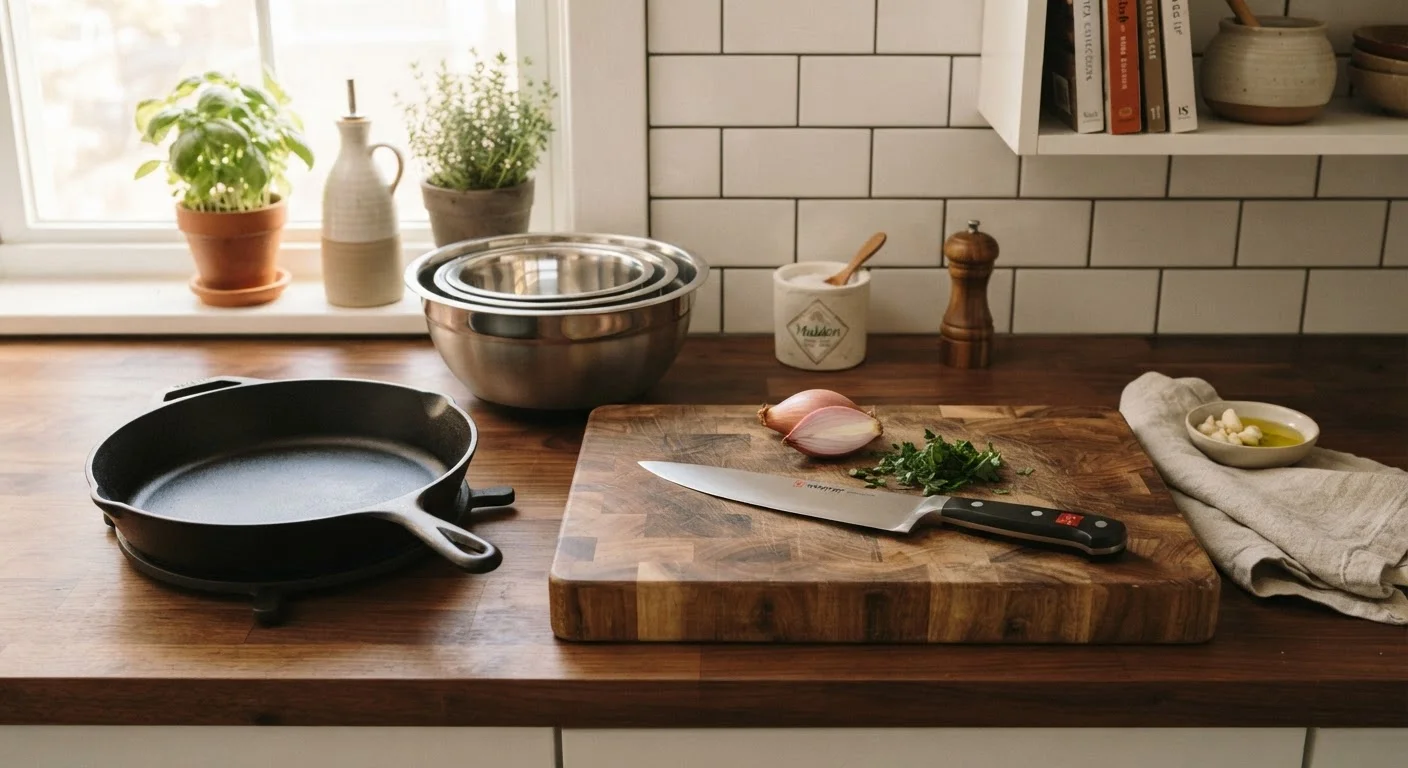
No tool in the kitchen gets more use than a well-balanced chef's knife. An 8-inch blade is long enough to handle most tasks - breaking down a chicken, slicing a watermelon, mincing garlic - without becoming unwieldy. High-carbon stainless steel holds an edge well and resists corrosion. Learn to hone it before each use and have it professionally sharpened once or twice a year, and it will serve you for decades. Everything else on this list becomes easier when your knife is sharp.
A sharp chef's knife is the most impactful upgrade any home cook can make.
A Large Wooden or Composite Cutting Board
Size matters here - cramped prep leads to accidents and inefficiency. A board measuring at least 12 by 18 inches gives you room to work without ingredients spilling onto the counter. End-grain wood is gentle on knife edges; composite boards are dishwasher-safe and low-maintenance. Either material works well. Avoid glass and ceramic boards, which dull blades rapidly. A non-slip mat underneath keeps the board stable during vigorous chopping.
A generously sized cutting board makes prep faster, safer, and far less frustrating.
A 10- or 12-Inch Cast Iron or Stainless Skillet
Between these two materials, you can handle virtually every stovetop task: searing, sautéing, pan sauces, shallow frying, and even baking cornbread or frittatas in the oven. Cast iron retains heat exceptionally well and improves with use over years of proper seasoning. Stainless steel heats more evenly on induction and gas, cleans easily, and won't react with acidic ingredients. If budget allows only one, a well-seasoned cast iron pan edges ahead for versatility.
Cast iron and stainless together cover virtually every cooking task you'll regularly face.
A Heavy-Bottomed Saucepan (3-4 Quart)
Soups, grains, sauces, blanching vegetables, boiling pasta in smaller batches - a 3- to 4-quart saucepan handles all of it. The key spec is a thick, heavy base that distributes heat evenly and prevents scorching. Tri-ply stainless construction performs consistently across all cooktop types. This is a daily-use item; if your current saucepan has hot spots or a warped bottom, upgrading here will noticeably improve results across dozens of recipes.
A thick-bottomed saucepan prevents scorching and anchors your everyday stovetop cooking.
An Instant-Read Thermometer
Cooking proteins to a safe internal temperature is a food safety fundamental, not just a quality concern. An instant-read thermometer removes all guesswork from poultry, pork, ground beef, and fish. Look for a model that reads in two to three seconds with a probe thin enough not to cause excessive juice loss. This tool pays for itself the first time it saves a roast from being overcooked - or, more importantly, confirms that chicken is fully safe to serve.
An instant-read thermometer is your most reliable food safety tool in the kitchen.
A Set of Mixing Bowls (Nesting, Three Sizes)
A nesting set of three bowls - small, medium, and large - covers marinating, mixing, tossing salads, preparing batters, and holding prepped ingredients. Stainless steel bowls are lightweight, durable, and don't retain odors. They also double as makeshift double-boilers for melting chocolate or tempering eggs. Having three sizes available means you always have the right volume for the task, which reduces the likelihood of overfilling and making a mess mid-recipe.
Nested mixing bowls in three sizes make prep organized and adaptable to any recipe.
A Sheet Pan (Half-Size, Rimmed)
The rimmed half-sheet pan - roughly 13 by 18 inches - is arguably the most useful piece of bakeware in a home kitchen. Roast vegetables, bake cookies, toast nuts, cook sheet-pan dinners, and catch drips from pies or casseroles. The rim is critical; it prevents rendered fat or juices from running off into the oven. Heavy-gauge aluminum heats evenly and won't warp under high temperatures. Two pans are even better, allowing you to cook in batches without waiting.
A heavy rimmed sheet pan is the most versatile piece of bakeware you can own.
Using These Tools Well
Owning good tools is only the starting point. Learning even one or two fundamental techniques - how to hold a knife correctly, how to preheat a skillet properly - multiplies what each tool can do for you. Our guide to the mise en place habit explains how professional cooks organize their workspace before cooking begins, and it's a practice that makes every tool here work harder with less stress.
Don't buy everything at once. Start with the chef's knife and a solid skillet. Cook with them regularly, learn their limitations, then add the next tool when a real need reveals itself. That's how kitchens get built well - one considered purchase at a time, not a single overwhelming shopping trip.
Maintain What You Own
Quality tools last a lifetime with basic care. Hand-wash and dry knives immediately after use rather than running them through the dishwasher, which degrades both the blade and the handle. Season cast iron after each wash to prevent rust. Store cutting boards upright so air can circulate. Consistent maintenance is the most cost-effective kitchen habit you can build.
This article is for informational purposes only. Always follow food safety guidelines - including safe internal cooking temperatures - recommended by public health authorities such as the USDA.