

Health & Wellness

Pantry Audit: Stocking a Kitchen That Supports Balanced Everyday Eating

Share
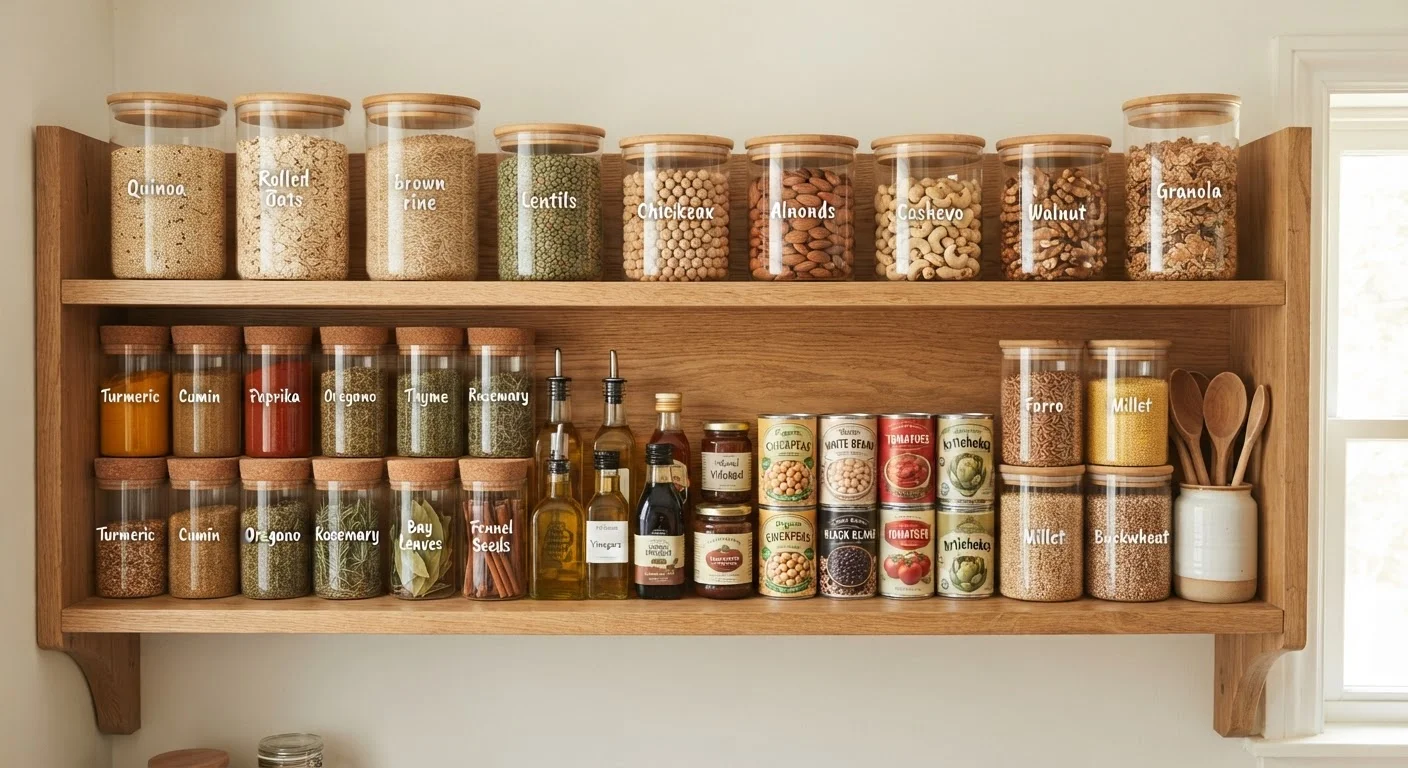
Neatly organized pantry shelves stocked with whole grains, canned goods, nuts, and dried herbs

Key Takeaways

A pantry audit reveals nutritional gaps before they show up in your eating habits.
Balanced stocking covers protein sources, whole grains, healthy fats, produce, and flavor builders.
Freezer and fridge inventory matter as much as shelf-stable pantry staples.
Regularly checking expiration dates and rotating stock reduces both waste and nutritional loss.
What you keep on hand directly shapes what you reach for at mealtimes.
20–45 min

Summary

28 items · 20–45 minutes

Why Auditing Your Pantry Is a Nutrition Strategy

Most eating decisions happen in the kitchen — not at the grocery store. What you find when you open a cabinet, pull open the freezer, or scan the fridge is what ends up on your plate. That's why a pantry audit isn't just an organizational exercise; it's one of the most practical nutrition steps you can take.

Research in behavioral nutrition consistently shows that food availability at home is one of the strongest predictors of dietary patterns. Simply put: if it's there, you're more likely to eat it. If it isn't, you'll reach for whatever is easiest — which may or may not support your goals.

This checklist helps you take honest stock of what's in your kitchen across three zones — pantry shelves, refrigerator, and freezer — and identify where nutritional gaps might be hiding. It's not about perfection or eliminating every treat. Think of it as a reset that puts your food environment back in alignment with how you actually want to eat. If you're just getting started with building better habits, the guide on starting to eat healthier offers a grounded starting point alongside this audit.

Protein Sources

Check for at least two types of canned or dried legumes (lentils, chickpeas, black beans, kidney beans) as versatile, shelf-stable protein sources. Must
Confirm you have a nut or seed option on hand (almonds, walnuts, sunflower seeds, pumpkin seeds) for snacking and meal additions. Must
Look for a nut or seed butter with minimal added ingredients — useful for quick protein additions to meals or snacks. Should
Check your freezer for frozen fish, poultry, or plant-based proteins that can anchor a meal on short notice. Should
Inventory eggs in the refrigerator — a reliable, affordable whole-food protein source. Must

Whole Grains & Complex Carbohydrates

Identify at least one intact whole grain (brown rice, quinoa, farro, oats, barley) rather than relying solely on refined grain products. Must
Check that any bread, pasta, or crackers you stock list a whole grain as the first ingredient on the label. Should
Confirm you have rolled or steel-cut oats available — one of the most fiber-dense, accessible breakfast staples. Should
Look for at least one starchy vegetable in the freezer (frozen sweet potato, peas, or corn) as a quick carbohydrate source. Nice to have

Vegetables & Fruit

Audit your canned vegetable supply — look for options with no added salt, or low-sodium varieties (diced tomatoes, tomato paste, artichokes). Must
Check your freezer for a variety of frozen vegetables; frozen produce is nutritionally comparable to fresh and significantly reduces spoilage. Must
Confirm you have fresh produce in the fridge and note which items are approaching the end of their shelf life to prioritize first. Must
Look for dried or canned fruit without added sugar (raisins, apricots, unsweetened applesauce) as a pantry backup for fresh fruit. Nice to have

Healthy Fats & Oils

Check that you have a general-purpose cooking oil suitable for higher-heat cooking (such as avocado oil or light olive oil). Must
Confirm you have an extra-virgin olive oil for dressings, dips, and lower-heat applications where flavor matters. Should
Note whether any oils smell rancid — oxidized oil loses beneficial properties and should be replaced. Must
Look for whole-food fat sources like whole nuts, seeds, or canned fatty fish (sardines, salmon) as alternatives to processed fat sources. Should

Flavor Builders & Pantry Essentials

Inventory dried herbs and spices; discard any that are more than one to two years old, as they lose potency and won't deliver flavor. Should
Check for a low-sodium stock or broth (vegetable, chicken, or beef) to use as a cooking base for grains, soups, and sauces. Should
Confirm you have at least one acid on hand — vinegar (apple cider, red wine, or balsamic) or citrus — for balancing flavors in cooked dishes. Nice to have
Look for a fermented condiment (such as miso paste or kimchi in the fridge) to add depth and gut-health-supporting variety to meals. Nice to have

Expiration, Storage & Safety Check

Check every canned good for bulging lids, dents along the seam, or rust — discard any compromised cans regardless of expiration date. Must
Review expiration dates on all dry goods (grains, legumes, nuts, seeds) and rotate older items to the front of shelves. Must
Confirm that bulk dry goods are stored in airtight containers to prevent moisture, pests, and premature spoilage. Should
Check freezer items for significant ice crystals or freezer burn, which degrade texture and nutritional quality over time. Should
Verify that your refrigerator is set to 40°F (4°C) or below and your freezer to 0°F (−18°C) to maintain food safety standards. Must

What to Do With Your Audit Results

Once you've worked through the checklist, you'll likely find a few common patterns: duplicates in some categories, complete blanks in others, and items that have quietly expired or lost nutritional value.

Don't Discard Useful Foods Prematurely

"Best by" dates on dry goods like grains, legumes, and canned foods generally reflect peak quality, not safety. Many shelf-stable items remain safe to eat well beyond the printed date if stored correctly. Use smell, texture, and appearance as practical guides, and reserve discards for items that are visibly compromised. When in doubt about a specific food's safety, consult USDA FoodKeeper resources for evidence-based storage guidance.

Use your findings to build a targeted shopping list — not a complete overhaul. If your protein sources are limited to canned tuna and peanut butter, that's a gap worth addressing. If you have five types of crackers but no whole grain options, that's an easy swap. The goal is breadth and balance, not volume.

Consider pairing this audit with your weekly grocery planning. The weekly grocery list audit checklist can help you carry your findings directly into better shopping decisions. And if you want to understand what balanced eating looks like at the meal level, what a balanced plate actually looks like translates pantry contents into practical plate composition.

For those who want to extend their stocked ingredients into flexible everyday cooking, see our guide to pantry staples that make last-minute meals actually possible.

Required

Pen and notepad (or notes app)

Record gaps, items to replenish, and anything to discard as you move through each pantry zone.

Required

Refrigerator and freezer thermometer

Verify that storage temperatures meet food safety standards during your audit.

Optional

Airtight storage containers

Transfer bulk dry goods like grains, legumes, and nuts to prevent moisture exposure and extend shelf life.

Optional

Masking tape and marker

Label homemade or transferred items with contents and the date to simplify rotation and reduce waste.

This article is for general informational and educational purposes only and is not a substitute for personalized nutrition or medical advice. Consult a qualified healthcare professional or registered dietitian for guidance specific to your health needs.

Health & Wellness Editorial Team is the collective byline for our editorial team and contributor network. Articles published under this byline or an editorial pen name are researched, written, and reviewed according to our editorial standards for clarity, consistency, and independence before publication.

View all articles by Health & Wellness Editorial Team →
Disclaimer: The content on this site is for informational purposes only and is not a substitute for professional advice. Always consult a qualified professional for guidance specific to your situation.