

Key Takeaways
Option A
Day Hiking
The accessible, low-commitment way to explore trails.
Best for: Hikers who want a full outdoor experience without overnight gear or permit complexity.
Option B
Backpacking
The immersive, self-sufficient overnight trail experience.
Best for: Adventurers ready to carry everything they need and sleep under the stars in the backcountry.
If you're new to trails or have only a single day available
Day Hiking
A light pack and no overnight commitment lets you build trail skills and confidence without the added complexity of backcountry camping.
If you want to reach remote wilderness areas unreachable in a single day
Backpacking
Backpacking opens terrain miles beyond any trailhead, with the reward of genuine solitude and immersive multi-day experience.
If you're hiking with children or mixed-ability groups
Day Hiking
Controllable distances, no overnight logistics, and easy turnaround points make day hikes far more adaptable for varied fitness levels.
If building toward a longer thru-hike or expedition
Backpacking
Overnight trips build the navigation, camping, and resupply skills that multi-day routes genuinely require.
If you want a memorable but low-stress full weekend outdoors
Day Hiking
Back-to-back day hikes from a car camping base offer variety and exploration without the weight of a full overnight kit.
What Actually Separates Day Hiking from Backpacking
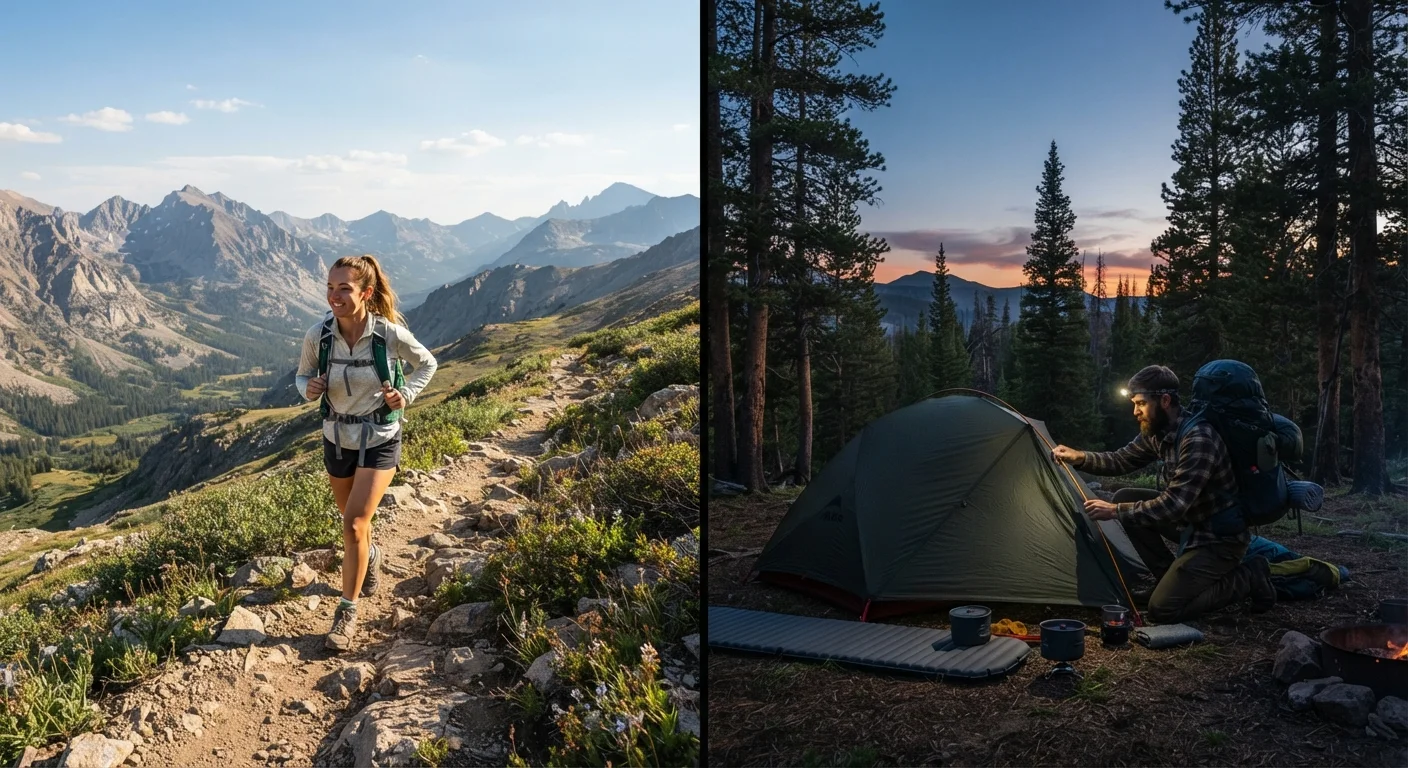
At their core, day hiking and backpacking share the same foundation — trail, boots, and terrain. What separates them is self-sufficiency. A day hiker carries what they need for several hours; a backpacker carries everything required to survive and sleep in the backcountry, sometimes for days at a stretch.
Day hiking typically means leaving from a trailhead, covering a set distance or destination, and returning to a vehicle or developed area before dark. Packs are light — usually 10 to 20 pounds at most — and gear needs are straightforward: water, food, navigation tools, weather layers, and a basic first-aid kit. Our trail-ready safety checklist covers the essentials that apply regardless of trip length.
Backpacking adds a shelter system, sleeping gear, a stove and cooking setup, and enough food and water treatment capacity for multiple days. Pack weight typically starts around 25 to 35 pounds for a well-outfitted beginner and can be reduced significantly with experience and lighter gear choices. The physical and logistical demands jump considerably the moment you plan to sleep on the trail.
| Criterion | Day Hiking | Backpacking |
|---|---|---|
| Typical pack weight | 10–20 lbs | 25–45 lbs |
| Overnight gear required | No | Yes (tent, sleep system, stove) |
| Permit complexity | Low to moderate | Moderate to high |
| Access to remote terrain | Limited by daylight | Extensive |
| Water treatment needed | Carry-in usually sufficient | Essential — filter or purify |
| Planning lead time | Days to a week | Weeks to months for popular routes |
| Fitness requirement | Scales with trail difficulty | Higher baseline recommended |
| Beginner accessibility | High | Moderate — learning curve applies |
Planning Complexity and Permit Requirements
One of the biggest practical differences between these two formats is how much advance planning they demand. Most day hikes on established trails require nothing more than checking trail conditions, verifying parking, and confirming seasonal access. Some high-traffic areas — particularly in National Parks — do require timed entry or day-use reservations, so it's worth researching your specific destination. Understanding the distinction between land management types matters here too; our piece on National Park vs. National Forest explains how rules and access differ between federal land designations.
Backpacking typically introduces a meaningful permit layer. Wilderness permits — often required for overnight stays in designated wilderness areas — may be limited by quota and can require applications months in advance for popular routes. Campsites may be assigned, fire restrictions may apply, and Leave No Trace practices around waste and food storage (bear canisters, for example) may be mandatory rather than optional.
Conditions also shift by season and region. Seasonal trail conditions across the US vary enormously — snowpack, river crossings, heat exposure, and wildlife activity all affect when a given route is safe and legal to attempt.
57M+
Americans who hike annually
The Outdoor Industry Association's participation reports consistently place hiking among the most popular outdoor activities in the US.
~30%
Of hikers who have taken an overnight trip
Participation surveys suggest a meaningful minority of general hikers have experience with at least one overnight backpacking trip.
10 lbs
Typical difference in pack weight
A baseline overnight kit — shelter, sleep system, cooking — commonly adds 10 to 15 pounds compared to a well-packed daypack for the same trail.
Gear, Fitness, and What to Realistically Expect
Day hiking has a low gear barrier. A well-fitted daypack, supportive footwear, layered clothing, a water filter or sufficient carry capacity, navigation tools, and ten trail essentials are enough for the vast majority of routes. Physical demands scale with the trail — a 3-mile nature walk and a 14-mile ridge traverse are both day hikes, but they require very different fitness levels.
Backpacking demands more from both your body and your wallet. Carrying 25-plus pounds over varied terrain for multiple hours engages muscle groups that flat-trail walking doesn't prepare. Hikers new to overnight trips often underestimate cumulative fatigue over back-to-back days. Starting with shorter distances and lower elevation gain is sound practice. Our first overnight backpacking primer walks through realistic expectations for a first backcountry night.
Water is also a more complex challenge on multi-day trips. Day hikers can usually carry what they need; backpackers must treat water from natural sources. Understanding water treatment methods — filters, purifiers, chemical treatment, and UV devices — is a genuine skill worth developing before relying on it in the field.
At altitude, both formats carry health risks. Trails above 8,000 feet can bring on altitude-related symptoms regardless of fitness level. See our overview of altitude sickness on US trails for what to watch for and when descending becomes the right call.
Going Solo Changes the Calculus
Both day hiking and backpacking carry different risk profiles when done alone. Solo hikers have no partner to assist in an emergency, which raises the stakes for navigation errors, injuries, or sudden weather changes. If you're considering either format solo, building a reliable communication plan — including a personal locator beacon (PLB) for remote trips — is a serious consideration rather than an optional upgrade.
Making the Call for Your Weekend
The honest question isn't which format is better — it's which one suits where you are right now in terms of fitness, experience, available time, and appetite for complexity. Day hiking is genuinely rewarding and never a consolation prize; some of the most dramatic scenery in the US is accessible on well-maintained day trails. Backpacking simply adds a dimension of immersion and self-reliance that no day hike can replicate.
If you're weighing a broader weekend structure — whether to base from a car campsite or push deeper into the backcountry — our comparison of car camping vs. dispersed camping is a useful next step. And if you're considering either format alone, the trade-offs of solo trail travel offers a balanced look at the freedoms and responsibilities involved.
Whatever you choose, solid pre-trip planning is non-negotiable. Check trail-specific regulations and conditions through official land management agency websites before departing, and always let someone know your route and expected return.