

Key Takeaways
Option A
Car Camping (Developed Campgrounds)
The structured, amenity-supported baseline for camping.
Best for: Families, first-timers, and anyone who wants a reliable setup with restrooms, fire rings, and a reserved spot.
Option B
Dispersed Camping (Backcountry)
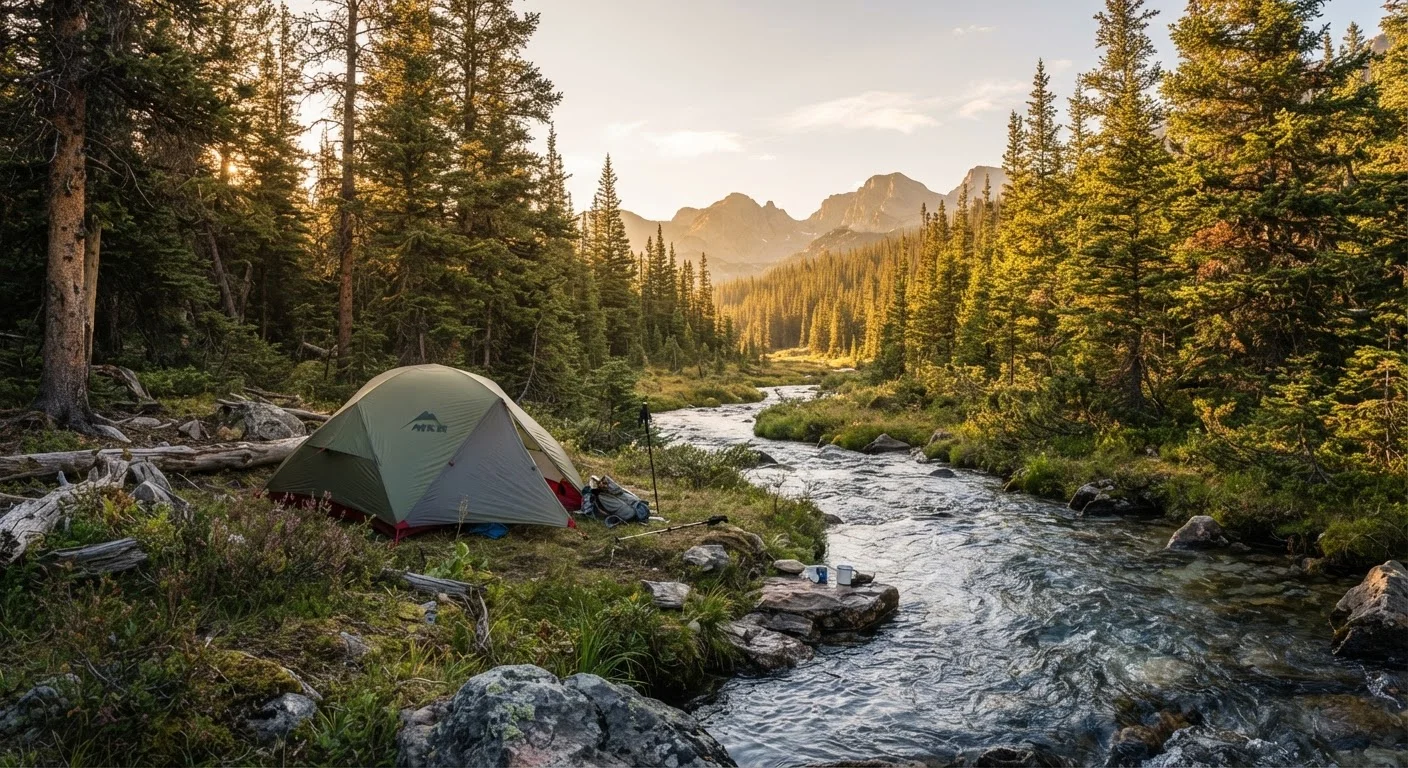
The self-sufficient, leave-no-trace wilderness alternative.
Best for: Experienced campers seeking solitude, flexibility, and access to areas far beyond the trailhead parking lot.
If you're planning a first camping trip or bringing young children
Car Camping (Developed Campgrounds)
Established sites reduce logistics and provide safety nets like restrooms and nearby camp hosts. See our guide on camping with kids for family-specific planning tips.
If you want maximum solitude and don't mind carrying everything you need
Dispersed Camping (Backcountry)
Dispersed camping opens up vast stretches of public land with no reservation queues and far fewer neighbors — provided you're self-sufficient and prepared.
If fire safety, waste disposal, or navigation are uncertain factors for your group
Car Camping (Developed Campgrounds)
Developed campgrounds enforce established rules and provide infrastructure that removes much of the judgment-call burden from inexperienced campers.
If you're transitioning toward backpacking and want to practice wilderness skills
Dispersed Camping (Backcountry)
Dispersed car camping — pulling off a forest road and setting up without facilities — is an effective bridge before committing to a full backpacking trip.
What Sets These Two Approaches Apart
Car camping typically means driving to a designated campsite within a managed campground — a spot reserved through a recreation agency, marked with a number, and equipped with some combination of a fire ring, picnic table, bear box, and nearby restrooms. The hosting agency (a National Forest, state park, or local authority) sets the rules, maintains the infrastructure, and usually staffs a camp host.
Dispersed camping, by contrast, means camping outside any designated campground on eligible public land — most commonly National Forest or Bureau of Land Management (BLM) territory. There is no reserved site, no fire ring, and no trash can. You choose your own location within the rules of that specific land management unit, and you are responsible for every aspect of your impact on that land.
Both approaches are legal and widely practiced. The difference is in what each assumes about the camper's preparedness, knowledge, and self-sufficiency. For context on how the type of public land affects your options, see how National Parks and National Forests differ for visitors.
| Criterion | Car Camping | Dispersed Camping |
|---|---|---|
| Site type | Designated, numbered campsite | Self-selected location on public land |
| Reservation required | Often yes, especially peak season | Rarely; some areas now require permits |
| Restrooms | Usually provided (flush or vault) | None — cat holes or pack-out required |
| Trash disposal | On-site bins typically available | Pack everything out |
| Potable water | Available at many campgrounds | Must filter or treat all water sources |
| Fire ring | Provided at most sites | Not provided; fires governed by local rules |
| Stay limits | Set by campground (typically 14 days) | Set by land unit (commonly 14 days per area) |
| Solitude | Limited — neighbors are close | High — often completely private |
| Cost | Nightly fee (varies widely by site) | Usually free; some permit fees apply |
Rules, Permits, and Stay Limits
Developed campgrounds operate under a clear rulebook: check-in and check-out times, quiet hours, vehicle limits per site, and fire policies that are enforced by staff. Reservations — often required at popular sites — can be made weeks or months in advance through federal or state recreation portals.
Dispersed camping rules are less uniform and require more homework. Most National Forests and BLM districts allow dispersed camping without a permit, but they impose stay limits (commonly 14 days in one location) and require you to camp a minimum distance from water sources, trails, and roads — often 100 to 200 feet, though the exact figure varies. Some high-use areas have adopted permit systems or designated dispersed zones to manage impact. Always confirm current rules with the managing ranger district before arriving, as fire restrictions can change with little notice and vary dramatically by region and season.
245M+
Acres of BLM land open to dispersed camping
The Bureau of Land Management oversees approximately 245 million acres of public land across the western United States, much of which permits dispersed camping under standard regulations.
14 days
Common dispersed camping stay limit
Most National Forest and BLM districts impose a 14-day stay limit at any one location before requiring campers to move at least a specified distance away.
200 ft
Minimum distance from water sources
Leave No Trace guidelines recommend camping, cooking, and disposing of waste at least 200 feet (roughly 70 adult paces) from lakes, streams, and other water sources.
Waste, Water, and Leave No Trace
In a developed campground, trash disposal, restroom access, and often potable water are handled for you. At a dispersed site, none of that exists. Campers must pack out all trash, use a portable trowel to dig cat holes for human waste at least 200 feet from any water source, and either filter or treat all drinking water from natural sources. A quality water filter, purification tablets, or a UV treatment device is non-negotiable.
The Leave No Trace (LNT) principles apply everywhere outdoors, but dispersed camping is where they carry the most direct environmental consequence. Choosing a durable surface — rock, gravel, or dry grass — rather than setting up camp on fragile vegetation can make a measurable difference over time. Campfires, when permitted, should be kept small and built only in already-disturbed areas; pack a camp stove as a reliable alternative.
Fire Restrictions Change Frequently
Dispersed campfire rules are not static. Many western regions impose Stage 1 or Stage 2 fire restrictions during dry conditions, banning open fires entirely regardless of what the general land-use rules say. Always check with the local ranger district and look up current fire restrictions through the relevant land management agency's website before your trip. A camp stove is a reliable backup for any season.
Safety, Navigation, and Emergency Preparedness
A developed campground sits within a managed zone where other people, cell signal, and sometimes a camp host are nearby. Dispersed camping often means genuine remoteness — no neighbors within earshot, unreliable cell coverage, and no one to flag down in an emergency. That changes the safety calculus significantly.
Before dispersed camping, ensure your group can navigate with a topographic map and compass (or a dedicated GPS device), has a plan for medical emergencies, and carries a personal locator beacon (PLB) or satellite communicator on trips into truly isolated terrain. Informing a trusted contact of your location and expected return is a basic but critical step.
If dispersed camping feels like a gateway to longer wilderness nights, our primer on first overnight backpacking trips covers the planning, packing, and safety considerations that carry over directly from backcountry car camping into foot-powered expeditions. You might also find it useful to first weigh day hiking versus backpacking to clarify what level of commitment fits your current skills and gear.