

Key Takeaways
Why Nutrition Needs Change Over a Lifetime
The human body is never nutritionally static. From the rapid cell division of early childhood to the muscle-preservation challenges of older adulthood, our metabolic demands, hormonal environment, and digestive efficiency all shift in ways that make a one-size-fits-all diet unrealistic. Understanding why these shifts happen helps you make smarter food choices at each phase of life - and support the people around you who are in different phases than you are.
Nutritional needs are primarily driven by four factors: growth rate, hormonal activity, body composition changes, and changes in how efficiently the gut absorbs nutrients. When any of these change - and they all do, repeatedly - so do the ideal amounts of calories, protein, vitamins, and minerals a person should be consuming. For a broader grounding in the science behind these concepts, see our introduction to nutrition science.
~90%
Peak bone mass acquired by age 18
According to the National Institutes of Health, most bone density is laid down during childhood and adolescence, underscoring the critical role of calcium and vitamin D early in life.
~1 in 5
Adolescent girls with iron-deficiency anemia
The CDC has reported that iron deficiency is among the most common nutritional deficiencies in teenage females, largely driven by menstrual blood loss and insufficient dietary iron.
3-8%
Muscle mass lost per decade after age 30
Research published in the Journal of Gerontology estimates adults lose roughly 3-8% of muscle mass per decade beginning in their 30s, with losses accelerating after 60.
Childhood: Building the Foundation (Ages 2-12)
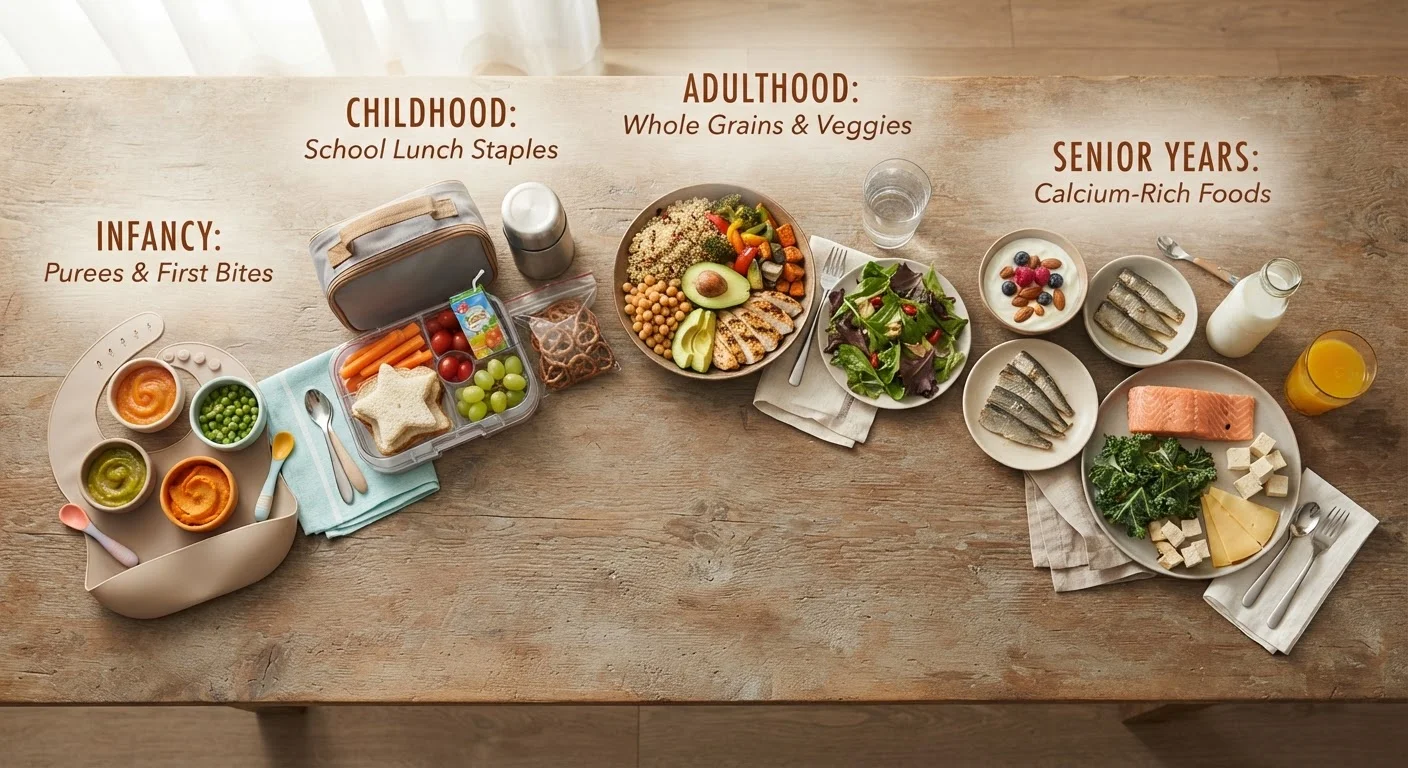
Early childhood is a period of intense physical and neurological development. Energy needs per pound of body weight are higher than at almost any other stage, but total daily calories are still modest because children are small. What matters most is nutrient density - getting enough vitamins, minerals, and protein without overloading on empty calories.
- Calcium and vitamin D are critical for bone mineralization, which peaks in childhood and adolescence. Dairy, fortified plant milks, and leafy greens are key sources.
- Iron supports cognitive development and is easily under-consumed, especially in children who eat little red meat. Beans, lentils, and iron-fortified cereals are practical alternatives.
- Healthy fats - particularly omega-3 fatty acids - support brain development throughout childhood.
Picky eating is developmentally normal but can create genuine nutritional gaps. Repeated, low-pressure exposure to a variety of foods - rather than forcing or restricting - is the approach most supported by pediatric nutrition research.
Make Nutrient Density the Goal for Kids
Rather than tracking grams and milligrams, focus on consistently offering children a variety of vegetables, fruits, whole grains, protein foods, and dairy or fortified alternatives. A varied diet is more likely to fill nutritional gaps than any single "superfood." Small, consistent food environment changes - like keeping fruit visible on the counter - tend to outperform strict dietary rules.
Adolescence: Fueling a Growth Surge (Ages 13-18)
Puberty triggers the fastest growth outside of infancy. Adolescents may need significantly more calories, calcium, iron, and zinc than they did just a few years earlier - and more than many adults. This is also the life stage where lifelong eating habits begin to solidify, making it an important window for building healthy patterns.
Key considerations for teens include:
- Bone density accumulation: Up to 90% of peak bone mass is acquired by age 18. Adequate calcium and vitamin D during this window has long-term implications for fracture risk decades later.
- Iron needs diverge by sex: Adolescent females have substantially higher iron requirements than males due to menstruation. Iron-deficiency anemia is among the most common nutritional deficiencies in teenage girls.
- Protein for muscle development: Teens who are physically active have elevated protein needs. Distributing protein across meals - rather than concentrating it in one - supports muscle protein synthesis more effectively.
Encourage teens to eat breakfast with a protein source - eggs, Greek yogurt, or nut butter - rather than skipping it. Breakfast consumption is consistently linked to better concentration and lower likelihood of overcompensating with high-calorie foods later in the day.
Adolescents who skip breakfast tend to have lower overall diet quality and more difficulty meeting daily nutrient targets, according to multiple dietary survey studies.
For adults over 50, consider asking your doctor to check vitamin B12 and vitamin D levels at your next physical. Deficiencies in both are common, often symptom-free for years, and straightforwardly addressable once identified.
Both B12 malabsorption and vitamin D insufficiency become more prevalent with age and are frequently missed without targeted testing, yet both carry meaningful consequences for neurological and bone health.
Social and emotional factors also shape teen eating in ways that pure nutrition science doesn't capture. Meal skipping, irregular schedules, and the influence of peers and social media on food choices are all real-world challenges. Framing food as fuel rather than a source of guilt or reward tends to support healthier long-term relationships with eating.
Early and Middle Adulthood: Maintaining and Protecting (Ages 19-59)
The nutritional theme of early and middle adulthood shifts from building to maintaining. Bone density, muscle mass, and metabolic rate all tend to gradually decline beginning in the late 20s and 30s, making intentional food choices increasingly important even when the body still feels resilient.
Adults in this range often face logistical eating challenges - busy schedules, work stress, changing family demands - that make convenience foods more appealing. The goal isn't perfection; it's building a sustainable baseline. Our guide to getting started with healthier eating offers practical, non-overwhelming entry points.
Watch for Nutrient Gaps During Pregnancy Planning
Adults who are pregnant or planning to become pregnant have substantially different nutritional needs - including folate, iron, iodine, and choline - that go beyond general adult recommendations. These needs often cannot be met by diet alone. Always work with an OB-GYN or registered dietitian to establish an appropriate nutrition plan before and during pregnancy.
Folate is particularly important for people of reproductive age who may become pregnant, as adequate folate in early pregnancy is associated with reduced neural tube defect risk. This is one of the few cases where a supplement - folic acid - is widely recommended before dietary sources alone can be reliably sufficient.
By the 40s and 50s, metabolic rate tends to slow, meaning that total calorie needs may decrease even as micronutrient needs remain the same or increase. Emphasizing vegetables, legumes, whole grains, and lean proteins helps maintain nutrient density while managing energy balance. Budget-conscious eaters can find this balance accessible - see our guide to nutritious eating on a budget.
Older Adulthood: Shifting Priorities After 60
Older adulthood brings a distinctive nutritional paradox: fewer calories needed, but higher needs for several key nutrients. Lean muscle mass (sarcopenia) declines with age, appetite often decreases, and the gut becomes less efficient at absorbing certain vitamins and minerals - particularly vitamin B12 and vitamin D.
“Older adults often need more protein, not less, to maintain muscle mass and functional independence - yet they're the group most likely to be eating protein-poor meals.”
— Nancy Rodriguez, Professor of Nutritional Sciences, University of Connecticut
- Protein: Current research suggests older adults may benefit from higher protein intake relative to body weight than younger adults to counteract muscle loss. Spreading protein intake across all meals - not just dinner - appears to be especially beneficial.
- Vitamin B12: Gastric acid production often declines with age, impairing the absorption of B12 from food. Fortified foods or a supplement may be warranted - a conversation to have with a healthcare provider.
- Calcium and vitamin D: Bone loss accelerates after menopause and in older men as well. Both nutrients remain essential, though excessive supplementation beyond recommended amounts carries its own risks and should be guided by a clinician.
- Hydration: The sense of thirst diminishes with age, making dehydration a quiet but significant risk. Consistent fluid intake - not just when thirsty - becomes a deliberate habit.
For a detailed reference on vitamins and minerals relevant to this stage, our micronutrient quick reference guide covers key nutrients, food sources, and deficiency signs in plain language.
This article is for general informational and educational purposes only and does not constitute medical or dietary advice. Individual nutritional needs vary based on health status, medications, and other factors. Consult a qualified healthcare provider or registered dietitian for guidance specific to your circumstances.
Nutrients That Matter at Every Stage
While specific needs shift with age, a handful of nutrients deserve attention across the entire lifespan. These are consistently under-consumed in the American diet and carry outsized importance regardless of age group:
- Fiber
- Supports gut health, blood sugar regulation, and cardiovascular function. Most Americans fall well short of recommended amounts. Beans, vegetables, fruits, and whole grains are the most reliable sources.
- Potassium
- Important for blood pressure regulation and muscle function. Found in bananas, potatoes, leafy greens, and legumes.
- Magnesium
- Involved in hundreds of enzymatic reactions including energy production and bone health. Nuts, seeds, whole grains, and dark leafy greens are good sources.
- Healthy fats (omega-3s)
- Associated with brain, heart, and inflammatory health across the lifespan. Fatty fish, walnuts, and flaxseed are primary sources.
Rather than chasing individual nutrients in isolation, building an eating pattern rich in whole, minimally processed foods tends to deliver a broad spectrum of these essentials naturally. For practical meal-planning tools and pantry guidance, explore our pantry audit checklist and the complete guide to healthy eating patterns.