

| Number of essential vitamins | 13 (National Institutes of Health, Office of Dietary Supplements) |
| Number of essential minerals | ~20 (16 confirmed essential) (National Academies of Sciences, Engineering, and Medicine) |
| Most common global deficiency | Iron deficiency anemia (World Health Organization) |
| Vitamin D deficiency prevalence (U.S. adults) | ~35% have insufficient levels (NHANES data, CDC) |
| Folate importance in pregnancy | Critical for neural tube formation in first 28 days (CDC, Folic Acid Recommendations) |
| Potassium average U.S. intake vs. adequate intake | Most adults fall below the 2,600-3,400 mg/day target (Dietary Guidelines for Americans, 2020-2025) |
What Micronutrients Are and Why They Matter
Macronutrients - protein, carbohydrates, and fat - get most of the nutrition headlines, but micronutrients are equally essential. Vitamins and minerals are required in smaller quantities, yet they drive hundreds of physiological processes: energy production, immune defense, bone maintenance, nerve signaling, and DNA repair, among others.
Unlike macronutrients, micronutrients supply no calories. Their value lies in enabling biochemical reactions that keep your body functioning normally. Persistent shortfalls, even mild ones, can impair health in ways that are easy to overlook until deficiency becomes clinically significant.
If you're new to thinking about what you eat, the no-jargon nutrition starting point provides helpful context before diving into specifics. And for a deeper look at how nutrient needs shift across your lifetime, see our guide on nutrition across every life stage.
Micronutrient
Vitamins and minerals required by the body in small but essential amounts. Unlike macronutrients, they provide no calories but are critical for normal physiological function.
Fat-soluble vitamin
Vitamins A, D, E, and K, which dissolve in fat and are stored in body tissues. Because they accumulate, excessive intake from supplements can reach harmful levels over time.
Water-soluble vitamin
Vitamins C and the eight B vitamins, which dissolve in water and are generally not stored in large quantities. Regular dietary intake is needed to maintain adequate levels.
Trace mineral
A mineral required by the body in very small amounts - measured in micrograms or low milligrams - but still essential for health. Examples include iron, zinc, iodine, and selenium.
Recommended Dietary Allowance (RDA)
The average daily intake level sufficient to meet the nutrient requirements of nearly all healthy individuals in a specific life stage and sex group, established by the National Academies of Sciences.
Deficiency
A state in which the body lacks sufficient amounts of a specific nutrient to support normal function, which can lead to characteristic health symptoms or conditions over time.
Key Vitamins: Functions, Sources, and Deficiency Signs
The table below summarizes the vitamins most relevant to everyday adult health. Fat-soluble vitamins (A, D, E, K) are stored in body tissue; water-soluble vitamins (C and the B vitamins) are not stored in significant amounts and need regular replenishment through food.
| Number of essential vitamins | 13 (National Institutes of Health, Office of Dietary Supplements) |
| Number of essential minerals | ~20 (16 confirmed essential) (National Academies of Sciences, Engineering, and Medicine) |
| Most common global deficiency | Iron deficiency anemia (World Health Organization) |
| Vitamin D deficiency prevalence (U.S. adults) | ~35% have insufficient levels (NHANES data, CDC) |
| Folate importance in pregnancy | Critical for neural tube formation in first 28 days (CDC, Folic Acid Recommendations) |
| Potassium average U.S. intake vs. adequate intake | Most adults fall below the 2,600-3,400 mg/day target (Dietary Guidelines for Americans, 2020-2025) |
Fat-Soluble Vitamins
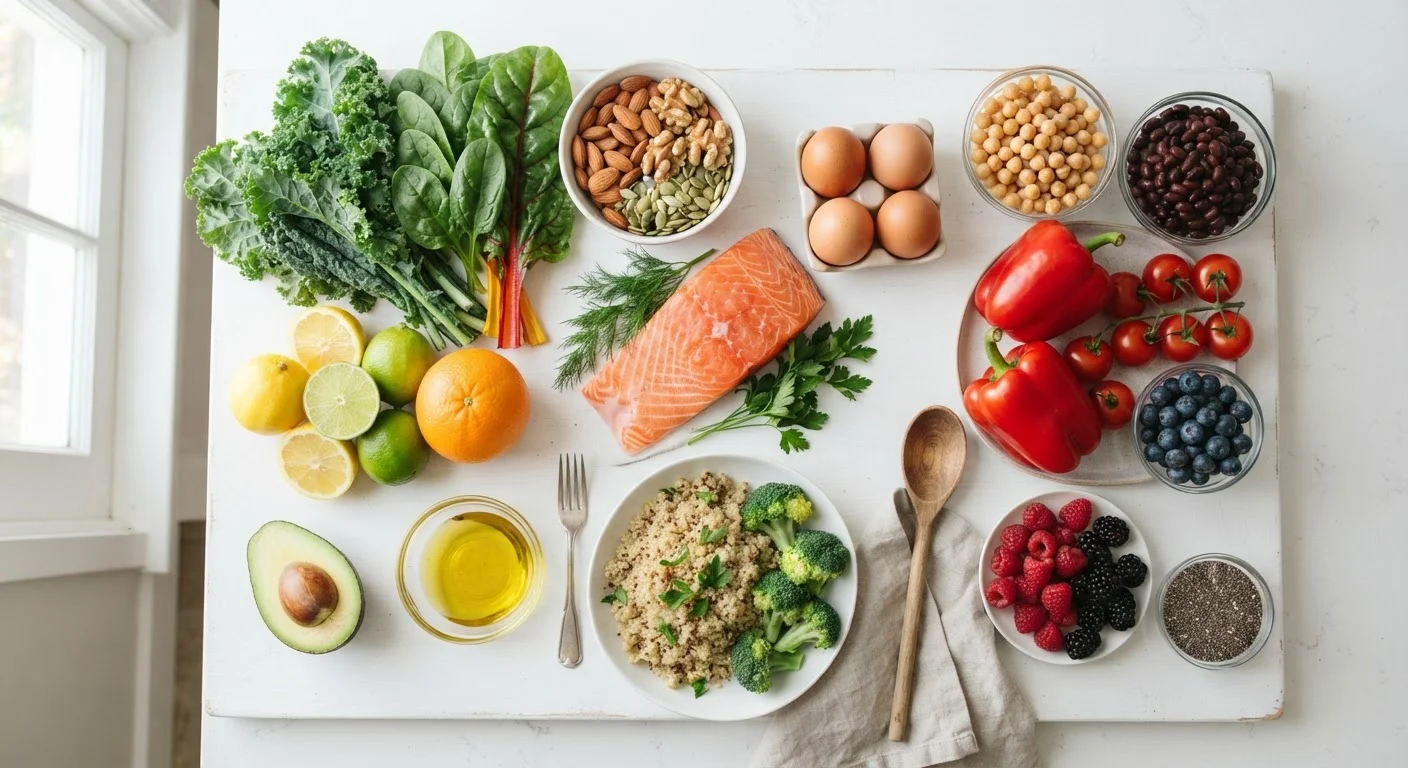
- Vitamin A: Supports vision, immune function, and cell growth. Found in liver, dairy, eggs, and orange-yellow vegetables. Deficiency can cause night blindness and increased infection susceptibility.
- Vitamin D: Regulates calcium absorption and supports bone health and immune function. Synthesized by skin in sunlight; dietary sources include fatty fish, fortified dairy, and egg yolks. Deficiency is common in northern latitudes and contributes to weakened bones.
- Vitamin E: Acts as an antioxidant protecting cell membranes. Found in nuts, seeds, and vegetable oils. Severe deficiency is rare in healthy adults but can impair nerve function.
- Vitamin K: Essential for blood clotting and bone metabolism. Leafy greens (kale, spinach) are primary sources. People on certain blood-thinning medications should discuss intake with their healthcare provider.
Water-Soluble Vitamins
- Vitamin C: Collagen synthesis, antioxidant activity, and immune support. Citrus fruits, bell peppers, and strawberries are rich sources. Classic deficiency produces scurvy - rare today but still seen in severely restricted diets.
- B Vitamins (B1, B2, B3, B5, B6, B7, B9, B12): Collectively support energy metabolism and nervous system health. B12 and folate (B9) are especially important - B12 is found almost exclusively in animal products, making supplementation worth discussing with a provider for those following a vegan diet. Folate is critical before and during pregnancy for neural tube development.
Keep in mind that what a nutrition label shows and what your body actually absorbs can differ significantly. The guide to nutrient bioavailability explains why food form and meal composition matter.
Key Minerals: Functions, Sources, and Deficiency Signs
Minerals are inorganic elements that support structural roles - such as building bone - and regulatory functions like fluid balance and muscle contraction. They fall into two broad categories: major minerals (needed in larger amounts) and trace minerals (required in smaller quantities but still essential).
35%
U.S. adults with insufficient vitamin D
National Health and Nutrition Examination Survey data compiled by the CDC estimates roughly one in three American adults has low vitamin D levels.
~800 mg
Average daily calcium intake (U.S. adults)
According to the Dietary Guidelines for Americans, most adults fall short of the 1,000-1,200 mg daily calcium recommendation.
2 billion
People affected by iron deficiency worldwide
The World Health Organization identifies iron deficiency as the most prevalent nutritional disorder globally, particularly affecting women and children.
Major Minerals
- Calcium: Primary structural component of bones and teeth; also involved in muscle contraction and nerve transmission. Dairy products, fortified plant milks, tofu, and leafy greens are good sources. Low intake over time raises the risk of osteoporosis.
- Magnesium: Involved in over 300 enzyme reactions, including energy production and blood pressure regulation. Nuts, seeds, whole grains, and dark leafy greens provide magnesium. Deficiency has been linked to muscle cramps, fatigue, and elevated blood pressure.
- Potassium: Regulates fluid balance and heart rhythm. Bananas, potatoes, beans, and dairy are reliable sources. Most Americans consume less than the recommended amount.
Trace Minerals
- Iron: Transports oxygen in the blood via hemoglobin. Red meat, legumes, tofu, and fortified cereals are sources. Iron-deficiency anemia is one of the most common nutritional deficiencies worldwide, particularly in women of reproductive age.
- Zinc: Supports immune function, wound healing, and taste perception. Oysters, meat, beans, and pumpkin seeds are high in zinc. Deficiency can impair immune response and slow wound healing.
- Iodine: Required for thyroid hormone production. Iodized salt and seafood are the primary dietary sources in the U.S.
- Selenium: Antioxidant functions and thyroid metabolism. Brazil nuts (even one or two per day can meet needs), fish, and eggs are good sources.
For an expanded look at trace elements and additional detail on each nutrient, the plain-language micronutrient reference covers the full landscape. You can also learn how to read a nutrition label accurately with our Nutrition Facts panel guide.
Supplements Don't Replace a Varied Diet
While supplements can help address specific shortfalls identified by a healthcare provider, they are not a substitute for the range of nutrients - and fiber, phytochemicals, and other compounds - found in whole foods. Most healthy adults who eat a varied diet meet their micronutrient needs through food alone. If you suspect a deficiency, a blood test ordered by a clinician is the most reliable way to confirm it before starting any supplement.
This article is for general informational and educational purposes only and is not a substitute for professional medical or dietary advice. Consult a qualified healthcare provider before making changes to your diet or taking supplements, especially if you have an existing health condition or are pregnant.