

Key Takeaways
Why Budget Eating and Good Nutrition Aren't at Odds
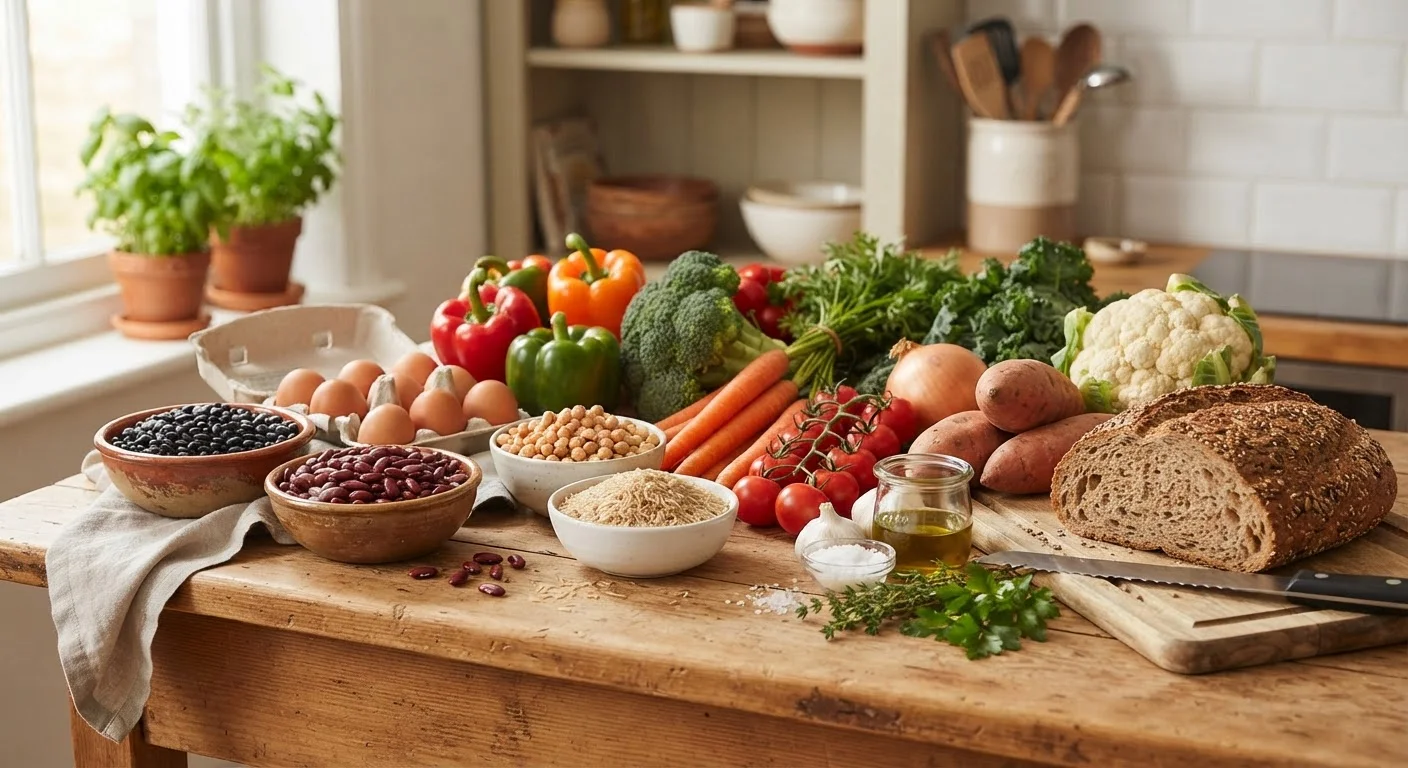
A persistent myth in American food culture holds that eating healthfully is an expensive pursuit - reserved for those with time, money, and access to specialty grocery stores. The evidence largely disagrees. Many of the most nutrient-dense foods available are also among the least expensive per serving: dried beans and lentils, oats, eggs, frozen spinach, canned tomatoes, brown rice, and in-season produce.
The challenge isn't a lack of affordable nutritious options - it's a lack of practical strategies to identify and use them consistently. If you're just starting to build better eating habits, beginning with budget-conscious principles is actually an advantage: it focuses attention on foundational whole foods rather than expensive trends or supplements.
Anchor your meals around plant-based proteins and whole grains.
Dried beans, lentils, chickpeas, tofu, and whole grains like brown rice and oats provide protein, fiber, and essential micronutrients at a fraction of the cost of most animal proteins. Research consistently shows these foods support long-term health outcomes while keeping grocery totals manageable.
Plan meals before you shop - every week, without exception.
Shopping without a plan is one of the primary drivers of both food waste and overspending. Pre-planning ensures you buy only what you'll use, allows you to shop sales strategically, and reduces midweek impulse purchases or takeout spending.
Embrace frozen and canned produce without reservation.
Frozen vegetables are typically flash-frozen at peak ripeness, locking in nutrients comparable to - and sometimes exceeding - fresh produce that has spent days in transit. Canned tomatoes, beans, and corn offer similar nutritional value at consistent, lower prices year-round.
Cook in batches and repurpose components across multiple meals.
Batch cooking - preparing large quantities of grains, legumes, or roasted vegetables at once - dramatically reduces the per-meal time cost of cooking from scratch. Repurposing components (e.g., cooked lentils in soup one day and a grain bowl the next) prevents monotony while minimizing waste.
Shop in-season produce and adjust your menu to what's affordable.
Produce prices fluctuate significantly with the season. Tomatoes, zucchini, corn, and stone fruits are far cheaper in summer; root vegetables, squash, and citrus drop in price during fall and winter. Letting seasonal availability guide your vegetable choices keeps variety high and costs predictable.
Core Practices for Stretching Your Grocery Dollar
The practices below are grounded in how food pricing, nutrition density, and kitchen efficiency actually work together. None require a dramatic lifestyle overhaul - they're incremental shifts that compound over time.
Once these habits are in place, a weekly grocery list audit can help you verify that your cart consistently reflects your nutritional goals and budget targets.
Building a Pantry That Does the Heavy Lifting
A well-stocked pantry is the infrastructure that makes budget eating sustainable rather than stressful. When your shelves hold dried legumes, whole grains, canned tomatoes, and a few key spices, you can construct a complete, balanced meal from almost nothing - reducing the temptation to order takeout or buy expensive prepared foods.
Generic vs. Store Brand: Usually No Nutritional Difference
For pantry staples like canned beans, oats, frozen vegetables, and whole grain pasta, store-brand and generic options are typically nutritionally equivalent to name-brand versions. The main differences are packaging and price. Checking the nutrition label and ingredient list is a reliable way to compare - and in most cases, the store brand holds up well.
For a structured approach to assessing what belongs in your kitchen, see the pantry audit checklist, which walks through the fridge, freezer, and shelf staples that support balanced everyday eating. You'll also find deeper guidance on pantry staples that make last-minute meals possible - a useful companion resource.
$0.14
Average cost per gram of protein from dried lentils
According to USDA food cost data, dried lentils and beans are consistently among the lowest-cost protein sources available in American grocery stores.
30-40%
Share of food Americans discard at home
The USDA estimates that American households waste roughly 30-40% of the food supply, much of it at the consumer level - making waste reduction one of the highest-impact budget strategies.
Budget and nutrition goals reinforce each other more than most people expect. The same priorities that help you eat more plants, reduce waste, and cook from scratch also happen to lower your grocery bill. If you're working on broader financial habits alongside your food goals, the principles in building a budget that holds up all year apply directly to food spending as a budget category.
“The most nutritious diets in the world are also among the most affordable - they're built on legumes, vegetables, whole grains, and modest amounts of animal products. Expensive superfoods are not the foundation of healthy eating.”
— Walter Willett, Professor of Epidemiology and Nutrition, Harvard T.H. Chan School of Public Health
This article provides general nutrition education and is not a substitute for personalized advice from a registered dietitian or qualified healthcare professional. Individual nutritional needs vary - consult a professional for guidance tailored to your health situation.