

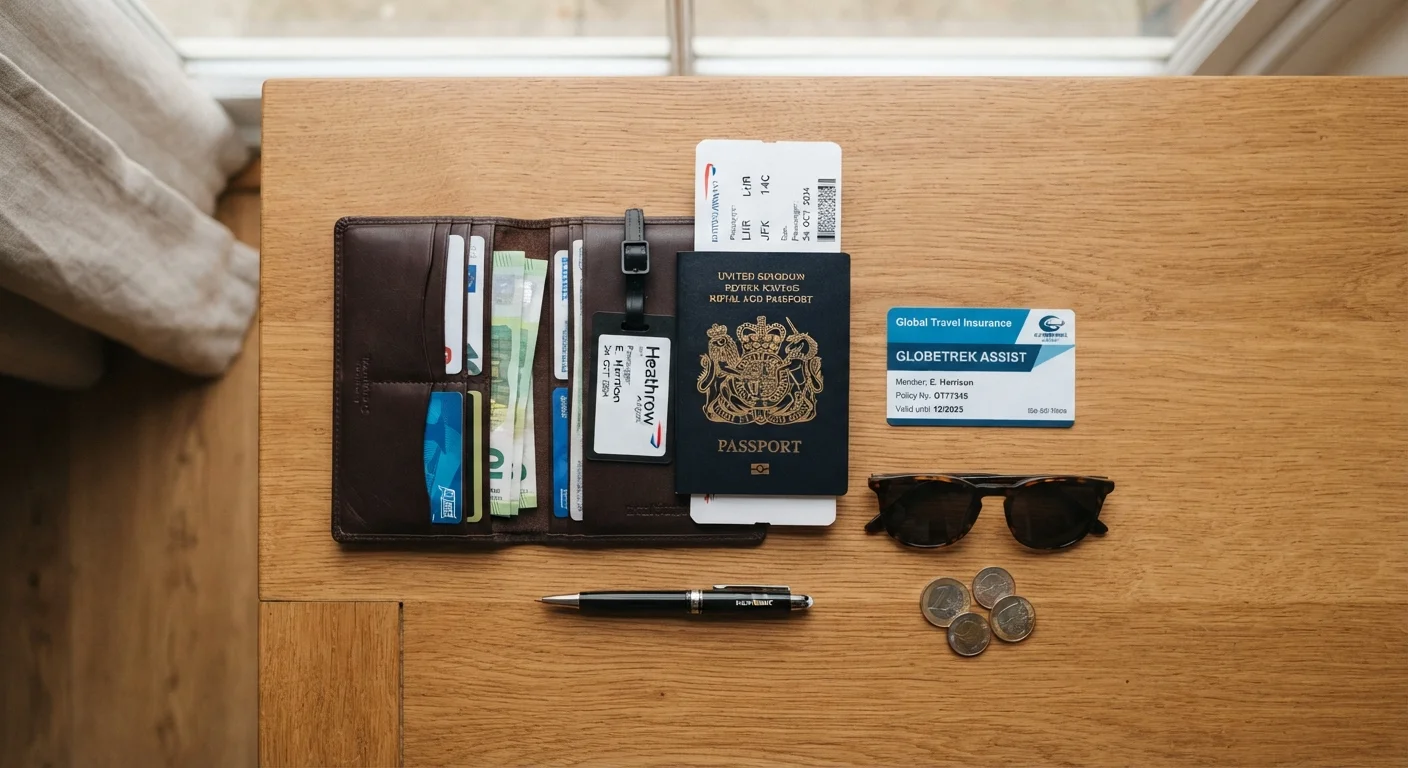
The Core Documents Every Traveler Needs
Whether you're crossing a state line or an international border, carrying the right documents is as important as packing the right gear. Missing or inaccessible paperwork can delay trips, block entry at borders, or leave you stranded in a medical situation. Before any journey, verify that the following essentials are accounted for.
Identity and Entry Documents
- Passport: Required for all international travel departing from or returning to the United States. Check that yours is valid for at least six months beyond your return date — many countries enforce this rule at entry. Always verify current requirements with official government sources before you travel.
- Passport card: Valid for land and sea crossings between the U.S., Canada, Mexico, the Caribbean, and Bermuda. Smaller and less expensive than a full passport book, but not accepted for international air travel.
- Driver's license or state ID: Required for domestic flights and car rentals. Ensure your license is REAL ID-compliant if you plan to use it at TSA checkpoints — check with your state's DMV for current compliance status.
- Visa or entry permit: Many countries require a visa in addition to a passport. Requirements vary significantly by destination and nationality. Consult official embassy or consulate resources for up-to-date entry rules before booking.
For road trips, don't forget your vehicle registration and proof of insurance. See our pre-trip vehicle checklist for a complete rundown of what to verify before hitting the highway.
Insurance, Health, and Financial Documents
Documents that protect your finances and health are often overlooked in packing but are among the most critical if something goes wrong.
~36%
U.S. adults who hold a valid passport
According to U.S. State Department data, roughly one-third of Americans hold a currently valid passport — meaning many domestic travelers may not have one ready for unexpected international opportunities.
6 months
Minimum passport validity required by many countries
Dozens of countries enforce a six-month validity rule beyond the traveler's return date, a requirement that catches many travelers off guard at the border.
Insurance Cards and Policies
- Health insurance card: Carry the physical card and photograph both sides. For international travel, contact your insurer before departure to confirm coverage abroad — domestic plans frequently do not cover overseas care.
- Travel insurance policy summary: If you've purchased travel insurance, keep a printed or downloaded copy that includes the policy number, covered events, and the 24-hour emergency assistance phone number. A full policy document is helpful, but the summary card is what you'll need in an emergency.
- Medicare or supplemental insurance cards: If applicable. Medicare generally does not cover care outside the U.S., so supplemental or travel health insurance is especially important for older travelers.
Financial Documents
- Credit and debit cards: Notify your bank before international travel to prevent fraud blocks. Carry at least two cards from different networks stored separately.
- Emergency cash: A small amount of local currency is useful when card readers are unavailable.
- International driving permit (IDP): Required or strongly recommended in some countries alongside your U.S. license. Issued by AAA and the American Automobile Touring Alliance — verify whether your destination requires one.
Planning how these costs fit into your overall spending is also worth the effort. Our guide on where your travel money really goes can help you budget realistically for the full trip.
Digital Backups and Smart Storage Strategies
Physical documents can be lost, stolen, or damaged. A layered backup strategy ensures you can still verify your identity, contact your insurer, or access your itinerary even if your wallet is gone.
Store Sensitive Documents Securely in the Cloud
When emailing document scans to yourself or uploading to cloud storage, use a secure, password-protected account with two-factor authentication enabled. Avoid sending sensitive files over public Wi-Fi without a VPN. The goal is accessibility in an emergency — not convenience at the expense of security.
What to Digitize
- Photo ID pages of your passport and any visas
- Travel insurance policy summary and emergency contact numbers
- Hotel confirmations, tour bookings, and transportation tickets
- Vaccination records or health certificates if required by your destination
- Emergency contacts and your itinerary
For guidance on which physical documents are worth scanning and how long to retain them, see our reference guide to organizing household documents.
Where to Store Copies
- Encrypted cloud storage or email: Send scans to yourself or upload to a password-protected cloud account accessible from any device.
- Secure travel wallet: Keep originals organized in a dedicated travel wallet or document pouch — not loose in a bag. RFID-blocking sleeves add a layer of protection for passport chips and card data.
- Separate from originals: Store a physical copy of your passport photo page and insurance card in a different bag from your originals. If one bag is stolen, you still have backup documentation.
- Leave copies at home: Give a trusted contact at home a copy of your passport, itinerary, and insurance details in case you need documents retrieved remotely.
A broader pre-trip planning checklist can help ensure document prep is one of many items you verify well before departure day. And if your plans include time on the trail, review our trail-ready safety checklist for destination-specific preparation steps.