

Key Takeaways
Our Verdict
Structured itineraries provide security, efficiency, and peace of mind — especially valuable for first-time visitors, group travel, and high-demand destinations. Spontaneous travel rewards seasoned, adaptable travelers with authentic experiences and true flexibility. For most trips, a hybrid approach that pre-books critical logistics while keeping daily schedules loose offers the strongest balance.
| Best for | Recommended |
|---|---|
| First-time visitors to a new destination or complex multi-city trip | Structured Itinerary |
| Groups with mixed preferences and shared logistics to coordinate | Structured Itinerary |
| Solo travelers with open-ended timelines and flexible budgets | Spontaneous Travel |
| Travelers who want security on logistics but freedom day-to-day | Hybrid Approach |
What Each Approach Actually Means
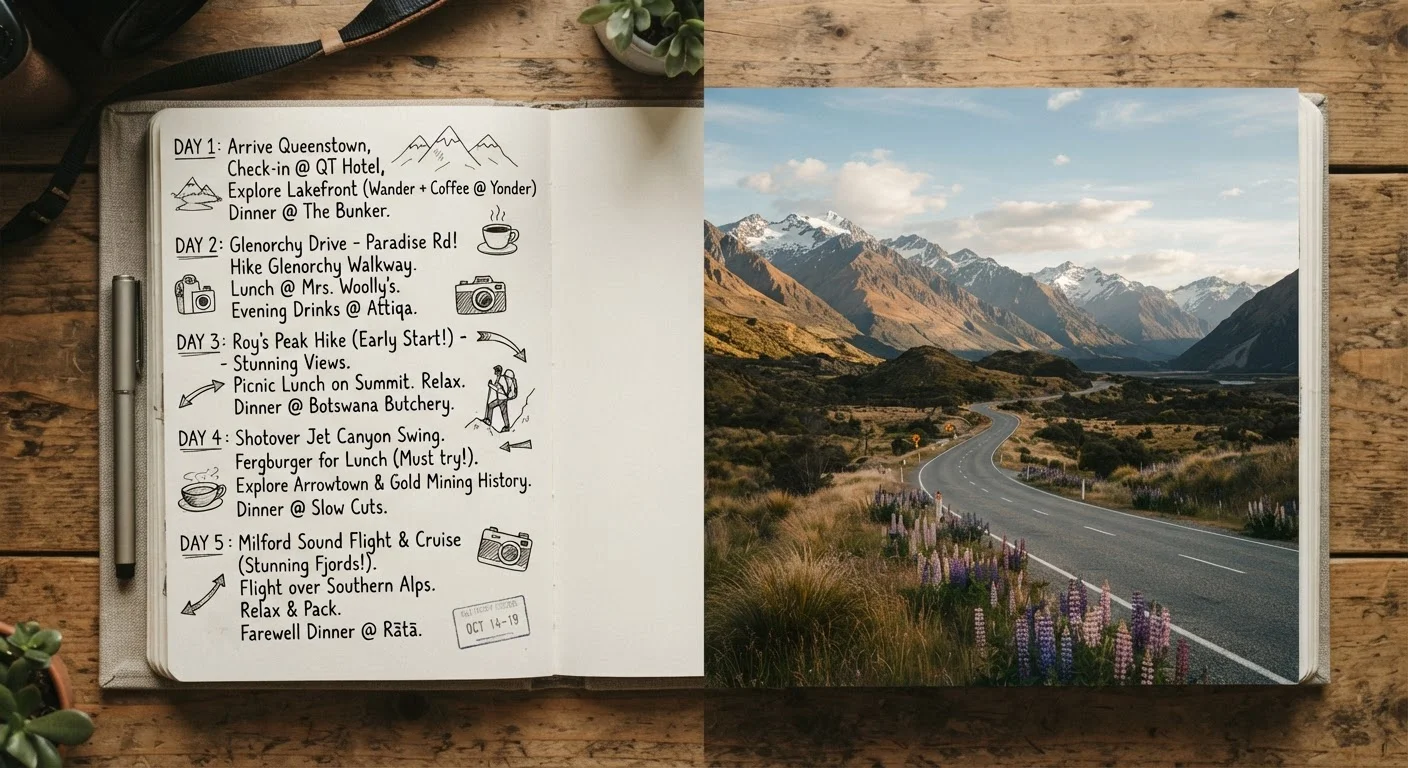
A structured itinerary is a pre-planned schedule that maps out where you'll be, what you'll do, and often where you'll eat, on a day-by-day or even hour-by-hour basis. Flights, accommodation, tours, and key attractions are booked in advance. The goal is predictability and maximum coverage of priorities.
Spontaneous travel means departing with little more than a destination in mind — perhaps an outbound flight and a rough sense of direction, with accommodation, activities, and onward transport decided as you go. It prizes adaptability over certainty.
In practice, few travelers operate at either extreme. Most trips land somewhere on a spectrum, and the right position depends on factors well beyond personal preference. See our complete trip-planning guide for a full overview of how these decisions fit into the broader planning process.
How the Two Styles Compare
The table below breaks down the practical trade-offs across the dimensions that matter most to everyday travelers.
| Structured Itinerary | Spontaneous Travel | |
|---|---|---|
| Cost predictability | High — costs known in advance | Variable — last-minute prices fluctuate |
| Flexibility day-to-day | Low to moderate | High |
| Decision fatigue on the road | Low — decisions made pre-trip | High — constant real-time choices |
| Access to high-demand sites | Strong — bookings secured early | Risk of sold-out entry or tours |
| Suitability for groups | Strong — shared framework helps | Difficult — conflicting preferences |
| Tolerance for uncertainty required | Low | High |
| Best trip length | Short to medium trips | Extended or open-ended trips |
Cost predictability is one area where structure consistently wins. Booking accommodation and transportation in advance — particularly for peak-season travel — generally protects against price surges. Spontaneous travelers, by contrast, may find last-minute availability limited or expensive, especially in popular destinations during busy periods. Traveling during shoulder season can partially offset this disadvantage, since availability is looser and prices are more negotiable.
When Structure Gives You More, Not Less
The common objection to structured itineraries is that they feel restrictive. In reality, planning ahead often creates freedom by eliminating the mental overhead of constant decision-making on the road. When accommodation, transportation, and a few anchor activities are already confirmed, travelers can be present in the moment rather than anxiously searching for a hotel at 9 p.m.
Structure is especially valuable in these situations:
- High-demand destinations: Iconic sites — popular national parks, historical monuments, or timed-entry museums — often require advance reservations that can sell out weeks or months ahead.
- Group trips: Coordinating schedules among multiple people is significantly harder without a shared framework. See our group travel logistics guide for strategies on keeping everyone aligned.
- Short trips: When you have only four or five days, unplanned downtime can feel like a wasted opportunity.
- First-time solo travelers: A pre-built day-by-day plan provides a safety net and confidence anchor. Our first solo trip itinerary guide walks through how to build one that still leaves room for the unexpected.
Build in Buffer Time Even with a Plan
Even the most detailed itinerary benefits from unscheduled buffer periods — a free afternoon, a morning with no agenda. These windows absorb delays, allow for rest, and create space for the unexpected discoveries that structured travel sometimes crowds out. Aim for at least one open half-day per three or four days of travel.
When Spontaneity Works in Your Favor
Spontaneous travel has genuine advantages that structured planning cannot replicate. The ability to extend a stay in a place that resonates, to follow a local's recommendation, or to simply slow down when you need rest — these are not small things. They often produce the memories that define a trip.
Spontaneity tends to work best when:
- The destination has abundant, year-round availability: Some regions — parts of Southeast Asia, rural Europe outside peak summer, much of Central and South America — have enough accommodation and transport options that last-minute decisions rarely strand you.
- You're an experienced traveler: Comfort with uncertainty, familiarity with local transport systems, and the ability to read a situation calmly all make loose plans more viable.
- You're traveling alone or with a like-minded partner: Shared flexibility eliminates the negotiation challenges that sink spontaneous group trips.
- You have a genuinely open schedule: Spontaneous travel under a hard deadline — a flight home on Friday — creates its own kind of stress.
Spontaneity Has Real Logistical Risks
Arriving without confirmed accommodation during major local holidays, festivals, or peak tourist season can leave you with few or very expensive options. Before committing to a fully unplanned approach, research whether your destination has known capacity pinch points. Always verify current entry requirements, safety advisories, and local conditions through official government sources before travel — conditions can change quickly and unverified information can be outdated.
The Hybrid Strategy Most Travelers Actually Use
The most practical framework for many travelers is a tiered approach: book the non-negotiables in advance, leave the rest open. Concretely, this means confirming flights, accommodation for the first and last nights, any timed-entry or high-demand experiences, and major intercity transport. Everything else — daily sightseeing, restaurant choices, optional day trips — is decided in the moment.
This hybrid gives you a structural backbone without a minute-by-minute script. It also builds in resilience: if you discover a place worth an extra day, you have the flexibility to stay without unraveling an entire downstream chain of bookings.
Before committing to any planning approach, verify that your destination's practical requirements — visas, vaccinations, local transport logistics — are in order. Our pre-trip planning checklist covers everything to confirm before you leave home. For those weighing the broader format of a trip, the road trip vs. fly-and-explore comparison also touches on how travel format shapes planning needs.