

Autos

Preparing Your Car for a Long Road Trip

Share
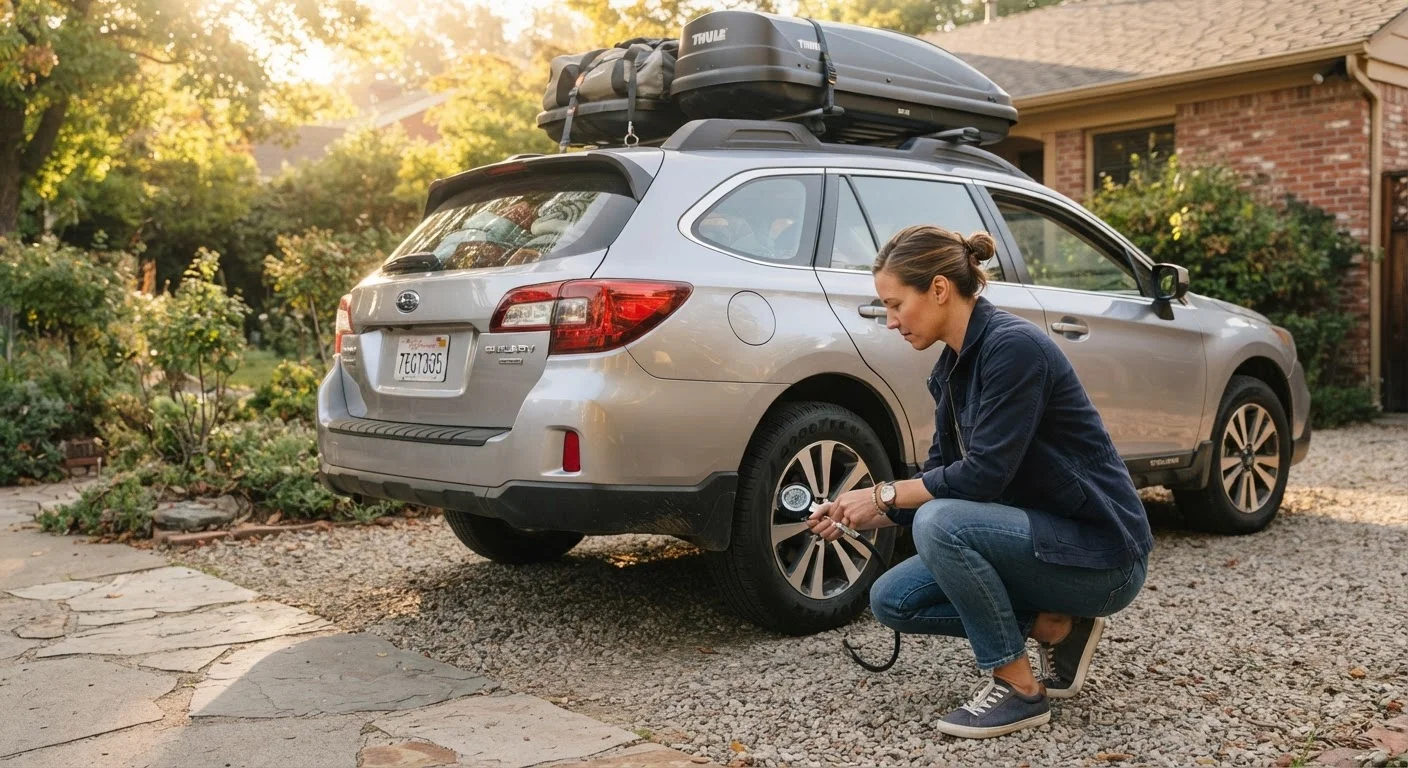
Driver checking tire pressure on a loaded car in a driveway before a long road trip

Key Takeaways

Tires, fluids, and brakes are the three most critical systems to inspect before any long drive.
Most pre-trip checks can be completed at home with basic tools in under two hours.
Catching a minor issue before departure is always cheaper and safer than a roadside breakdown.
Emergency supplies and vehicle documents are easy to overlook but essential on long trips.
If your vehicle is due for scheduled maintenance, complete it before the trip — not after.
45–90 min

Summary

22 items · 45–90 minutes

Why a Pre-Trip Check Matters More Than You Think

Most roadside breakdowns aren't random — they're predictable. A tire with low tread, a coolant level that's been quietly dropping, or a belt showing early wear are all problems that give warning signs before they fail. The trouble is, daily driving rarely pushes these issues to the surface. A long road trip will.

Sustained highway speeds, heavy loads, and hours of continuous engine operation stress every system in your vehicle simultaneously. That's a fundamentally different demand than your typical commute. Running through a structured inspection a few days before you leave gives you enough time to schedule a mechanic appointment if something needs professional attention — without scrambling.

For a deeper look at what trained mechanics examine and why it matters, see our guide to what a professional inspection covers. You can also pair this checklist with our seasonal car maintenance checklist for a complete year-round picture.

Don't Wait Until the Night Before

Complete this inspection at least two to three days before your planned departure. If something needs professional repair — a brake inspection, a tire replacement, a fluid leak — you'll need time to get a shop appointment without scrambling. Rushing a vehicle check the morning of a trip is how problems get missed.

What You'll Need

Before you get started, gather these basic tools and references. You won't need a full mechanic's toolkit — just the essentials for a thorough visual and manual inspection.

Required

Tire pressure gauge

Accurately measures PSI in each tire so you can inflate to the manufacturer-specified pressure.

Required

Owner's manual

Contains the correct fluid specs, tire pressure ratings, service intervals, and warning light explanations specific to your vehicle.

Required

Flashlight or work light

Illuminates dark areas under the hood and beneath the vehicle where leaks or wear are easiest to miss.

Required

Clean rags or paper towels

Needed for checking fluid levels on dipsticks and wiping residue to identify leaks.

Optional

Tread depth gauge

Gives a precise tread-depth reading in 32nds of an inch for more accuracy than the coin test alone.

Optional

OBD-II scanner or reader app

Reads stored diagnostic trouble codes from your vehicle's computer, surfacing hidden issues that haven't yet triggered a dashboard light.

The Pre-Trip Checklist

Work through each group below methodically. Don't rush — this is time well spent. Items marked must are non-negotiable for safe travel. Should items are strongly recommended, and nice-to-have items add an extra layer of preparedness.

Tires

Check tire pressure on all four tires (including the spare) using a gauge and inflate to the PSI listed in your owner's manual or door jamb sticker — not the number on the tire sidewall. Must
Inspect tread depth using the quarter test: insert a quarter into the tread groove with Washington's head pointing down — if you can see the top of his head, tread is critically low. Must
Look for sidewall cracking, bulges, or uneven wear patterns, which can signal alignment or suspension problems. Must
Confirm the spare tire is properly inflated and that your jack and lug wrench are accessible and in working condition. Should

Fluids

Check engine oil level using the dipstick; if you're within 1,000 miles of your next oil change interval, change it before the trip. Must
Inspect coolant level in the overflow reservoir when the engine is cold — low coolant on a long drive can cause overheating. Must
Verify brake fluid level sits between the MIN and MAX marks on the reservoir; a significant drop can indicate a leak that needs immediate professional attention. Must
Top off windshield washer fluid — you'll use far more than usual at highway speeds, especially in summer bug season or winter spray. Should
Check power steering fluid and transmission fluid levels if your vehicle has accessible dipsticks for these; consult your owner's manual for the correct procedure. Should

Brakes and Steering

Listen and feel for brake warning signs during a slow stop: squealing, grinding, or a pulsating pedal all warrant a professional inspection before departure. Must
Check that the steering wheel does not pull to one side during straight-line driving, which may indicate alignment or tire-pressure issues. Should
Note any unusual vibration in the steering wheel at highway speed — this can signal a wheel-balance problem that worsens under load. Should

Lights and Visibility

Test all exterior lights — headlights (low and high beam), taillights, brake lights, turn signals, and reverse lights — with a helper or by using a reflective surface. Must
Replace any wiper blades that streak or skip; visibility during highway rain demands fully functional wipers. Must
Clean all exterior lights and mirrors of road film or debris before departure. Nice to have

Under the Hood

Inspect belts (serpentine and timing, if accessible) for cracking, fraying, or glazing; a snapped serpentine belt will disable charging and cooling instantly. Must
Check hoses for soft spots, swelling, or leaks at the clamps — squeeze them gently; a spongy hose is a failure risk. Should
Scan the vehicle's dashboard for any active warning lights and look up their meaning in your owner's manual before deciding whether to proceed. Must

Emergency Kit and Documents

Pack a basic roadside emergency kit: jumper cables or a jump starter pack, a reflective triangle or flares, a basic first-aid kit, a flashlight, and a phone charger. Should
Confirm your vehicle registration, proof of insurance, and roadside assistance membership card are in the glovebox and current. Must
Keep a small supply of water, non-perishable snacks, and a blanket in the vehicle — particularly important for remote routes. Nice to have

Active Warning Lights Mean Stop — Don't Ignore Them

If your check engine, oil pressure, brake, or temperature warning light is active, do not assume it's safe to drive hundreds of miles and deal with it later. Have the code read at a shop or auto parts store before departure. Some warnings are minor; others signal imminent mechanical failure. Only a diagnostic reading will tell you which you're dealing with.

Once you've confirmed your car is road-ready, make sure your paperwork is in order too. Our guide to essential travel documents covers registration, insurance cards, and what else to keep accessible. For broader road safety guidance, our hub covers everything from driving technique to vehicle safety standards.

Autos Editorial Team is the collective byline for our editorial team and contributor network. Articles published under this byline or an editorial pen name are researched, written, and reviewed according to our editorial standards for clarity, consistency, and independence before publication.

View all articles by Autos Editorial Team →
Disclaimer: The content on this site is for informational purposes only and is not a substitute for professional advice. Always consult a qualified professional for guidance specific to your situation.