

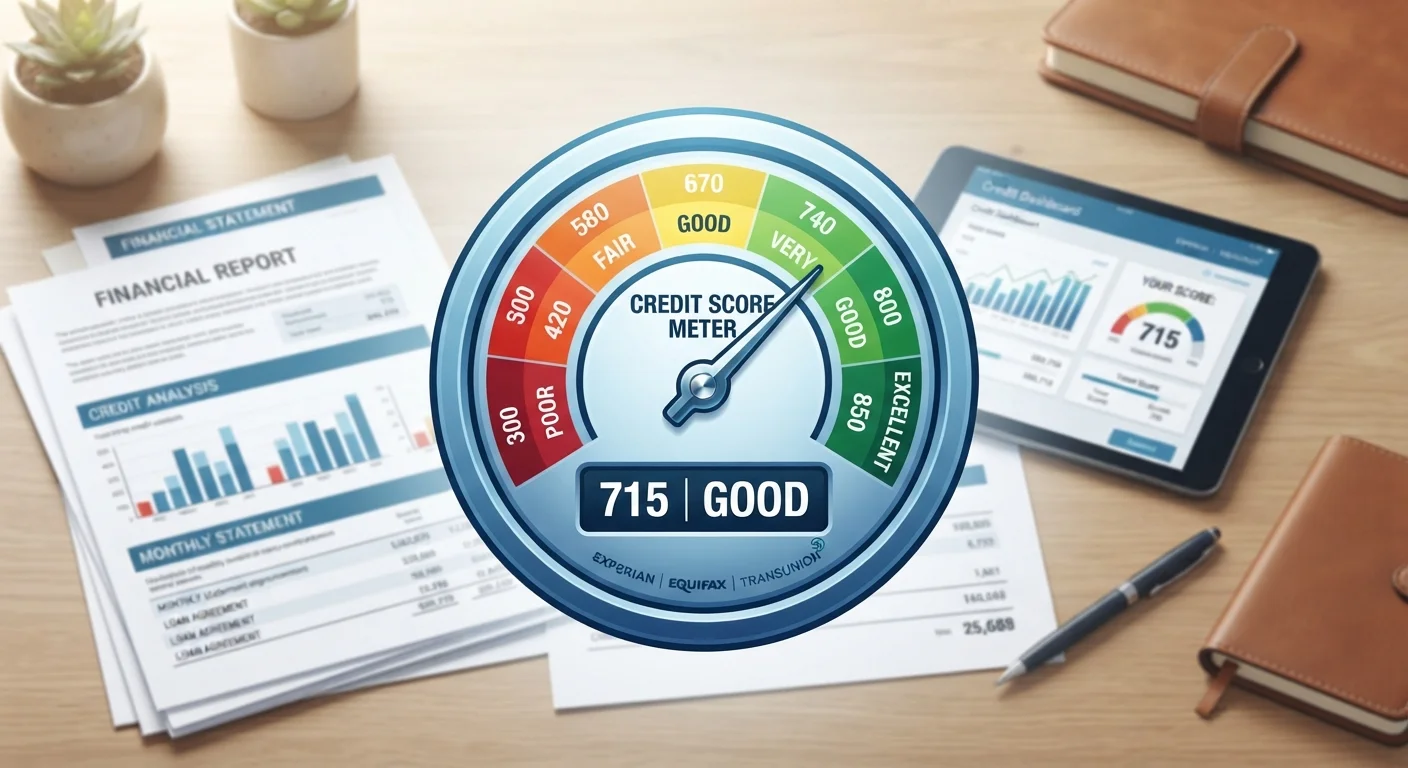
| Score Range (FICO & VantageScore) | 300 - 850 (FICO and VantageScore scoring models) |
| Poor | 300 - 579 (FICO score band definitions) |
| Fair | 580 - 669 (FICO score band definitions) |
| Good | 670 - 739 (FICO score band definitions) |
| Very Good | 740 - 799 (FICO score band definitions) |
| Exceptional | 800 - 850 (FICO score band definitions) |
| Average U.S. FICO Score | ~718 (Experian State of Credit report, 2023) |
| Number of Major Credit Bureaus | 3 (Equifax, Experian, TransUnion) (Consumer Financial Protection Bureau (CFPB)) |
The Five Credit Score Tiers at a Glance
Most lenders in the U.S. rely on FICO scores, which range from 300 to 850. VantageScore, another widely used model, uses the same 300-850 scale. While exact cutoffs vary by lender, there are five broadly recognized tiers that determine how creditors are likely to treat your application. If you're new to how scores are built, our explanation of what a credit score actually measures is a good starting point.
| Score Range (FICO & VantageScore) | 300 - 850 (FICO and VantageScore scoring models) |
| Poor | 300 - 579 (FICO score band definitions) |
| Fair | 580 - 669 (FICO score band definitions) |
| Good | 670 - 739 (FICO score band definitions) |
| Very Good | 740 - 799 (FICO score band definitions) |
| Exceptional | 800 - 850 (FICO score band definitions) |
| Average U.S. FICO Score | ~718 (Experian State of Credit report, 2023) |
| Number of Major Credit Bureaus | 3 (Equifax, Experian, TransUnion) (Consumer Financial Protection Bureau (CFPB)) |
Here's a plain-language summary of each tier and what it typically means in practice.
What Each Range Means for Borrowers
Poor (300-579): Lenders view this range as high risk. Approval for credit cards or loans is uncommon, and when credit is extended, it often comes with high interest rates, low limits, or security deposit requirements. Rebuilding from this range takes consistent on-time payments and responsible credit use over time.
Fair (580-669): Sometimes called the "subprime" zone. More doors open here - some credit cards and personal loans are available - but expect above-average interest rates and more scrutiny. Borrowers in this range are often approved with conditions.
Good (670-739): This is where most Americans land, and it's where conventional borrowing becomes more accessible. You'll generally qualify for standard loan products at competitive - though not the lowest possible - rates. Many lenders consider 670 the practical floor for routine approvals.
Very Good (740-799): At this level, lenders typically offer better terms, lower rates, and fewer hurdles. Applicants in this range are considered low risk, and they may receive pre-approval offers more frequently.
Exceptional (800-850): The top tier. Borrowers here can expect the most favorable terms available. That said, the practical difference between 780 and 830 is often smaller than people assume - lenders care most that you're above their threshold, not that you've maximized the scale.
FICO Score
A credit score calculated by the Fair Isaac Corporation and used by most U.S. lenders to assess creditworthiness. Scores range from 300 to 850, with higher scores indicating lower risk.
VantageScore
A credit scoring model developed jointly by the three major credit bureaus. It also uses a 300-850 scale and is increasingly used alongside FICO scores by lenders and credit monitoring services.
Subprime
An industry term for borrowers whose credit profile is considered below standard, typically those with scores below 670. Subprime loans often carry higher interest rates to offset lender risk.
Credit Utilization
The percentage of your available revolving credit that you're currently using. It's calculated by dividing your total balances by your total credit limits, and it's one of the most heavily weighted factors in most credit scoring models.
For context on the factors that move you between these tiers, see our guide on how credit utilization shapes your score.
Putting Your Score in Context
Credit scores are one input, not the whole picture. Lenders also consider your income, existing debt load, employment history, and the type of credit you're applying for. A score in the "good" range may be more than sufficient for a personal loan but fall short of a lender's threshold for a jumbo mortgage.
Your Score Can Vary by Bureau
Because lenders don't always report to all three bureaus, your score at Equifax, Experian, and TransUnion may differ - sometimes by 20-30 points or more. When applying for a major loan, it's worth checking all three reports to understand the full picture and spot any errors that could be dragging a score down.
If you're not sure where your score stands, you can access free reports from all three major bureaus - Equifax, Experian, and TransUnion - through AnnualCreditReport.com, the federally mandated source. Reviewing your full credit report alongside your score gives you a more complete view of what lenders see.
Understanding the range you're in is a starting point, not a verdict. For a broader look at how credit fits into your financial life, the complete picture of debt and credit covers everything from score fundamentals to payoff strategies. And if you're just getting started, this plain-language introduction to debt and credit breaks it down without the jargon.
This article is for general informational purposes only and does not constitute financial or legal advice. Consult a licensed financial professional for guidance specific to your situation.