

Key Takeaways
Start here
What Is Credit, Really?
Next
How Credit Scores Work
Then
Good Debt vs. Costly Debt
Apply it
Core Habits That Protect Your Credit
Keep going
Where to Go From Here
What Is Credit, Really?
At its most basic, credit is an agreement: a lender provides money or purchasing power now, and you agree to pay it back later - usually with interest. Every credit card, car loan, student loan, and mortgage is a form of credit.
Lenders decide whether to extend credit - and at what cost - based on your credit history: the documented record of how you've borrowed and repaid money in the past. If that record is thin or rocky, lenders see more risk and may charge higher interest or decline the application. If it's solid, you generally gain access to better terms.
Credit history
The full record of how you've borrowed and repaid money over time, including loans, credit cards, and any missed payments. Lenders use this record to judge how likely you are to repay new debt.
Credit score
A three-digit number - typically between 300 and 850 - that summarizes your credit history. Higher numbers indicate lower risk to lenders and generally result in better borrowing terms.
Credit utilization
The percentage of your available credit limit that you're currently using. For example, a $500 balance on a $1,000 limit card is 50% utilization. Lower percentages are generally better for your score.
APR (Annual Percentage Rate)
The yearly cost of borrowing money, expressed as a percentage and including both interest and fees. It allows you to compare the true cost of different loans or credit cards on equal terms.
Hard inquiry
A credit check initiated by a lender when you apply for credit. Hard inquiries can temporarily lower your credit score by a small amount and remain on your report for about two years.
Revolving credit
A type of credit account - like a credit card - where you can borrow, repay, and borrow again up to a set limit. The balance and minimum payment change depending on how much you use.
Understanding this basic exchange removes a lot of the mystery. Credit isn't a reward for being wealthy - it's a track record, one you build gradually through ordinary financial behavior.
How Credit Scores Work
Your credit score is a three-digit number - most commonly ranging from 300 to 850 - that condenses your credit history into a single signal lenders can act on quickly. The most widely used scoring models weigh five broad factors:
- Payment history (~35%): Whether you've paid on time. This is the single largest factor.
- Amounts owed (~30%): How much of your available credit you're currently using, known as credit utilization. See our explainer on credit utilization for the full picture.
- Length of credit history (~15%): How long your accounts have been open.
- Credit mix (~10%): Whether you have a variety of account types, such as revolving credit and installment loans.
- New credit (~10%): Recent applications for new accounts.
Scores don't update in real time - they're recalculated periodically as new information arrives from lenders. For a plain walkthrough of the underlying data, our guide on reading a credit report explains what each entry actually means.
Check Your Score Without Fear
You're entitled to free credit reports from all three major bureaus through AnnualCreditReport.com, the federally authorized source. Many banks and credit unions also provide free score monitoring through your account dashboard. Checking these regularly costs you nothing and keeps you informed.
Good Debt vs. Costly Debt
Not all debt is created equal. The cost of borrowing depends heavily on the interest rate attached to it and how long you carry the balance.
A mortgage on a home or a federal student loan typically carries a relatively lower interest rate and may contribute to an asset or a long-term earning increase. High-interest debt - particularly credit card balances carried month to month - compounds quickly and can become expensive to escape.
High-Interest Debt Compounds Fast
Credit card interest rates are often substantially higher than those on other types of loans. Carrying even a modest balance month to month can result in paying significantly more than the original purchase price over time. If you're managing credit card debt, knowing the exact APR on each account is an important first step before deciding how to prioritize payments.
The key question to ask before taking on any debt isn't just can I afford the monthly payment? - it's what will this actually cost me by the time it's paid off? A loan's annual percentage rate (APR) tells you the yearly cost of borrowing, including fees, which lets you make fair comparisons. For a broader look at debt types, repayment strategies, and your legal rights as a borrower, the complete debt and credit overview covers the full picture.
Core Habits That Protect Your Credit
Building and maintaining healthy credit doesn't require complicated strategies. A small number of consistent habits account for most of the outcome:
- Pay every bill on time. Even one 30-day-late payment can noticeably lower your score and stays on your report for years.
- Keep balances low relative to your credit limit. Using a large share of your available credit - even if you pay in full - can temporarily drag your score down.
- Don't open accounts you don't need. Multiple new applications in a short period can signal financial stress to lenders.
- Review your credit reports regularly. Errors and unfamiliar accounts happen. Catching them early limits the damage.
Some behaviors people worry about turn out to be harmless. Checking your own credit, for instance, has no effect on your score. Our article on things that don't actually hurt your credit score separates fact from common fear. And if you use credit cards, the everyday habits that quietly damage finances is worth a look before small patterns become costly ones.
Where to Go From Here
This introduction covers the foundation. From here, the next steps depend on where you are: building credit for the first time, digging out of debt, or simply trying to understand a confusing statement or report.
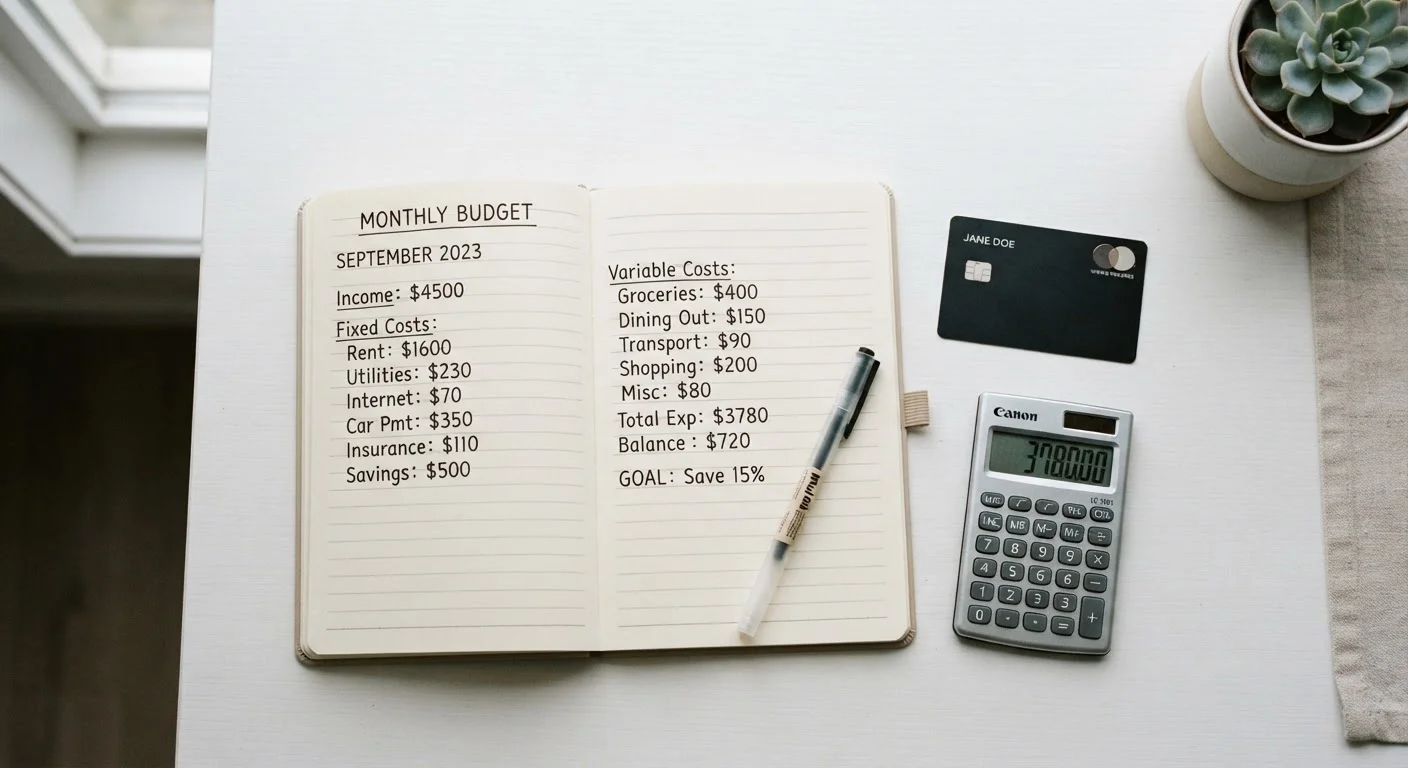
Whatever the goal, pairing strong credit habits with a realistic monthly budget makes both easier. Our budgeting basics hub covers straightforward approaches to tracking spending and building a plan that works for real life.
AnnualCreditReport.com
The federally authorized source for free annual credit reports from Equifax, Experian, and TransUnion. Reviewing your reports regularly is one of the most practical steps you can take to protect your credit.
Consumer Financial Protection Bureau (CFPB)
The CFPB publishes plain-language guides on credit scores, debt collection, and borrower rights. Their resources are written for general consumers and backed by federal oversight.
This article is for general informational and educational purposes only and does not constitute personalized financial or legal advice. For decisions specific to your situation, consult a qualified financial professional.