

Key Takeaways
What Debt and Credit Actually Mean
Debt and credit are two sides of the same coin. Credit is the ability to borrow money with a promise to repay it, usually with interest. Debt is what you owe once you've used that credit. Both are normal parts of American financial life - mortgages, student loans, and auto financing all involve debt - but they require active management to avoid becoming a burden.
The key distinction worth keeping in mind: credit is a tool, not a score to maximize or a trap to avoid entirely. Used intentionally, it lets you make large purchases over time and build a financial track record. Mismanaged, it compounds through interest and late fees faster than most people expect.
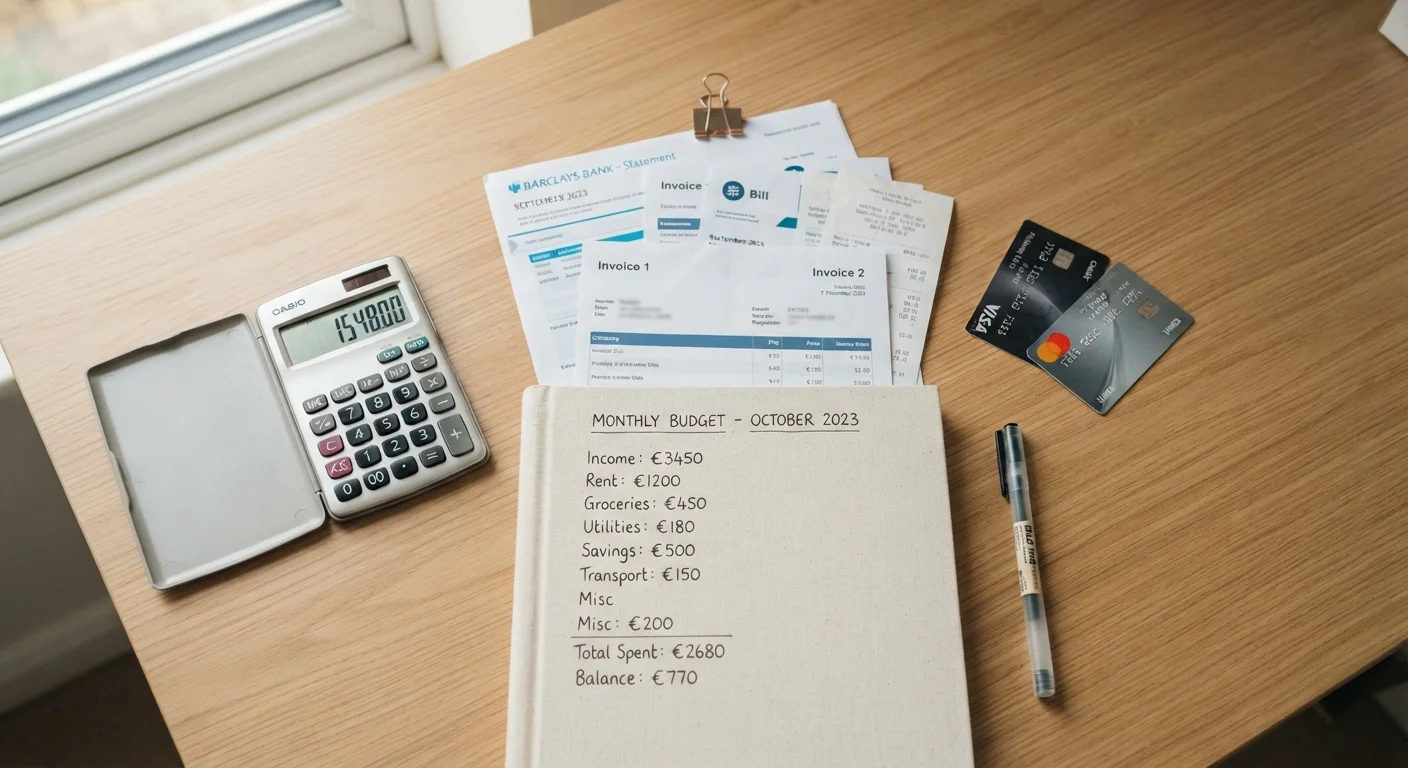
Start by getting a clear picture of what you owe. List each debt with its balance, interest rate, and minimum payment. This single step - often called a debt inventory - turns an anxiety-inducing abstraction into a workable problem. See our budgeting basics hub for a practical framework on tracking all your monthly obligations alongside your income.
How Credit Scores Work
Your credit score is a three-digit number - typically ranging from 300 to 850 - that lenders use to gauge how likely you are to repay what you borrow. The most widely used scoring model, FICO, calculates scores from five factors:
- Payment history (35%): Whether you pay on time
- Amounts owed (30%): How much of your available credit you're using (your utilization ratio)
- Length of credit history (15%): How long your accounts have been open
- Credit mix (10%): Variety of account types (cards, installment loans, etc.)
- New credit (10%): Recent applications for new accounts
35%
Weight of payment history in FICO score
According to FICO's published scoring model breakdown, on-time payments are the single largest factor in your credit score.
1 in 5
Americans with a credit report error
A Federal Trade Commission study found that roughly one in five consumers had an error on at least one of their three credit reports.
$6,501
Average American credit card balance
According to TransUnion's consumer credit data, average credit card balances among cardholders have risen steadily in recent years.
You're entitled to a free credit report from each of the three major bureaus - Equifax, Experian, and TransUnion - once every 12 months through AnnualCreditReport.com, the federally authorized site. Review yours regularly for errors, which are more common than most people realize and can be disputed at no cost.
Keep your credit utilization below 30% on each card individually, not just in total. Bureaus evaluate per-card utilization, so a maxed-out card hurts even if your overall ratio looks fine.
Credit scoring models assess utilization at the account level. A single card at 90% utilization can drag your score down even if other cards are unused.
Set up autopay for at least the minimum payment on every account. A single missed payment can drop your score by 50-100 points and stays on your report for seven years.
Payment history is the heaviest-weighted factor in FICO scoring, and even one late payment has an outsized and lasting impact.
Common Types of Debt
Not all debt behaves the same way. Understanding the differences helps you prioritize:
- Revolving debt
- Credit cards and lines of credit. Balances carry over month to month if unpaid, and interest compounds quickly. Average credit card APRs frequently exceed 20%.
- Installment debt
- Fixed loans - mortgages, auto loans, personal loans, student loans - repaid in set monthly payments over a defined term. Generally carry lower interest rates than revolving debt.
- Secured vs. unsecured
- Secured debt is backed by collateral (your home or car). Unsecured debt, like most credit cards and personal loans, has no collateral - but typically comes with higher interest to compensate the lender for greater risk.
Payday and High-Rate Installment Loans
Payday loans and some high-rate installment loans can carry APRs exceeding 300%, making them among the most expensive forms of debt available to consumers. They are often structured so that fees and rollovers trap borrowers in a cycle that's very difficult to exit. If you're considering one, explore alternatives - a payment plan with the creditor, a credit union small-dollar loan, or nonprofit emergency assistance - first.
Federal student loans carry specific repayment options - income-driven plans, deferment, and forgiveness programs - that private student loans do not. Knowing which type you hold matters significantly for your options.
Strategies for Paying Down Debt
Two structured methods dominate personal finance advice, and both work - the better one depends on your personality:
- Avalanche method: Pay minimums on all debts, then put any extra money toward the highest-interest debt first. Mathematically, this saves the most money over time.
- Snowball method: Pay minimums on all debts, then focus extra payments on the smallest balance first. Each paid-off account creates momentum and motivation.
Research suggests that people who need psychological wins to stay on track tend to stick with the snowball method longer, which matters more than the theoretical savings of the avalanche approach.
If managing multiple accounts feels overwhelming, debt consolidation can combine balances into a single payment - sometimes at a lower interest rate. It's not universally the right move, but it deserves a careful look if you're juggling high-rate debt across several accounts.
Automate Extra Payments Strategically
Once you've chosen a payoff method, automate the extra payment immediately after each paycheck hits your account. Treating it like a fixed bill - rather than discretionary spending - dramatically increases follow-through. Even an extra $25 per month directed at a high-interest balance accelerates payoff meaningfully over time.
Your Legal Rights as a Borrower
Federal consumer protection law gives borrowers meaningful rights that many people don't know they have.
The Fair Debt Collection Practices Act (FDCPA) restricts third-party debt collectors. They cannot call before 8 a.m. or after 9 p.m., contact you at work if you ask them not to, use abusive or deceptive tactics, or continue contacting you after you send a written cease-communication request. You can also request written verification of the debt.
The Fair Credit Reporting Act (FCRA) gives you the right to dispute inaccurate information on your credit report. Bureaus are required to investigate and correct or remove errors within 30 days in most cases.
Debt Collectors Cannot Sue After the Statute of Limitations
Every state sets a statute of limitations on how long a creditor can successfully sue to collect a debt - often between three and six years, though it varies. Making a payment or acknowledging the debt in writing can reset this clock in some states. If you receive collection calls on old debt, do not make a payment or promise to pay before understanding your state's rules. Consider consulting a consumer law attorney before responding.
The Consumer Financial Protection Bureau (CFPB) and the Federal Trade Commission (FTC) both handle complaints about debt collectors and credit reporting errors. Filing a complaint is free and can prompt faster resolution.
When to Seek Professional Help
There's a point where self-directed repayment isn't realistic - and that's not a failure. It's a signal to get the right help.
Nonprofit credit counseling agencies (look for NFCC-member organizations) offer free or low-cost budget reviews and can set up a Debt Management Plan (DMP), which negotiates reduced interest rates with creditors and consolidates payments into one monthly amount. For a deeper comparison of DMPs versus debt settlement - a more aggressive but consequence-heavy option - see debt management plans vs. debt settlement.
If debt has become unmanageable even with assistance, a bankruptcy attorney can explain whether Chapter 7 or Chapter 13 bankruptcy applies to your situation. Bankruptcy carries serious long-term credit consequences, but for some households it provides a legal fresh start that no other option can.
“The most dangerous financial mistake isn't taking on debt - it's taking it on without understanding the terms. Most people are surprised by how much clarity comes from simply reading the loan agreement before signing.”
— Gail Cunningham, Former spokesperson, National Foundation for Credit Counseling (NFCC)
This article is for general informational purposes only and does not constitute financial, legal, or tax advice. For guidance tailored to your situation, consult a licensed financial advisor, credit counselor, or attorney.