

Key Takeaways
Why Small Closets Fail (And How to Fix the Root Cause)
Most small-closet problems aren't really space problems - they're volume problems. When a closet holds more than it's designed for, no organizational system will hold up. Before buying a single bin or shelf divider, the first move is an honest audit of what you actually own.
As our common organizing myths guide points out, adding more storage containers without reducing items is one of the most common traps people fall into. The result: a fuller closet that's harder to navigate than before.
Start by pulling everything out. Sort into three categories: keep, donate or sell, and discard. If you haven't worn something in a year and it doesn't serve a specific seasonal or occasional purpose, it's a strong candidate for removal. Be realistic rather than aspirational - clothes kept "just in case" quietly consume space that working pieces need.
What you will need
How to Set Up Your Closet System Step by Step
Once you've reduced your wardrobe to what you genuinely use, you're ready to build a system that fits the space. The steps below move from the structural level (how the closet is configured) down to the daily-use level (how items are arranged and accessed).
Measure Your Closet Before Buying Anything
Write down the interior width, depth, and ceiling height of your closet. Note any fixed elements like existing rods, shelves, or light fixtures. These measurements determine what's actually possible and prevent wasted money on organizers that don't fit.
Add a Second Hanging Rod for Short Items
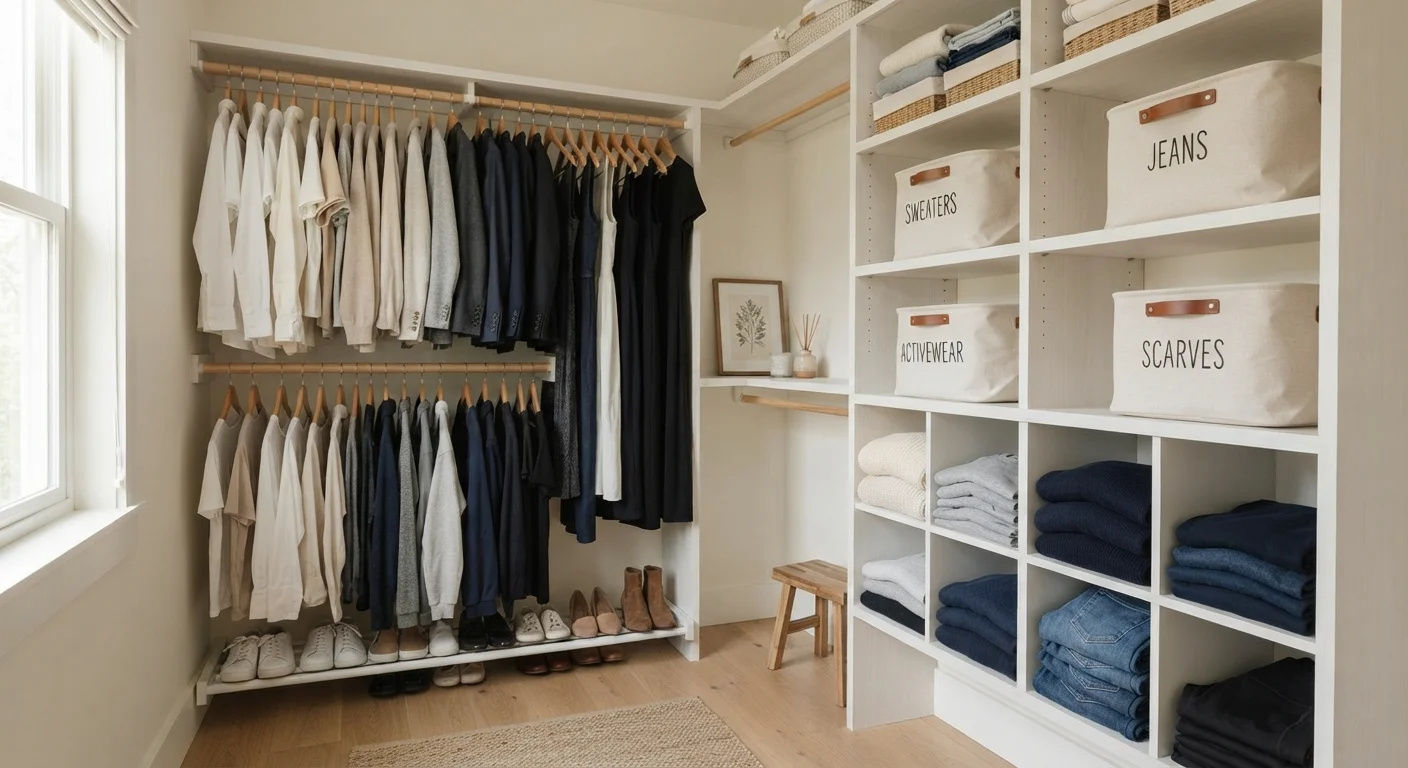
Most standard closets waste the lower half of hanging space beneath long garments. Install or hang a second rod below the main one to double your hanging capacity for shirts, jackets, folded pants, and skirts. This single change often creates the most dramatic improvement.
Use the Full Vertical Height
The space above the standard closet shelf is often ignored. Add a second shelf above the existing one for items used less frequently - spare linens, luggage, or seasonal accessories. Use sturdy bins with labels so you don't have to pull everything down to find one item.
Standardize Your Hangers
Switching to slim, uniform hangers immediately increases rod capacity - often by 30 to 50 percent compared to bulky plastic versions - and creates visual consistency that makes the closet easier to scan. Velvet-flocked versions also prevent slipping for lightweight fabrics.
Group and Arrange by Category, Then Color
Hang items together by type - all tops, then all pants, then all dresses, for example. Within each category, arrange by color from light to dark. This approach makes outfits faster to assemble and makes it immediately obvious when something is out of place.
Fold and Stack Strategically on Shelves
For folded items like sweaters and jeans, use the file-folding method - standing items vertically in a drawer or bin so you can see all pieces at once rather than digging through a pile. This reduces re-folding and makes it easier to maintain order between wears.
Use the Back of the Closet Door
An over-door organizer can hold shoes, accessories, belts, scarves, or small bags - items that would otherwise claim shelf or floor space. This is especially valuable in reach-in closets where floor space is minimal.
Rotate Seasonally to Free Prime Space
Your everyday closet should hold only what you wear in the current season. Boxing up off-season items and storing them under beds, in a spare room, or in vacuum-seal bags can dramatically open up a small closet. Swapping takes about 30 minutes twice a year and pays off in daily usability.
For items that only appear once or twice a year - winter coats, holiday attire, sporting gear - consider moving them out of the primary closet entirely. Our seasonal rotation guide covers practical ways to store and retrieve those items without disrupting your everyday setup. You might also find usable space in spots you've overlooked - see underused storage spots in most homes for ideas beyond the closet itself.
Maintaining the System Without Backsliding
A well-organized closet degrades quickly without a simple maintenance habit. The key is making the right behavior the easiest behavior. Every item should have a designated spot, and that spot should be easy to return to - not just easy to take from.
A weekly reset of five minutes is far more effective than a quarterly overhaul. If you notice clothes piling on a chair or floor rather than returning to the closet, that's a signal the system has friction somewhere: a hanger that's hard to reach, a shelf that's too packed, or a category that needs a clearer home.
If your household has more than one person using a shared closet, organization becomes a negotiation as much as a logistics problem. Our guide to organizing shared spaces offers strategies for building systems that work for everyone - not just the person who set them up.
Avoid Over-Buying Organizers Upfront
It's tempting to purchase an entire suite of bins, dividers, and racks before you know what fits. Buy one category of organizer at a time, test it for a week, and adjust before adding more. Returns are common when items are purchased based on aspirational plans rather than measured reality.
Finally, resist the urge to over-engineer. The most sustainable systems are ones where every step is obvious. If a guest couldn't figure out where something goes within 30 seconds, the system may be too complex to maintain long-term.