

Key Takeaways
Why Organizing Advice So Often Fails
Home organization content is everywhere - yet most people who attempt a major declutter find themselves back where they started within months. The problem usually isn't effort or motivation. It's that widely repeated organizing advice contains several stubborn myths that send people in the wrong direction from the start.
Understanding what doesn't work - and why - is the most direct path to systems that actually hold up in everyday American households.
Myth
You just need more storage. If you had better shelving, more bins, or a bigger closet, everything would finally have a place.
Fact
Storage containers organize what you already have - they don't reduce how much you have. Excess belongings will fill whatever space you create.
This is the most pervasive organizing myth, and it's expensive to believe. More storage accommodates more stuff, which often leads to acquiring even more over time. Professional organizers consistently point to reduction as the necessary first step. Once you've decided what to keep, then appropriately sized storage makes sense. Underused storage spots are worth exploring - but only after you know exactly what needs a home.
Myth
Getting organized is a one-time project. Once you tidy everything up, you just need to maintain it.
Fact
Clutter returns because of ongoing habits, not a single failed cleaning session. Maintenance requires consistent small actions, not periodic overhauls.
Organizing is better understood as a practice than a project. Research on habit formation suggests that behavior change requires repeated action over time, not a single decisive effort. A weekend purge can create a clean slate, but without daily habits - like returning items to their designated spots and reviewing what comes into the home - clutter rebuilds quickly. See how small consistent habits make order stick long term.
Myth
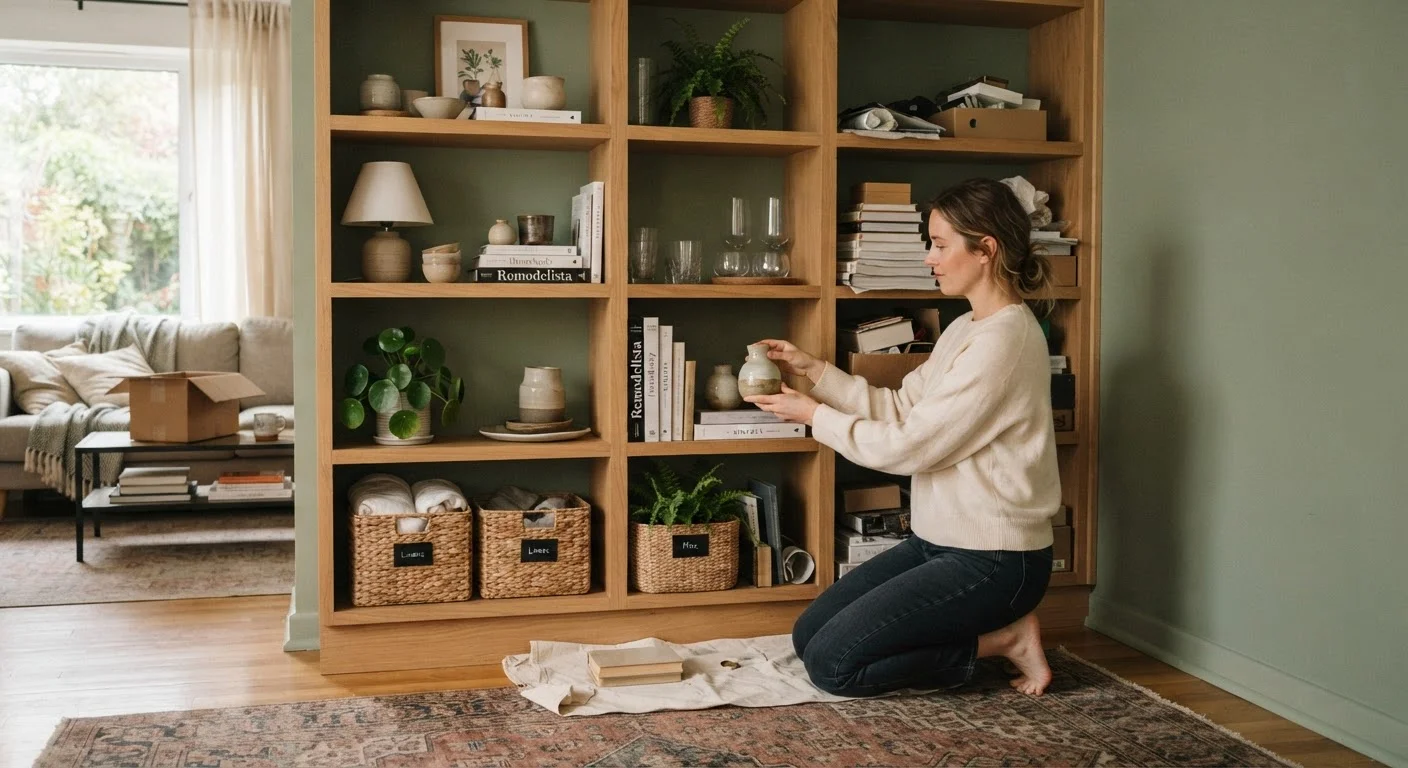
Everything needs to be hidden away to look organized. Open shelves and visible items make a home feel messy.
Fact
Visible storage works well for frequently used items and can reduce friction in daily routines. What matters is intentionality, not concealment.
Hiding everything behind closed doors can actually undermine a system - out of sight often means out of mind, leading to forgotten items and disorganized interiors. Many functional homes use a mix of open and closed storage deliberately: frequently reached items are accessible, while rarely used or visually busy items are contained. The key question isn't "Is it visible?" but "Does this placement make daily life easier?"
Myth
You need a large, dedicated space to get organized. Small homes and cramped closets make real organization impossible.
Fact
Organization quality depends far more on how space is used than how much space exists. Small spaces can be highly functional with the right approach.
Limited square footage requires more thoughtful decisions, not more square footage. Vertical storage, multi-use furniture, and strict ownership limits all help small spaces function well. As covered in our guide on organizing strategies for small closets, arrangement and reduction consistently outperform simply adding more storage area.
Myth
There's one right organizing system, and you just need to find it. Following a popular method will finally fix the problem.
Fact
No single organizing philosophy works for every household. The best system is one you'll actually use consistently, given your real habits and lifestyle.
Frameworks like KonMari, zone-based organizing, and category-based systems each have genuine strengths - and real limitations depending on who's using them. A system designed for a single person with low sentimental attachment to objects will function very differently in a household with children, shared spaces, or multiple people with differing standards. Comparing zone, category, and routine-based approaches can help you find a fit rather than forcing one method.
Myth
Clutter is just a willpower problem. Organized people simply care more and try harder.
Fact
Clutter accumulates for structural reasons - poor systems, unclear homes for items, and mismatched routines - not a failure of character.
Framing disorganization as a personal failing leads people to try harder using the same broken systems, rather than fixing the systems themselves. If items don't have a clear, convenient home, they'll pile up regardless of effort. The junk drawer problem is a good illustration: it's almost never about laziness, and almost always about the absence of a better-designated spot for miscellaneous items.
What Actually Makes a Home Stay Organized
Once the myths are cleared away, a simpler picture emerges. Functional homes tend to share a few common traits: everything that belongs in the home has a specific, convenient location; the number of items is proportional to available space; and daily routines include small resets rather than periodic full overhauls.
Don't Buy Containers Before Decluttering
Purchasing bins, baskets, and drawer dividers before sorting through your belongings is one of the most common - and costly - organizing mistakes. You'll likely buy the wrong sizes, fill them with things you don't need, and end up with more clutter, not less. Always sort and reduce first, then measure and shop.
For homes shared by people with different organization tolerances, the system also needs enough flexibility to survive disagreement. Organizing shared spaces when household members disagree is a genuinely different challenge than solo organizing, and requires its own approach.
Systems Must Fit Real Life
An organizing system that requires perfect behavior every single day will fail most households. The most effective systems account for busy days, shared spaces, and the reality that people backslide. Design for your actual life, not an aspirational one.
If you're starting from scratch in a particularly overwhelming area, a room-by-room approach tends to work better than trying to reorganize an entire home at once. Our garage organization guide walks through a beginner-friendly framework that applies broadly: sort, zone, store, then maintain.
80%
Of clutter is items rarely or never used
Professional organizers frequently cite the 80/20 principle, noting that most households actively use only about 20% of what they own on a regular basis.
1 in 4
American households can't use their garage for cars
According to a UCLA study on American middle-class home life, garage clutter is so prevalent that a significant share of households can no longer park vehicles inside.