

Key Takeaways
Rain Gutter System
A rain gutter system is the network of channels, downspouts, and drainage components attached to the edges of a roof that collect and redirect rainwater away from the home's structure. Without functioning gutters, water runs directly off the roof and pools against the foundation, siding, and landscaping. Proper gutter maintenance protects the integrity of the entire house.
Most U.S. homes use either K-style or half-round gutters made from aluminum, vinyl, or steel. Gutter size (typically 5" or 6" wide) and downspout placement are determined by roof pitch and square footage to manage expected water volume.
What Gutters Are Actually Doing for Your Home
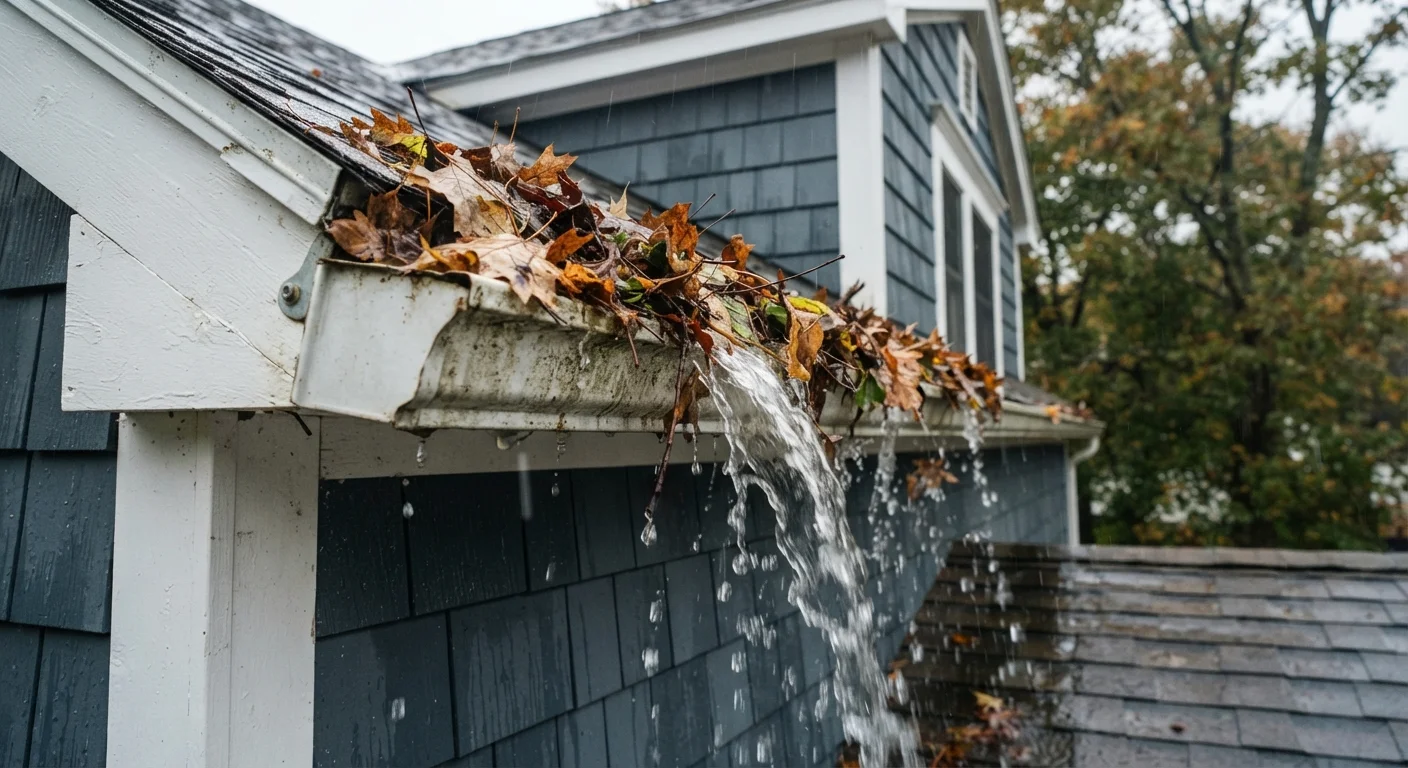
Gutters look simple - they're just channels on the edge of your roof. But their job is fundamental: they intercept rainwater before it can run down your siding, saturate the soil around your foundation, seep into your basement, or erode your landscaping. A typical roof sheds thousands of gallons of water during a moderate rainstorm, and without gutters, all of that moves directly toward the most vulnerable parts of your home's structure.
A properly functioning gutter system does four things at once: it catches water at the roofline, channels it to downspouts, moves it away from the structure, and discharges it far enough from the foundation to prevent soil saturation. When any one of these steps fails, the downstream consequences can be significant - and expensive. This connects directly to the broader pattern described in our article on the hidden costs of deferred home maintenance: small neglected systems often create large repair bills.
The Damage That Builds When Gutters Are Ignored
Homeowners often don't think about gutters until something goes visibly wrong - and by then, the damage has frequently already begun. Here's where the problems typically appear:
- Foundation damage: Overflowing water saturates soil directly against the foundation. Repeated cycles of wetting and drying (or freezing and thawing in cold climates) can cause cracking and settling that is extremely costly to repair.
- Fascia and soffit rot: When gutters sag or overflow inward, water contacts the wooden fascia boards behind them. This wood can rot within a single season of persistent moisture, and rot spreads quickly to the soffit and eventually into the roof structure.
- Basement and crawl space flooding: Saturated soil eventually finds the path of least resistance - often through foundation cracks or window wells into basement spaces.
- Landscape erosion: The volume of water discharged at downspout points can wash away mulch, soil, and plantings repeatedly if the exit point isn't managed.
These aren't theoretical risks. They're the routine outcomes when gutter maintenance is skipped across multiple seasons. For context on how gutter condition relates to overall roof health, see our roof inspection guide.
A Practical Gutter Maintenance Routine
Good gutter care doesn't require special expertise - it requires consistency. A straightforward twice-yearly routine covers the majority of what most homes need.
Cleaning
Clear debris from gutter channels using a scoop, gloved hand, or a purpose-built gutter cleaning tool. Work from one end to the other, then flush the entire length with a garden hose to verify flow and check for standing water, which indicates a low spot or partial blockage in the channel.
Downspout Check
Run water into the downspout from above and confirm it flows freely out the bottom. A blocked downspout can be cleared with a hose at pressure or a plumber's snake. Confirm that downspouts discharge water at least four to six feet away from the foundation - use splash blocks or flexible extensions if needed.
Visual Inspection
From the ground, look for sections that are visibly pulling away from the roofline, sagging in the middle (which indicates standing water and improper slope), or showing rust, cracks, or separated joints. Check the fascia boards behind the gutters for soft spots or discoloration that signals moisture damage.
This maintenance pairs naturally with a broader seasonal home checkup. Our seasonal home maintenance guide provides a full framework for timing these tasks throughout the year.
When to Call a Professional
Many gutter tasks are DIY-friendly, but some situations call for a licensed contractor. If fascia boards behind the gutters feel soft or show visible rot, the repair extends beyond the gutter itself into carpentry - and potentially into the roof structure. Similarly, if a significant length of gutter has separated from the roofline, re-securing it safely requires understanding the underlying attachment method and whether the fascia can still hold fasteners.
Working on ladders also carries real fall risk, particularly on multi-story homes or with steeply pitched roofs. If reaching your gutters safely requires extending a ladder beyond a comfortable angle or leaning out over a significant drop, professional help is the appropriate call.
Finally, if you're noticing persistent water intrusion in a basement or crawl space even after cleaning gutters and extending downspouts, the issue may involve grading, drainage tile, or foundation-level waterproofing - each of which requires a qualified assessment before any work begins.