

Key Takeaways
Summary
28 items · 30-60 minutes to review; tasks vary by season
Why Seasonal Maintenance Matters
A home is a living system - its components expand, contract, wear, and age differently as the seasons change. Gutters clog in autumn. Pipes freeze in winter. HVAC systems strain through summer heat. Without a structured approach, these routine issues quietly escalate into expensive emergencies.
Deferred maintenance compounds quickly - a $10 tube of caulk ignored in fall can become a $1,500 water damage repair by spring. Working through tasks by season keeps the scope of each session manageable and ensures nothing falls through the cracks year after year.
This checklist is organized by season. Not every item will apply to every home - a townhouse in a mild climate has different needs than a detached house in the Upper Midwest - but use it as a starting framework and adjust for your specific property, region, and lease or ownership situation. If you're new to owning a home, the Home Maintenance for First-Time Owners guide is a useful companion resource.
Permits and Codes Apply to Many Repairs
Home maintenance tasks can cross into regulated territory - particularly HVAC replacements, water heater installations, and any structural or electrical work. Most US municipalities require permits and inspections for these jobs. Always check with your local building department before starting work that goes beyond basic upkeep, and hire licensed contractors for regulated tasks. Unpermitted work can create liability issues when you sell or file an insurance claim.
Tools and Supplies to Keep on Hand
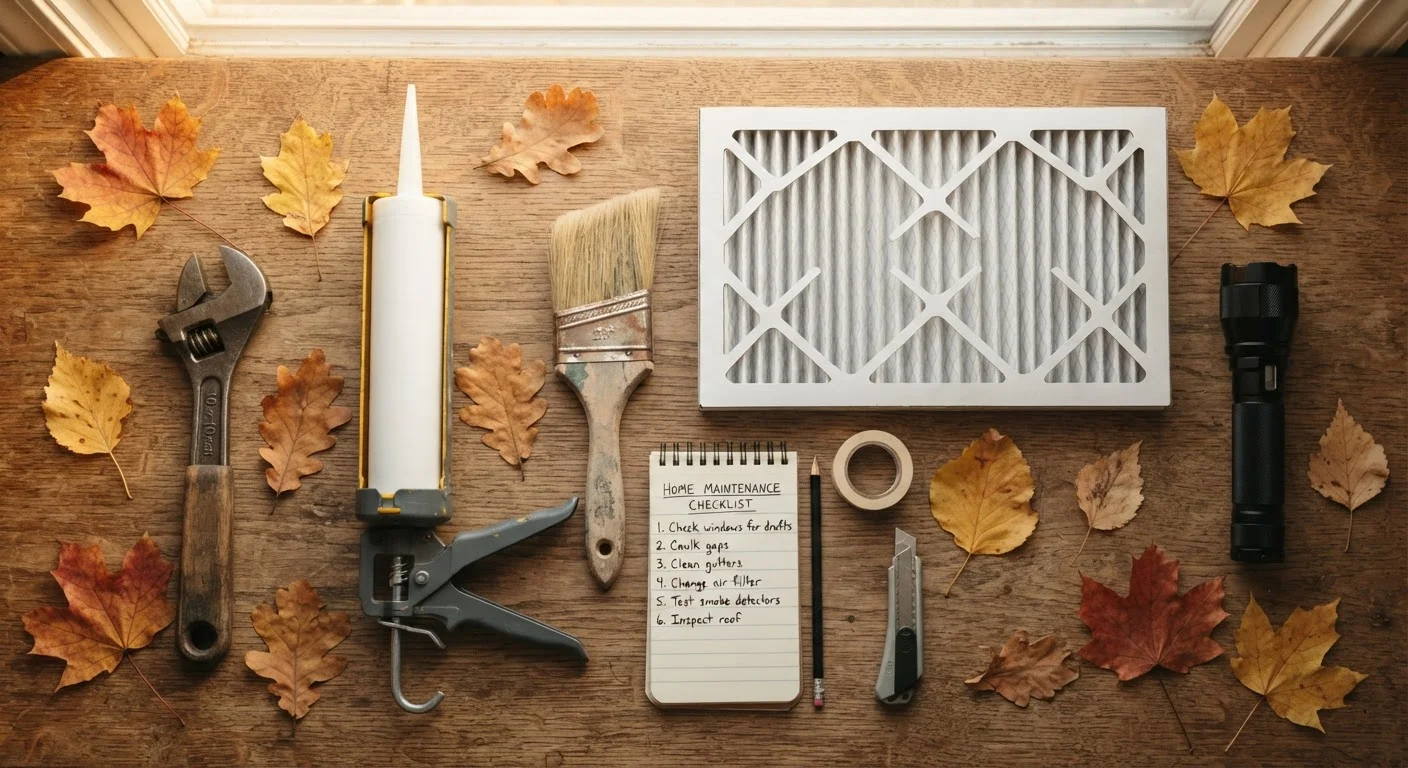
Before working through seasonal tasks, make sure your basic toolkit is stocked. Running out to buy supplies mid-task is a common reason maintenance gets postponed.
Caulking gun and caulk
Seal gaps around windows, doors, and exterior penetrations to prevent air and moisture infiltration.
HVAC air filters (correct size for your system)
Replace filters every 1-3 months to maintain air quality and system efficiency.
Smoke and CO alarm tester
Verify that all detectors respond correctly during seasonal safety checks.
Gutter scoop and garden hose
Remove debris from gutters and flush downspouts to ensure proper drainage.
Flashlight or headlamp
Inspect attics, crawl spaces, and other low-light areas safely.
Pipe insulation foam
Wrap exposed pipes in unheated areas to reduce freeze risk in winter.
Garden hose bib insulating cover
Protect outdoor faucets from freezing temperatures as a low-cost preventive measure.
Voltage tester (non-contact)
Safely confirm power is off before inspecting any electrical components - for general awareness only; electrical panel work requires a licensed electrician.
Your Season-by-Season Maintenance Checklist
Work through each group at the appropriate time of year. Items marked must are non-negotiable for protecting your home's systems and safety. Should items are strongly recommended annual practices. Nice-to-have tasks improve efficiency or comfort but can be deferred without immediate risk.
Spring
Summer
Fall
Winter
Know When to Call a Professional
Some maintenance tasks look approachable but carry real safety risks if performed incorrectly. Any work involving your home's gas lines, electrical panel, structural elements, or roofing on steep pitches should be handled by a licensed professional. Permitted work - such as certain HVAC replacements or electrical upgrades - also requires inspections in most US jurisdictions. When in doubt, get a professional assessment before proceeding.
For tasks involving your water heater specifically, see what homeowners commonly get wrong about water heater maintenance - it's one of the most neglected appliances in the home. And if you're unsure whether a repair should be DIY or professional work, this honest breakdown of DIY home repairs can help you decide before you start.
Before winter sets in, consider doing a full pre-winter walkthrough of your home - it covers weatherstripping, pipe insulation, HVAC filters, and more in a room-by-room format. Renters should also review what changes are lease-safe before undertaking any modifications.
This article is for general informational purposes only. For tasks involving electrical panels, gas lines, structural systems, or permitted work, consult a licensed, qualified professional and verify local code requirements before proceeding.