

Key Takeaways
Why Deferred Maintenance Is a Financial Risk, Not Just an Inconvenience
Putting off a small home repair can feel like a reasonable short-term decision - especially when budgets are tight. But what starts as a $50 caulking job or a $30 gutter cleaning can quietly evolve into a $5,000 water damage restoration or a $15,000 foundation repair. The pattern isn't unusual; it's one of the most consistent ways that homeownership costs spiral beyond initial expectations.
Deferred maintenance works against homeowners in two ways: it allows small problems to worsen structurally, and it signals to insurers and future buyers that a home hasn't been properly cared for. Much like habits that quietly erode savings, neglecting routine upkeep rarely triggers an immediate alarm - the consequences accumulate gradually and then arrive all at once.
The sections below outline the most common maintenance mistakes homeowners make, why those mistakes are so easy to fall into, and what you can do to interrupt the cycle before repairs become emergencies.
Ignoring small roof damage until leaks become visible indoors.
Why it happens: Missing shingles or minor flashing gaps aren't visible from ground level, and homeowners rarely schedule roof inspections unless something obvious goes wrong.
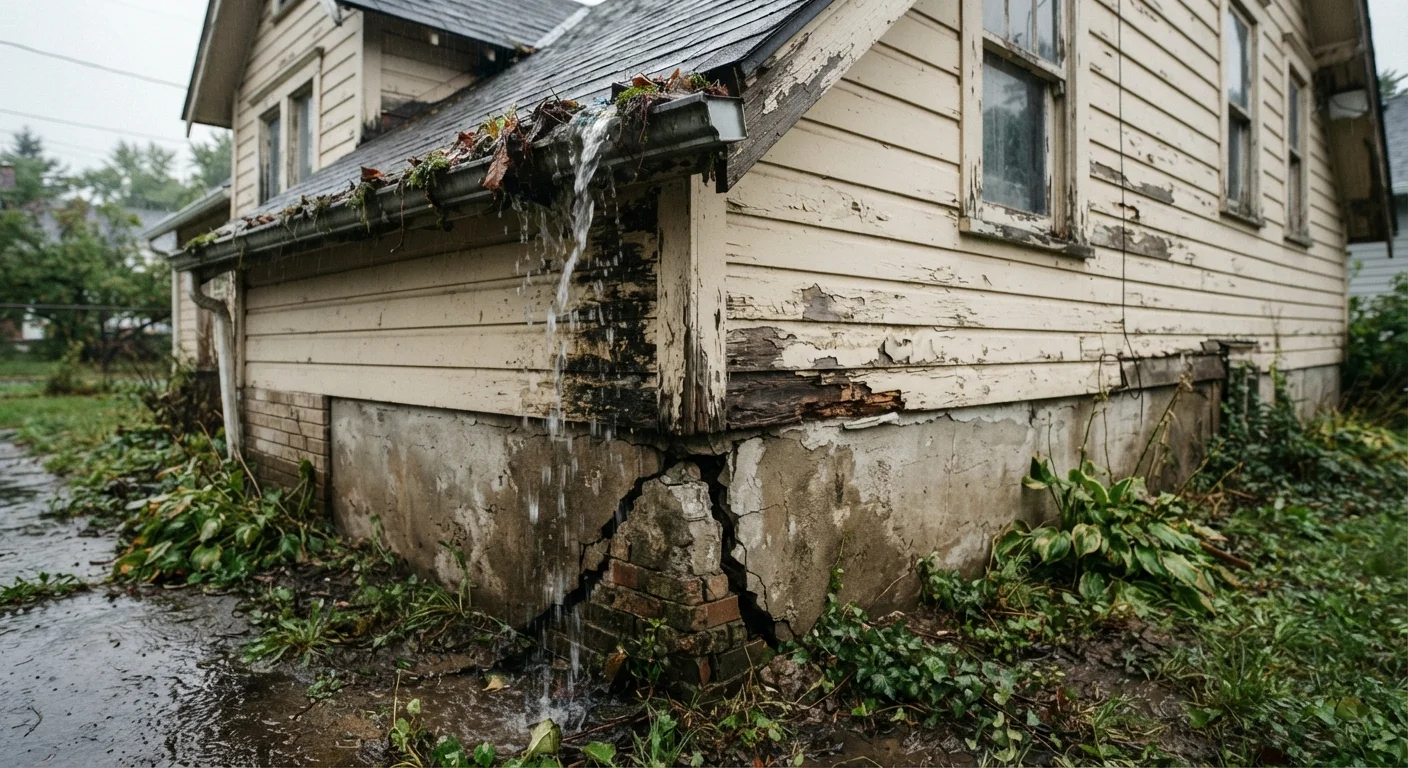
Skipping gutter cleaning, allowing water to overflow against the foundation.
Why it happens: Gutters are easy to forget because they're out of direct sight and the consequences of blockage develop slowly, often underground where they're hardest to detect.
Failing to reseal gaps around windows, doors, and exterior penetrations.
Why it happens: Caulk and weatherstripping deteriorate gradually, and the early signs - slight drafts or faint moisture - are easy to attribute to other causes or simply overlook.
Neglecting HVAC filter replacements and annual system servicing.
Why it happens: Filters are out of sight, and system performance typically degrades so gradually that homeowners don't notice the change until efficiency has dropped significantly.
Leaving minor plumbing drips and slow drains unaddressed.
Why it happens: A slow drip feels minor and easy to tolerate, and many homeowners aren't confident diagnosing whether a leak signals a simple washer replacement or something more serious.
The Real Cost Multipliers Hiding in Plain Sight
Certain systems in a home are especially sensitive to neglect because they interact with other systems. Water, in particular, is the great multiplier: a small roof leak that goes unpatched doesn't just damage shingles - it can soak insulation, rot structural framing, promote mold growth, and eventually compromise drywall and flooring below. By the time visible symptoms appear, multiple trades may be needed for remediation.
~$5,000
Average cost of water damage restoration
According to industry estimates from home restoration contractors, residential water damage remediation often ranges from $3,000 to over $10,000 depending on affected area and materials.
1%-3%
Annual maintenance spend recommended
Many housing and financial planning resources suggest setting aside 1%-3% of a home's value each year for routine upkeep and repairs to prevent larger deferred costs.
Up to 10x
Cost multiplier for unaddressed roof leaks
Roofing and restoration professionals commonly note that water intrusion left unaddressed for a single season can increase total repair costs tenfold compared to early intervention.
HVAC systems follow a similar compounding logic. A clogged filter reduces airflow efficiency, causing the unit to work harder, which shortens its operational life and drives up energy costs - all before any mechanical failure occurs. Replacing a filter costs a few dollars; replacing a compressor can cost thousands.
For homeowners considering which repairs to tackle themselves and which to hand off, it helps to honestly assess complexity and safety risk. The honest case for and against DIY home repairs lays out a practical framework. And for lower-stakes maintenance that doubles as improvement, low-cost weekend projects can address comfort issues without requiring professional trades.
Deferred Repairs Can Affect Insurance Claims
Homeowner's insurance policies generally cover sudden and accidental damage, not damage resulting from gradual neglect or lack of maintenance. If a claim is filed for roof damage or water intrusion and an adjuster determines the problem developed over time due to deferred upkeep, coverage may be denied or reduced. Keeping a record of maintenance performed - with dates and receipts - can help support a claim if damage does occur.
Electrical, gas, structural, and roofing work should always involve licensed professionals. These aren't areas where DIY experimentation is safe or, in many jurisdictions, legal without the appropriate permits and inspections. When in doubt, contact your local building department to verify what's required before beginning any significant repair.