

Key Takeaways
HVAC Preventive Maintenance
HVAC preventive maintenance refers to scheduled upkeep tasks performed on your heating, ventilation, and air conditioning system before problems arise. It includes routine filter replacements, cleaning of key components, and professional inspections designed to keep the system running efficiently and safely. The goal is to catch wear, buildup, or minor faults early - rather than waiting for a breakdown during extreme weather.
HVAC systems are rated by SEER (Seasonal Energy Efficiency Ratio) for cooling and AFUE (Annual Fuel Utilization Efficiency) for heating; neglected maintenance can measurably reduce real-world performance relative to those ratings.
The Filter: Small Part, Outsized Impact
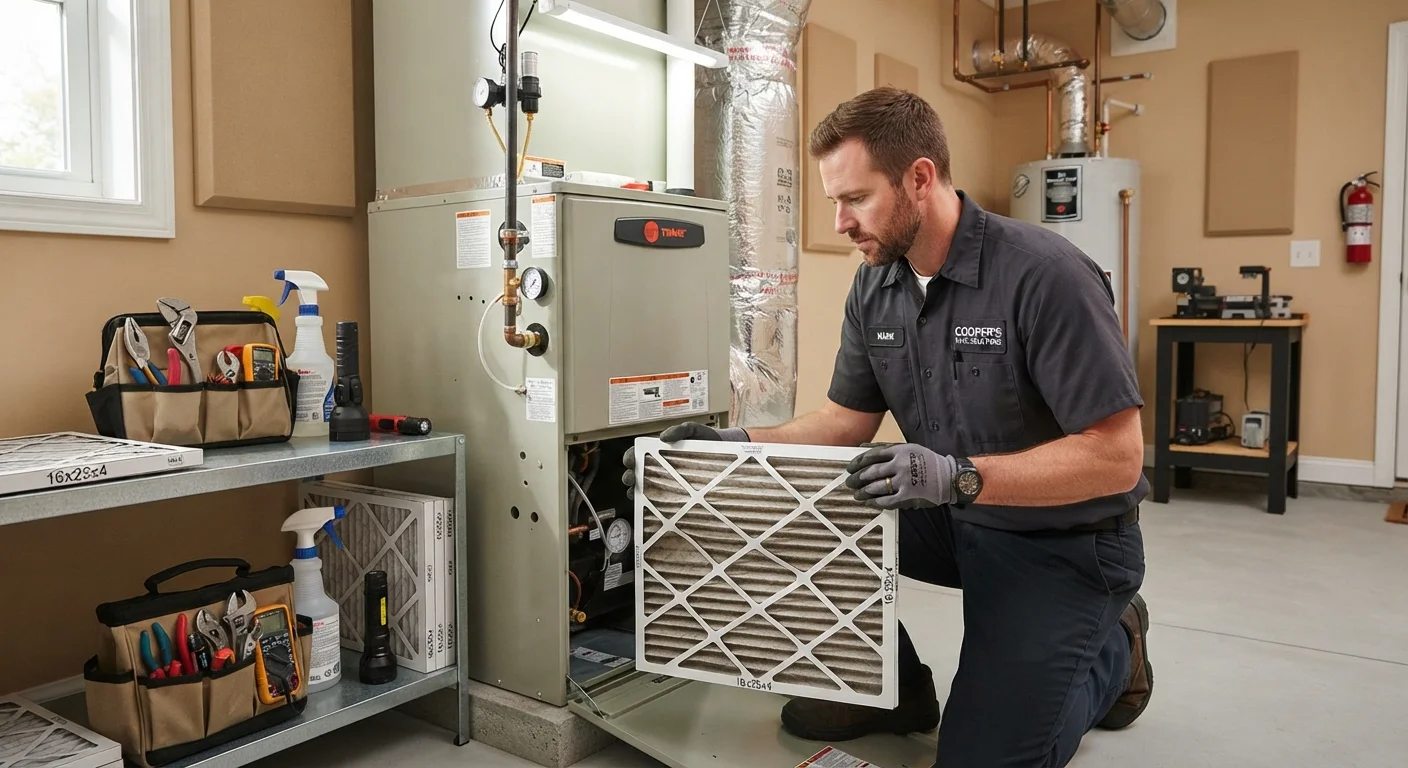
The furnace filter sits between the return air duct and the blower, capturing dust, debris, and particles before they pass through the system. It protects internal components - not primarily the air you breathe, though cleaner air is a side benefit. When a filter becomes clogged, the blower must work harder to pull air through it, which raises energy consumption, strains the motor, and can cause the heat exchanger to overheat and cycle off on a safety limit.
Filters are rated using the MERV scale (Minimum Efficiency Reporting Value). A MERV 8 filter captures most common household dust and pollen. MERV 11-13 filters also trap finer particles like mold spores and pet dander, which improves indoor air quality but creates more airflow resistance. A filter that's too restrictive for your system's blower can actually cause more harm than a well-matched lower-rated one. Consult your equipment documentation or a technician before upgrading filter grades.
Replacement is straightforward: note the filter dimensions printed on the frame, purchase a matching replacement, and slide the new filter in with the airflow arrow pointing toward the blower. Many homeowners find it useful to write the change date on the frame with a marker. For a broader look at seasonal upkeep tasks, see our season-by-season home maintenance guide.
Set a Filter-Change Reminder
Set a recurring calendar reminder on your phone to check the filter every 30 days until you know your home's typical loading rate. Households with multiple pets or occupants with allergies often find that a 30-day replacement cycle works better than the packaging guidance. Once you have a feel for how your filter loads, you can extend or shorten the interval accordingly.
What a Professional Tune-Up Covers
Beyond filter changes, an HVAC system contains components that require professional tools and training to inspect safely. A licensed technician typically performs tasks that fall into three categories: cleaning, measurement, and safety verification.
- Cleaning: Burners, heat exchanger surfaces, the blower wheel, and coil fins accumulate buildup that reduces efficiency and can create combustion or moisture problems.
- Measurement: Technicians check static pressure (airflow resistance), temperature rise across the heat exchanger, refrigerant charge on cooling systems, and electrical draw on motors - all of which reveal whether the system is operating within design specifications.
- Safety verification: Gas pressure and valve operation, heat exchanger integrity (cracks can allow combustion gases to enter living space), and safety limit switches are tested to confirm the system will shut down correctly under fault conditions.
These tasks involve gas connections, electrical components, and - for AC - refrigerant handling that is regulated by federal law. They are not appropriate for DIY. If your system is due for an inspection before winter, our pre-winter home walkthrough checklist covers HVAC alongside other key preparation steps.
When Permits May Be Required
In many jurisdictions, replacing an HVAC unit or making significant modifications to ductwork requires a permit and inspection by a local building official. Routine maintenance - filter replacement, cleaning, inspection - generally does not. If you're unsure whether a planned project requires a permit, contact your local building department before work begins. Licensed contractors typically pull required permits as part of their service.
The Cost Logic of Staying Current
Deferred maintenance on an HVAC system follows a predictable pattern: minor inefficiencies compound, components wear faster under stress, and a system that could have run reliably for 15-20 years may begin failing in its tenth or eleventh year. A heat exchanger replacement or full system replacement represents a substantially larger expense than the cumulative cost of annual tune-ups.
Energy consumption is also a real factor. A system laboring against a clogged filter or dirty coils uses more electricity or gas to deliver the same conditioned air. While individual savings will vary based on utility rates, system size, and climate, the relationship between system condition and efficiency is well established in HVAC engineering literature.
5-15%
Potential energy savings from regular HVAC maintenance
The U.S. Department of Energy estimates that routine maintenance, including filter changes and coil cleaning, can reduce HVAC energy consumption by this range.
15-20 years
Expected lifespan of a well-maintained furnace
Industry guidelines suggest properly maintained forced-air furnaces can operate reliably for 15 to 20 years; neglect typically shortens this range significantly.
1-3 months
Standard filter replacement interval for 1-inch filters
HVAC manufacturers and contractors generally recommend this range for standard residential filters, with shorter intervals for high-occupancy or pet households.
This same logic applies broadly to household systems. Our article on water heater maintenance differences shows how upkeep requirements vary by equipment type - and why understanding them matters for long-term costs.
Building a Practical Maintenance Routine
An effective HVAC maintenance routine doesn't require a large time commitment - it requires consistency. Here's a framework most households can follow:
- Monthly: Visually inspect the filter. Replace if visibly gray or congested, regardless of the scheduled interval.
- Seasonally: Check that supply and return vents are unobstructed by furniture, rugs, or stored items. Clear at least 12 inches of space around the outdoor condenser unit.
- Annually: Schedule a professional inspection - fall for heating systems, spring for cooling. Keep a simple log of service dates and any parts replaced.
Pair HVAC upkeep with other life-safety maintenance habits. Our guide on smoke and carbon monoxide detector testing is a useful companion read, since CO risks and HVAC combustion systems are directly connected.
“The most common cause of HVAC system failure is lack of maintenance. Most breakdowns we see could have been prevented or significantly delayed with routine servicing.”
— Air Conditioning Contractors of America (ACCA), Industry trade association representing HVAC contractors across the United States
This article is for general informational purposes only. Always consult a licensed HVAC professional before performing any work beyond routine filter replacement, and verify local permit or code requirements with your jurisdiction.