

Key Takeaways
Our Verdict
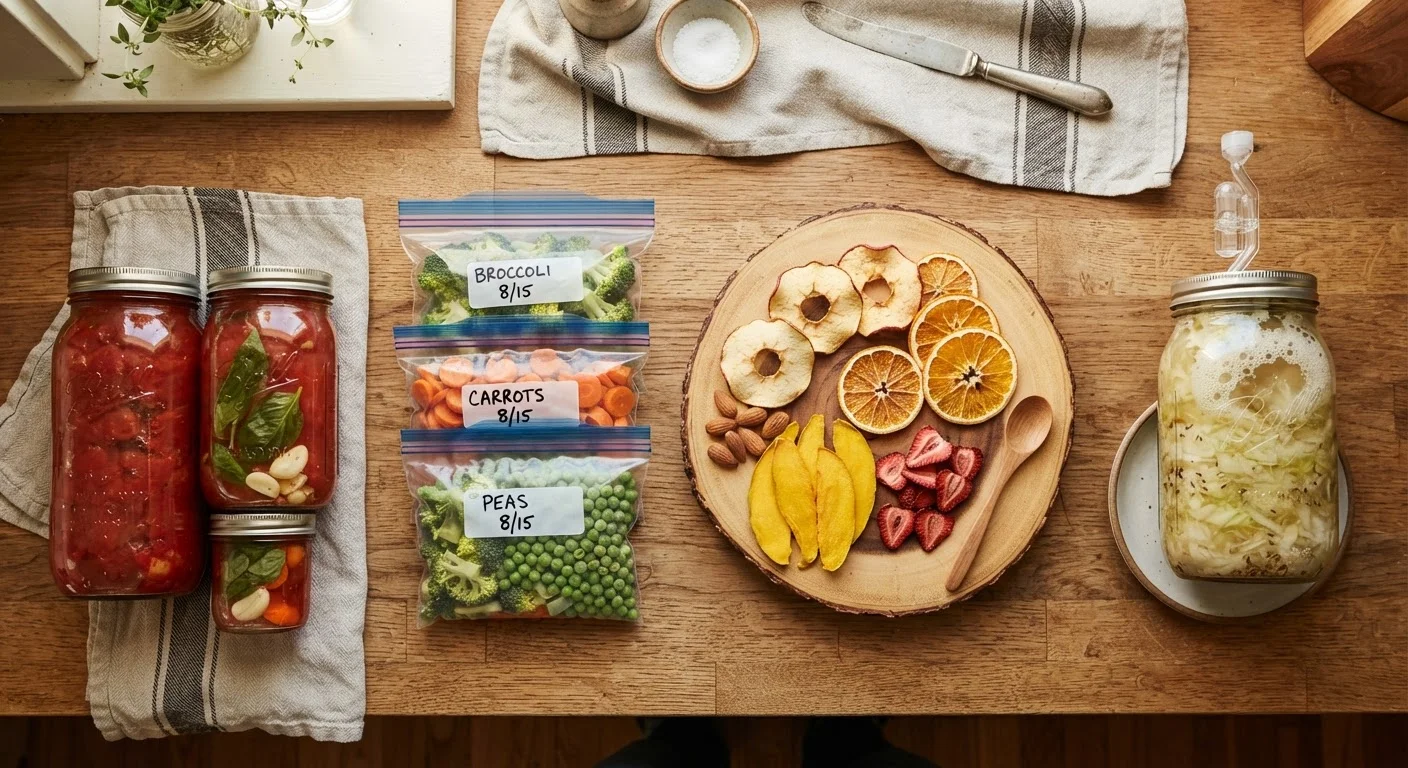
No single preservation method wins across all criteria. Freezing leads on nutrition retention and ease, canning excels for long-term shelf stability, drying offers portability, and fermentation uniquely enhances nutritional complexity. The right choice depends on the food type, how quickly you plan to use it, and what nutritional qualities matter most.
| Best for | Recommended |
|---|---|
| Maximizing nutrient retention | Freezing |
| Long-term shelf-stable storage without refrigeration | Canning |
| Lightweight, portable, shelf-stable snacks | Drying |
| Adding probiotics and developing complex flavors | Fermentation |
How Each Method Actually Works
Food spoils through two main pathways: microbial activity (bacteria, molds, yeasts) and enzymatic breakdown within the food itself. Every preservation method targets one or both of these pathways, just through different mechanisms.
- Canning uses heat to destroy microorganisms and enzymes, then seals food in an airtight container to prevent recontamination. Pressure canning reaches temperatures high enough to eliminate Clostridium botulinum spores in low-acid foods.
- Freezing slows microbial growth and enzymatic activity by dropping food to temperatures at or below 0°F (−18°C). Microbes don't die - they become dormant - so food safety resumes as a concern during thawing.
- Drying (dehydration) removes the water that microbes require to reproduce. With water activity reduced below 0.6, most pathogens cannot thrive.
- Fermentation uses beneficial microorganisms - primarily lactic acid bacteria or yeasts - to produce acids or alcohol that create an inhospitable environment for harmful bacteria.
Understanding the mechanism helps you predict how each method will affect your food before you begin. See also how heat affects nutrients during cooking for related context on heat and food chemistry.
Nutrition: What Each Method Preserves and What It Costs
Preservation invariably involves trade-offs in nutritional content, though the losses vary considerably by method and food type.
| Canning | Freezing | Drying | Fermentation | |
|---|---|---|---|---|
| Nutrient retention | Moderate (heat degrades C, B1) | High (especially when blanched) | Moderate (C losses, minerals concentrated) | Variable; can add new nutrients |
| Shelf life | 1-5 years (sealed) | 3-12 months typically | 6 months-2 years | Weeks to years depending on type |
| Equipment needed | Canner, jars, lids | Freezer bags or containers | Dehydrator or oven | Jar, salt, weight |
| Refrigeration required | No (until opened) | Yes (freezer) | No | Often yes (after active ferment) |
| Texture after preservation | Soft, tender | Near-fresh if sealed well | Chewy or crisp | Transformed, tangy |
| Safety complexity | High (botulism risk if wrong method) | Low | Moderate (meat especially) | Moderate (anaerobic conditions required) |
Freezing typically results in the least nutritional loss when vegetables are blanched briefly before freezing - a step that deactivates enzymes. Studies have found frozen vegetables often match or exceed fresh produce that has traveled long distances in terms of vitamin content.
Canning degrades water-soluble vitamins, particularly vitamin C and thiamine (B1), due to prolonged heat exposure. However, fat-soluble nutrients like vitamin A and lycopene in tomatoes are largely retained - and in the case of lycopene, heat actually improves bioavailability.
Drying concentrates macronutrients and minerals but destroys some heat-sensitive vitamins (especially C). Dried fruit contains significantly more sugar and calories per gram than fresh - a meaningful consideration for those monitoring intake.
Fermentation is unique: it doesn't just retain nutrients, it can synthesize new ones. Fermentation of certain grains and legumes produces B vitamins and increases the bioavailability of minerals by breaking down phytic acid. For a deeper look at these microbial transformations, see fermentation's effect on food's nutritional profile.
Texture, Flavor, and Practical Trade-offs
Nutrition isn't the only variable - texture and flavor change dramatically depending on the method, and those changes determine what the preserved food is actually useful for.
Canned foods become soft and tender, making them ideal for soups, stews, and sauces but less suited to preparations where structure matters. The heat process also mellows raw flavors, which can be an asset or a drawback depending on the dish.
Frozen foods retain structure better than canning but are susceptible to freezer burn and ice crystal damage if packaging is inadequate or storage time is excessive. Texture after thawing varies significantly: berries and leafy greens become soft, while corn and peas hold up well.
Dried foods are dense, chewy or crisp, and highly concentrated in flavor. Rehydration can restore some texture but rarely returns food to its original state. These characteristics make dried goods excellent for trail mixes, baking, and long backpacking trips.
Fermented foods develop sour, tangy, or effervescent qualities through acid and gas production. These flavor transformations are intentional and often prized - think sauerkraut, kimchi, or yogurt - but fermented foods are generally not used as direct substitutes for fresh ingredients.
Combine Methods for a Stronger Pantry
Many experienced home cooks use more than one preservation method to build a well-rounded food supply. Freeze peak-season vegetables for everyday use, can high-acid fruits and tomatoes for long-term storage, dry herbs and mushrooms for convenience, and ferment dairy or vegetables for flavor and gut-health diversity. Matching the method to the food type - and your storage space - produces the best results.
For practical guidance on organizing your preserved foods effectively, the pantry audit framework offers a useful checklist approach to managing what you store.
Safety Considerations by Method
Each method carries specific safety requirements that home practitioners need to understand.
Canning carries the highest risk if done incorrectly. Low-acid foods (vegetables, meats, beans) must be pressure canned - not water bath canned - to safely reach temperatures that destroy botulism spores. Following tested recipes from established food safety sources is essential. Common food safety oversights in home kitchens addresses related risks worth reviewing before starting.
Freezing is the most forgiving method from a safety standpoint, provided food is stored at a consistent 0°F. Thaw food in the refrigerator, under cold running water, or in the microwave - never at room temperature, where the outer layers can reach the danger zone (40-140°F) while the center remains frozen.
Drying requires foods to reach sufficient internal temperatures during drying to eliminate pathogens, particularly for jerky made from meat. Home dehydrators vary in performance, so consulting USDA guidelines on specific temperatures and times is advisable.
Fermentation is self-regulating when done properly - the acid produced inhibits harmful bacteria. However, the environment must be anaerobic (free of oxygen exposure) and the correct salt concentrations used to ensure lactic acid bacteria dominate. Mold on the surface of brine-fermented vegetables is generally a sign of oxygen exposure, not necessarily spoilage throughout.
This article provides general educational information about food science and preservation. It is not a substitute for tested, approved recipes from food safety authorities. Always consult established guidelines from sources such as the USDA for specific processing times, temperatures, and procedures.