

Key Takeaways
Start here
What Fermentation Actually Is
Next
The Microorganisms Doing the Work
Then
How Fermentation Changes Food
Explore examples
Common Fermented Foods and Their Science
Apply it
What This Means for Your Diet
What Fermentation Actually Is
Fermentation is one of the oldest food processes on Earth, yet it happens at a scale too small to see. At its core, fermentation is a metabolic process in which microorganisms - bacteria, yeasts, or molds - break down sugars in food, producing byproducts like acids, gases, and alcohol in the process. No heat, no pressure: just microbial chemistry quietly reshaping ingredients over hours or days.
The process is distinct from simple spoilage. Controlled fermentation favors specific microorganisms that produce desirable changes while crowding out harmful ones. Salt concentration, temperature, and oxygen availability are the environmental levers that determine which microbes thrive. Unlike cooking reactions such as the Maillard reaction, which require high heat, fermentation works cold and slow - yet its flavor impact can be just as profound.
Fermentation
A metabolic process where microorganisms like bacteria or yeast break down sugars in food, producing acids, gases, or alcohol as byproducts.
Lactic acid bacteria (LAB)
A group of bacteria that convert sugars into lactic acid, which preserves food and creates the sour flavor in yogurt, kimchi, and sauerkraut.
Koji
A mold (Aspergillus oryzae) cultivated on grains or legumes that produces enzymes used in making miso, soy sauce, and sake.
Phytic acid
A naturally occurring compound in grains and legumes that can bind minerals and reduce their absorption; partially broken down during fermentation.
Starter culture
A preparation of live microorganisms - bacteria, yeast, or both - added to food to reliably initiate and control the fermentation process.
Bioavailability
The proportion of a nutrient that the body can actually absorb and use; fermentation can increase bioavailability of some vitamins and minerals.
The Microorganisms Doing the Work
Three categories of microorganisms drive most food fermentation:
- Lactic acid bacteria (LAB): The workhorses of vegetable and dairy fermentation. Species like Lactobacillus and Leuconostoc convert sugars into lactic acid, lowering pH and creating that characteristic tang in yogurt, kimchi, and sauerkraut.
- Yeasts: Single-celled fungi that convert sugars into carbon dioxide and ethanol. Saccharomyces cerevisiae is responsible for leavening in bread and fermentation in beer and wine. Wild yeasts from the environment also populate sourdough starters alongside bacteria.
- Molds: Used in a smaller subset of ferments. Aspergillus oryzae (koji) produces enzymes that break down starches and proteins in miso, soy sauce, and sake, generating rich umami compounds.
Many ferments involve communities of these organisms working in sequence or in parallel. A sourdough starter, for example, is a stable ecosystem of wild yeasts and lactic acid bacteria that compete, cooperate, and keep each other in balance.
How Fermentation Changes Food
The microbial activity during fermentation alters food on multiple levels simultaneously:
Flavor and Aroma
Acids, esters, and volatile compounds produced by microbes generate the complex flavors that make fermented foods distinctive. Lactic acid delivers tartness; acetic acid adds sharpness; enzymatic breakdown of proteins releases free amino acids, the building blocks of savory depth. This is why miso or aged cheese carries flavors far beyond their raw ingredients.
Texture
Microbial enzymes break down pectin in vegetables (softening them over time), degrade gluten networks in bread dough, and alter the protein structure of dairy. Salt timing interacts directly with these processes - a concept explored in our guide to salting food at the right moment.
Nutritional Profile
Fermentation can increase the bioavailability of certain vitamins and minerals. Phytic acid, a compound in grains and legumes that binds minerals and limits absorption, is partially broken down during fermentation. Some B vitamins are synthesized by fermenting bacteria. However, these changes vary significantly by food, fermentation duration, and microbial strain - they should not be treated as predictable nutritional guarantees.
Keep Temperatures Consistent for Better Results
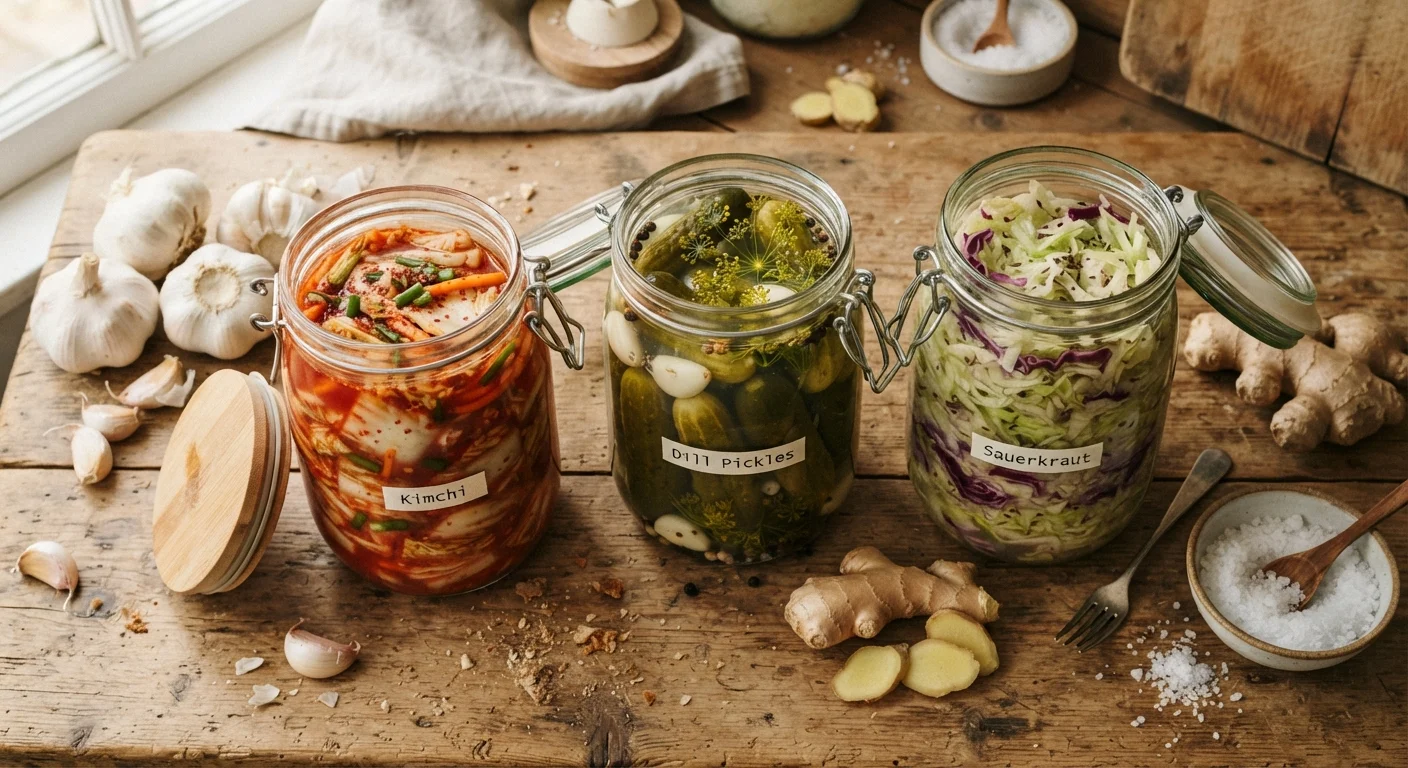
Most lacto-ferments perform best between 65°F and 75°F (18-24°C). Too warm, and unwanted microbes can outcompete beneficial ones; too cold, and fermentation slows dramatically. A stable room-temperature spot away from direct sunlight - like a pantry shelf - is usually ideal for vegetable ferments like sauerkraut or kimchi.
Common Fermented Foods and Their Science
Understanding what happens inside familiar fermented foods makes them easier to use well in cooking:
- Yogurt
- Milk is inoculated with Lactobacillus bulgaricus and Streptococcus thermophilus, which ferment lactose into lactic acid. The acid causes milk proteins to coagulate, creating yogurt's thick texture. The live cultures remain if the product is not heat-treated after fermentation.
- Kimchi
- Salted cabbage and vegetables ferment via naturally present lactic acid bacteria. Salt draws moisture out, creating brine. As LAB multiply, lactic acid accumulates, lowering pH and preserving the kimchi while developing its signature funky-sour character.
- Sourdough bread
- A live starter ferments dough over many hours. Yeasts produce CO₂ for rise; bacteria produce acids that develop flavor and partially break down gluten and phytic acid. The result is structurally and nutritionally different from fast-risen commercial bread.
- Miso
- Soybeans fermented with koji mold and salt for months or years. Koji enzymes break proteins into amino acids (umami) and starches into sugars. Longer aging generally produces darker, more complex flavors.
For a broader look at how fermentation compares to other preservation techniques, see our comparison of food preservation methods.
What This Means for Your Diet
Incorporating fermented foods into your diet is straightforward because many already exist in standard American kitchens: plain yogurt, naturally fermented pickles, sourdough bread, aged cheeses, miso, and tempeh. The key is choosing varieties that retain live cultures where that matters to you, and understanding that fermented foods are nutritious, flavorful additions - not cure-alls.
Research into the gut microbiome and fermented foods is active and promising, but the science is still developing. Current evidence suggests that a diet rich in diverse fermented foods may support a healthy gut microbial community, though individual responses vary considerably. Fermented foods are one layer of a balanced diet, not a replacement for broader dietary variety.
From a culinary standpoint, fermented ingredients are powerful flavor-building tools. A spoonful of miso in a braise, a dollop of yogurt on roasted vegetables, or kimchi alongside eggs adds depth without complexity. The microbes did the heavy lifting long before the food reached your kitchen.
This article is for informational and educational purposes only and is not intended as medical or dietary advice. Consult a qualified healthcare professional before making significant changes to your diet, especially if you have a health condition.