

| Number of FDA-regulated additives | More than 10,000 substances (FDA, Food Ingredients and Packaging overview) |
| Regulatory authority in the U.S. | Food and Drug Administration (FDA) |
| Most common additive by volume | Salt (sodium chloride) |
| Labeling requirement | All intentional additives must appear on the ingredient list by their common or usual name (FDA ingredient labeling regulations) |
| GRAS self-determination | Manufacturers can designate substances GRAS without mandatory FDA notification (FDA GRAS program) |
Why Ingredient Lists Look Like Chemistry Homework
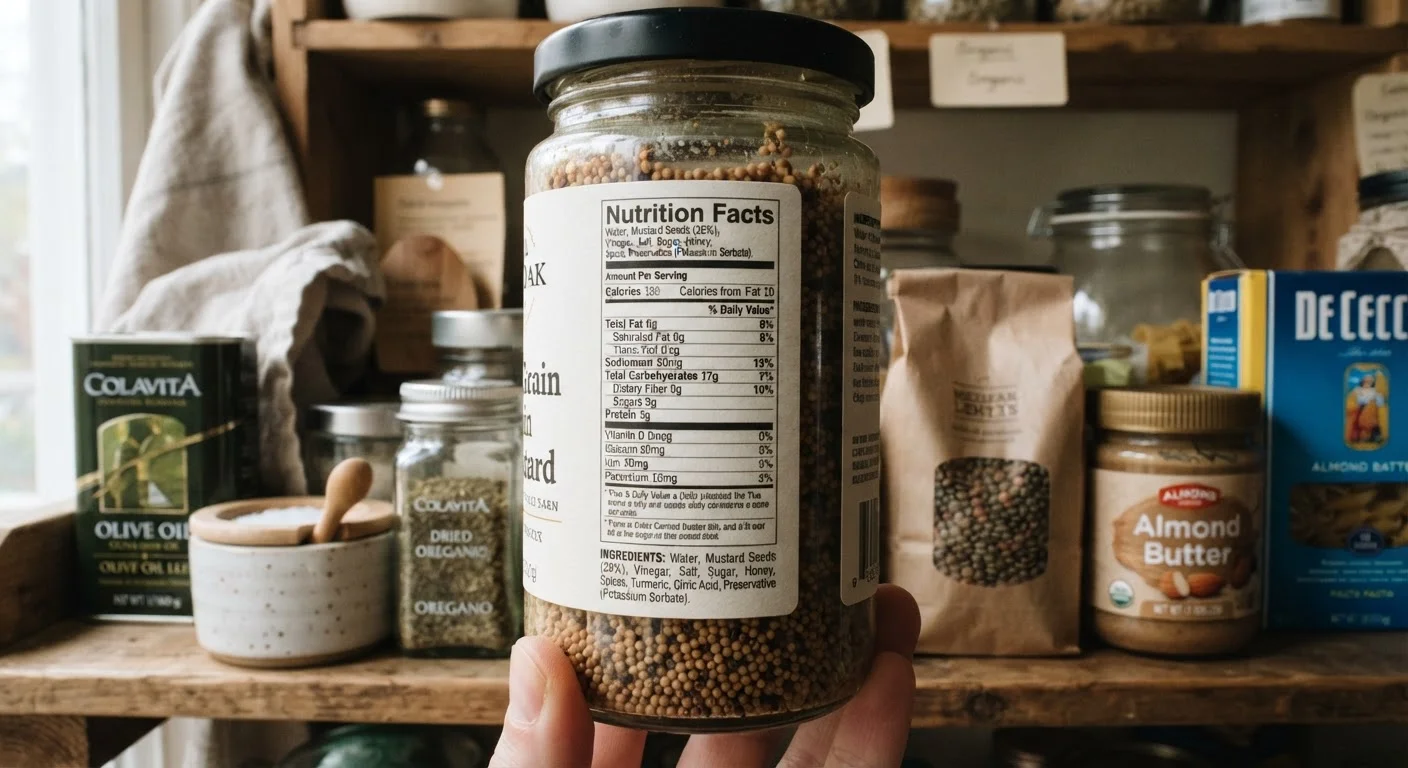
Flip over almost any packaged food and the ingredient list can feel impenetrable - a parade of polysyllabic names that seem designed to confuse. Most of them are not exotic or dangerous; they are functional ingredients with specific jobs. Understanding what those jobs are is the first step toward reading labels with confidence.
In the United States, the FDA requires that all intentional food additives appear on the ingredient list by their common or usual name, listed in descending order by weight. Reading a Nutrition Facts label without getting confused can help you pair that ingredient list with the numbers on the panel above it.
| Number of FDA-regulated additives | More than 10,000 substances (FDA, Food Ingredients and Packaging overview) |
| Regulatory authority in the U.S. | Food and Drug Administration (FDA) |
| Most common additive by volume | Salt (sodium chloride) |
| Labeling requirement | All intentional additives must appear on the ingredient list by their common or usual name (FDA ingredient labeling regulations) |
| GRAS self-determination | Manufacturers can designate substances GRAS without mandatory FDA notification (FDA GRAS program) |
A Plain-Language Glossary of Common Additives
The additives below represent some of the most frequently encountered names on American food labels. Each entry covers what the additive is, what function it performs, and what current science generally says about it. This is educational information - not medical advice. If you have a specific health condition or allergy concern, speak with a qualified healthcare provider.
Food additive
Any substance intentionally added to food during processing, packaging, or storage to affect its taste, texture, appearance, or shelf life. In the U.S., additives must be approved by the FDA or be classified as Generally Recognized as Safe (GRAS).
GRAS
Generally Recognized as Safe - an FDA designation for substances that qualified experts consider safe under intended conditions of use. Many traditional food ingredients, such as salt and vinegar, carry this status.
Emulsifier
A substance that helps oil and water mix and stay blended. Lecithin and mono- and diglycerides are common examples found in salad dressings, baked goods, and spreads.
Preservative
An additive that inhibits microbial growth or oxidation to extend a food's safe shelf life. Examples include sodium benzoate, BHA, and BHT.
Stabilizer
An additive that maintains a food's intended texture and consistency over time, preventing separation or settling. Carrageenan and xanthan gum frequently serve this role.
Carrageenan
A polysaccharide derived from red seaweed, used as a thickener and stabilizer in dairy alternatives, deli meats, and infant formula. Its safety, particularly for the gut, remains an active area of research.
Xanthan gum
A fermentation-derived polysaccharide used to thicken and stabilize sauces, dressings, and gluten-free products. It is widely considered safe at levels found in food.
Sodium nitrite
A curing salt used in processed meats to prevent bacterial growth and preserve color. At high levels, its conversion to nitrosamines in the body has raised health questions in ongoing research.
For a deeper look at one major category, see our companion article on emulsifiers in packaged foods - including how they keep your salad dressing from separating.
Preservatives: What They Prevent and What to Know
Preservatives fall into two broad types: antimicrobials, which slow bacterial and mold growth, and antioxidants, which prevent fats and oils from going rancid. Common antimicrobials include sodium benzoate (found in acidic drinks) and potassium sorbate (found in cheese and baked goods). Common antioxidant preservatives include BHA (butylated hydroxyanisole) and BHT (butylated hydroxytoluene), used in cereals and snack foods.
BHA and BHT have been subjects of ongoing study. At high doses in animal models, BHA has shown some concerning effects, but the levels used in food are far lower. The FDA considers both GRAS at current use levels, while noting that research continues. For more on how antioxidants function in food - versus what marketing claims often imply - see our article on antioxidants in food.
Additive Safety Is Not a Static Verdict
The FDA periodically reviews additives as new research emerges. A substance approved decades ago may be re-evaluated if credible new evidence raises concerns. Staying informed through sources like the FDA website helps you track any changes. Always consult a healthcare professional if you have specific health conditions that may be affected by dietary ingredients.
Sodium nitrite in cured meats is another preservative that receives scrutiny. Research has linked high consumption of processed meats - not just the nitrite itself - with increased risk of certain cancers, according to assessments by organizations like the World Health Organization. This does not mean occasional consumption is acutely harmful, but it is context worth having.
Sweeteners, Colors, and Flavor Enhancers
Artificial sweeteners such as sucralose, aspartame, acesulfame potassium, and saccharin replace sugar's sweetness without the calories. All are FDA-approved. Research on their long-term effects on gut microbiota and appetite regulation is ongoing and not yet conclusive. Added sugar hides under many names - a useful read if you are trying to track total sweetener intake across both natural and artificial sources.
Artificial colors (e.g., Red 40, Yellow 5, Blue 1) are certified by the FDA and must be listed by name. Some parents and researchers have raised questions about behavioral effects in children with sensitivities, though regulatory bodies have not established a definitive causal link at typical consumption levels. The European Union requires advisory labels on products using certain synthetic dyes - a policy difference worth knowing if you travel or import foods.
Monosodium glutamate (MSG) is a flavor enhancer derived from glutamic acid - an amino acid found naturally in tomatoes, parmesan, and mushrooms. The FDA classifies it as GRAS. Decades of controlled research have not confirmed that MSG causes the symptoms historically attributed to it in susceptible individuals, though some people report sensitivity.
10,000+
Substances permitted in U.S. food supply
According to the FDA's Food Ingredients and Packaging overview, more than 10,000 substances are used in or come into contact with food.
~73%
Americans who read ingredient labels
A survey by the International Food Information Council found roughly three-quarters of consumers check ingredient lists, though many report confusion about what they see.