

Key Takeaways
Emulsifiers in Food
Emulsifiers are food additives that help oil and water mix together and stay mixed. Without them, ingredients like oil and vinegar would naturally separate. They're found in hundreds of packaged foods - from salad dressings and mayonnaise to bread, chocolate, and ice cream - where they improve texture, extend shelf life, and create a more consistent product.
Emulsifiers are molecules with both a water-attracting (hydrophilic) end and a fat-attracting (hydrophobic) end, allowing them to bridge oil and water phases and form a stable mixture called an emulsion.
Why Oil and Water Don't Mix - and How Emulsifiers Fix That
Pour oil into water and give it a shake. Within seconds, the two liquids separate into distinct layers. This happens because water molecules are polar - they have positive and negative charges - while fat molecules are non-polar and electrically neutral. They simply don't attract each other.
Emulsifiers solve this problem by acting as a molecular bridge. Each emulsifier molecule has two distinct ends: one that bonds readily with water and one that bonds readily with fat. When an emulsifier is added to a mixture of oil and water, it positions itself at the boundary between the two liquids, surrounding tiny oil droplets and keeping them evenly suspended throughout the water - or vice versa. The result is a stable, uniform mixture called an emulsion.
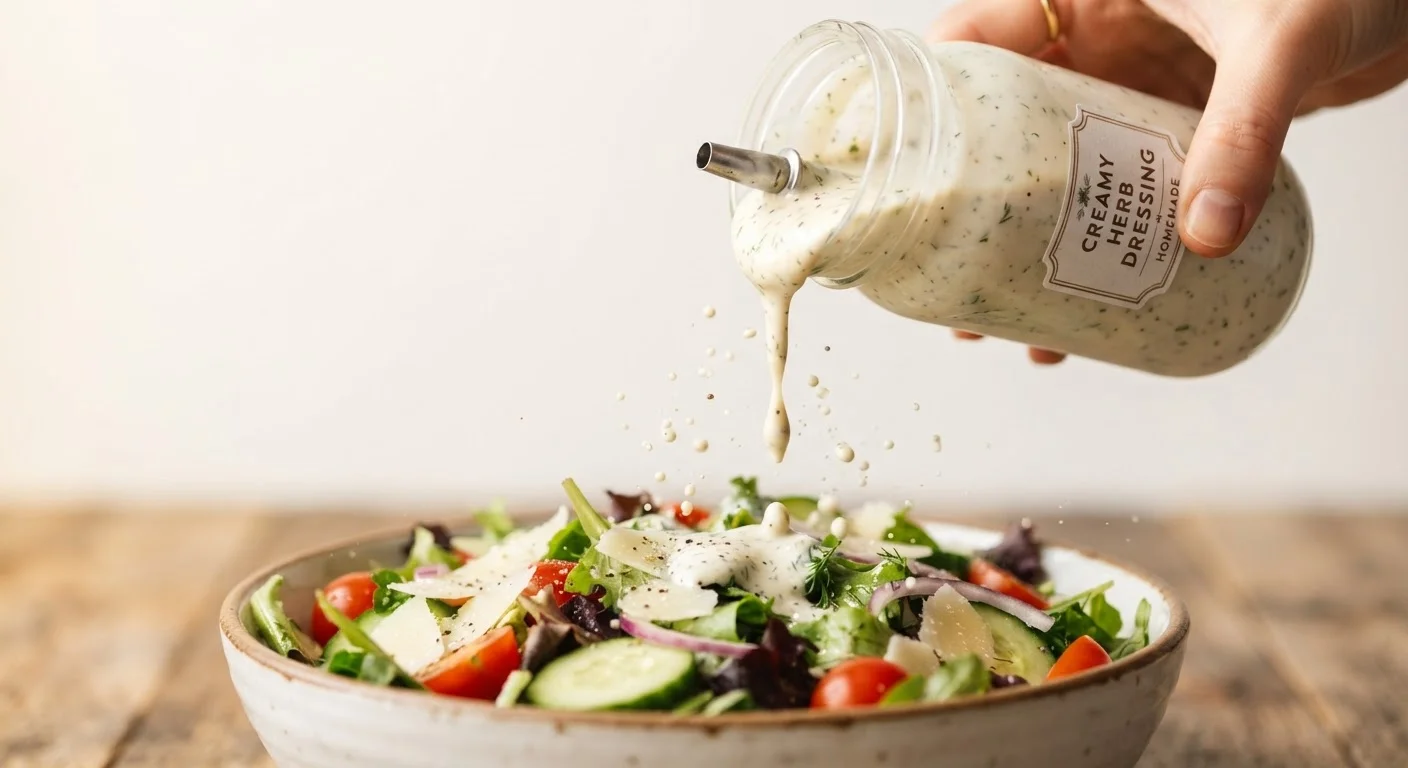
This is the same principle at work whether you're looking at a bottle of store-bought ranch dressing or a loaf of sandwich bread. The physics doesn't change - just the specific emulsifier and the food it's used in.
“Emulsification is one of the most fundamental techniques in food science - it's how we transform simple ingredients into the stable, appealing textures that modern consumers expect from packaged foods.”
— Harold McGee, Author of 'On Food and Cooking,' widely cited food science reference
Common Emulsifiers and Where You'll Find Them
Once you know what to look for, emulsifiers are easy to spot on an ingredient label. Here are some of the most frequently used:
- Lecithin: Found naturally in egg yolks and soybeans, lecithin is one of the most widely used emulsifiers in the food industry. It appears in chocolate, baked goods, salad dressings, and margarine. Sunflower lecithin is increasingly common as an alternative for those avoiding soy.
- Mono- and diglycerides: Derived from fats (plant or animal), these are common in breads, peanut butter, and whipped toppings. They help keep bread soft and prevent oils from separating out of nut butters.
- Polysorbate 80: A synthetic emulsifier used in ice cream to create a smoother texture and slow melting, and in salad dressings and baked goods.
- DATEM (diacetyl tartaric acid esters of monoglycerides): Often used in bread dough to strengthen gluten structure and improve volume.
- Carrageenan: Derived from red seaweed, it functions as both an emulsifier and a thickener in dairy products, plant-based milks, and deli meats.
For a broader look at these and other additives, see our plain-language guide to common food label ingredients.
~90%
Processed foods containing at least one additive
Research published in nutrition epidemiology journals estimates the vast majority of packaged foods sold in the U.S. contain at least one food additive, including emulsifiers.
700+
Substances with FDA GRAS status
The FDA maintains a list of over 700 substances generally recognized as safe for use in food, a category that includes most common food emulsifiers.
1920s
Decade lecithin was first isolated commercially
Commercial soy lecithin has been used as a food emulsifier since the 1920s, giving it one of the longest safety track records of any food additive.
What Emulsifiers Actually Do for Your Food
Beyond simply keeping mixtures from separating, emulsifiers serve several practical functions that affect the quality of food on your shelf and your table.
How to Spot Emulsifiers on a Label
Look for terms like lecithin, mono- and diglycerides, polysorbate, DATEM, or carrageenan in the ingredient list - these are clear signals that an emulsifier is present. Ingredients are always listed in descending order by weight, so emulsifiers typically appear near the end of a long ingredient list, reflecting their small but effective concentrations.
Texture improvement: In ice cream, emulsifiers promote a creamier mouthfeel by controlling how fat molecules interact during churning and freezing. In bread, they interact with gluten and starch to produce a softer, more uniform crumb.
Extended shelf life: By stabilizing emulsions and slowing the migration of moisture, emulsifiers can delay staling in baked goods and prevent oil separation in nut butters - keeping products fresher for longer without necessarily adding preservatives.
Consistent appearance: Chocolate without an emulsifier like lecithin can develop a dull, streaky surface called bloom. Emulsifiers help maintain the glossy finish consumers expect.
These functions explain why emulsifiers are so prevalent in processed foods: they deliver a more reliable, predictable product at commercial scale.
Safety, Research, and How to Read the Label
In the United States, the FDA requires that any food additive, including emulsifiers, be demonstrated as safe before use, or hold GRAS status based on a long history of safe use and scientific consensus. The emulsifiers commonly found in American packaged foods have passed these thresholds.
Emerging research - primarily animal and laboratory studies - has examined whether certain emulsifiers at high doses might disrupt gut bacteria or contribute to low-grade intestinal inflammation. These findings are preliminary, and current human dietary exposure levels are generally far lower than the doses used in experimental studies. Major regulatory and scientific bodies have not revised their safety assessments based on this research to date, though the scientific conversation continues.
For most people, a reasonable approach is straightforward: read ingredient labels with curiosity rather than alarm. If you follow a vegan diet or have religious dietary restrictions, pay attention to the source of mono- and diglycerides. If you have a soy allergy, note that soy lecithin is widespread - though many people with soy allergies tolerate it without issue, it's worth discussing with your healthcare provider.
Those who prefer to minimize their intake of processed food additives overall can focus on cooking from whole ingredients more often. Our food additives reference guide can help you decode other common label terms alongside emulsifiers.
This article is for general informational and educational purposes only and is not a substitute for professional medical or dietary advice. Consult a qualified healthcare professional for guidance specific to your health needs or conditions.