

Key Takeaways
Why the Label Exists and What It's Designed to Tell You
The U.S. Nutrition Facts label is regulated by the FDA and has appeared on most packaged foods since the early 1990s, with a significant redesign completed in 2020 for larger manufacturers. Its purpose is straightforward: to give consumers standardized, comparable information about what they're eating - not to prescribe what they should eat.
Understanding its structure is a foundational food literacy skill. If you're new to thinking about nutrition more broadly, this no-jargon nutrition starting point provides useful context before diving into label specifics.
One important caveat: a Nutrition Facts label reflects what's present in food, not necessarily what your body absorbs. Factors like cooking method, food combinations, and individual biology all influence actual nutrient uptake - a concept explored in depth in this bioavailability explainer.
This Is General Information, Not Medical Advice
Nutrition Facts labels provide general dietary information based on a standardized 2,000-calorie reference diet. Individual nutrition needs vary significantly by age, health status, activity level, and medical history. Consult a registered dietitian or qualified healthcare provider before making significant dietary changes, especially if you manage a chronic health condition.
How to Read Every Line, Section by Section
The label is organized into distinct zones, each serving a different purpose. Working through them in order - rather than jumping to the calorie count - gives you a much more complete picture of what a food actually contains.
What you will need
Packaged food with a Nutrition Facts panel
Your primary reference point for practicing label-reading in real time.
FDA's interactive Nutrition Facts label resource (fda.gov)
Provides an official, annotated breakdown of every label section for reference.
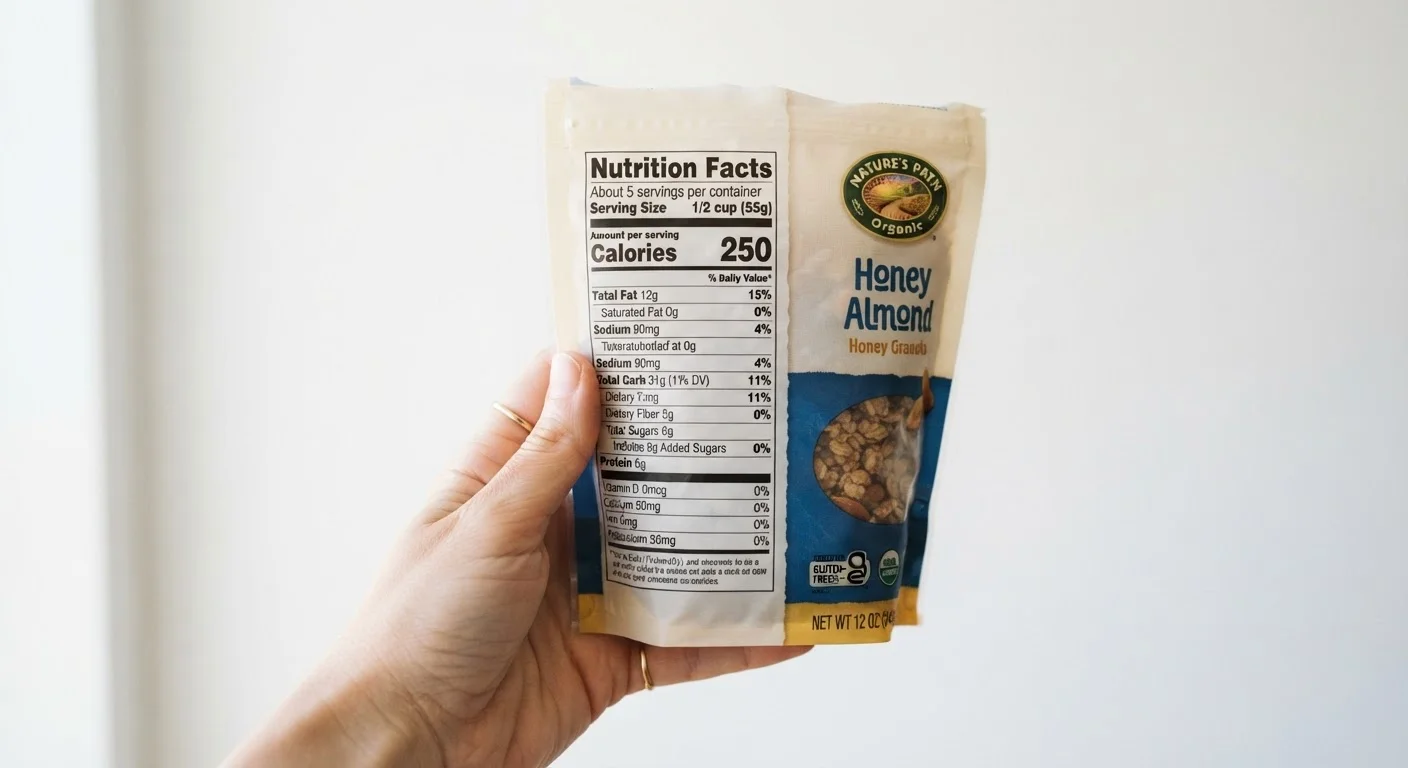
Start with serving size and servings per container
The serving size sits at the very top of the panel in bold, larger type - and for good reason. Every single number below it is calculated per that serving, not per package. Serving sizes are standardized by the FDA based on amounts people typically consume, expressed in both household measures (e.g., "1 cup") and grams.
Check the "servings per container" line immediately below. A 20 oz bottle labeled "2.5 servings" means a full bottle delivers 2.5 times the calories, sugar, and sodium shown.
Read the calories line
Calories measure the total energy one serving provides from all three macronutrients: fat, carbohydrate, and protein. This single number is useful for overall energy awareness, but context matters - a 200-calorie serving of nuts delivers far more nutritional value than a 200-calorie serving of candy.
Examine the fats section
Total fat includes all fat subtypes. Below it, you'll see:
- Saturated fat - linked to elevated LDL cholesterol at high intakes; most dietary guidelines recommend limiting this.
- Trans fat - artificially produced trans fats are largely eliminated from the U.S. food supply, but the line still appears. Aim for 0g.
Unsaturated fats (mono- and polyunsaturated) are not always broken out but are generally considered the more favorable fat types. They're calculated by subtracting saturated and trans fat from total fat.
Break down the carbohydrates section
Total carbohydrates include three subcategories worth distinguishing:
- Dietary fiber - supports digestive health and satiety; most Americans fall short of recommended intake. A good source provides 10-19% DV per serving; an excellent source provides 20% DV or more.
- Total sugars - all sugars present, including those naturally occurring in dairy or fruit.
- Added sugars - sugars incorporated during processing, not naturally present. The FDA requires this line separately because of research linking high added sugar intake to various health concerns. For a deeper look at where added sugar hides, see how added sugar hides on labels.
Check protein
Protein is listed in grams but - unlike fat and carbohydrates - has no % Daily Value on most labels, because individual protein needs vary considerably based on age, body weight, and activity. Use the gram amount as a raw data point and compare it against general guidance from a healthcare or nutrition professional.
Review micronutrients and % Daily Value
The bottom section lists vitamins and minerals - currently required: Vitamin D, Calcium, Iron, and Potassium. Others may appear voluntarily. Each shows a % Daily Value (% DV), which indicates how much of the recommended daily amount one serving provides, based on a 2,000-calorie reference diet.
% DV is most useful as a comparison tool between products. For a deeper understanding of what these nutrients actually do, the plain-language micronutrients reference covers each one in detail.
Cross-reference the ingredient list
The ingredient list is not part of the Nutrition Facts panel, but it's an essential companion. Ingredients are listed in descending order by weight - whatever appears first is present in the largest quantity. The label tells you how much of something is in a product; the ingredient list tells you what form it takes. If you encounter unfamiliar additives, the food additives reference guide decodes the most common ones.
Use % Daily Value as a Quick Compass
The FDA's general guidance: 5% DV or less is considered low for a nutrient, while 20% DV or more is considered high. Use this as a rough signal, not a strict rule, since individual needs vary. It's especially useful for quick comparisons between similar products.
Package Size ≠ Serving Size
Many single-serve-looking packages contain two or more servings. Eating the whole container means multiplying every number on the label by the number of servings listed. This is one of the most common ways calorie and nutrient counts get dramatically underestimated.
For additional context on label language that sits outside the Nutrition Facts panel itself - including terms like "natural flavors" - see what natural vs. artificial flavors actually means.
This article is for informational purposes only and is not a substitute for personalized medical or dietary advice. Consult a qualified healthcare provider or registered dietitian for guidance specific to your health needs.