

Key Takeaways
Antioxidants in Food
Antioxidants are compounds found naturally in many foods - and sometimes added during processing - that can neutralize unstable molecules called free radicals in the body. Free radicals are produced through normal metabolism and environmental exposures like pollution and UV radiation. When free radicals accumulate faster than the body can handle them, a state called oxidative stress can develop, which researchers have linked to aging and various chronic diseases. Antioxidants help counter this process, though how much dietary antioxidants contribute to that defense in living humans is more complicated than most marketing suggests.
Antioxidant activity is often measured in lab settings using assays like ORAC (Oxygen Radical Absorbance Capacity), but these in-vitro scores do not reliably predict how a compound behaves inside the human body after digestion, absorption, and metabolism.
The Science Behind Free Radicals and Oxidative Stress
Every cell in your body produces free radicals as a byproduct of converting food into energy. These molecules carry an unpaired electron, making them highly reactive - they seek to stabilize themselves by borrowing electrons from nearby molecules, potentially damaging DNA, proteins, and cell membranes in the process.
Environmental exposures amplify the load: cigarette smoke, air pollution, UV radiation, and even intense exercise all increase free radical production. A small amount of this activity is normal and even useful - the immune system uses free radicals to destroy pathogens. The problem arises when production significantly outpaces the body's natural antioxidant defenses, creating oxidative stress.
Oxidative stress has been associated in research with the development and progression of cardiovascular disease, type 2 diabetes, neurodegenerative conditions, and cellular aging. That association is what drives scientific and consumer interest in antioxidants - but association is not the same as a proven causal chain that supplemental antioxidants can interrupt.
~600
Known dietary antioxidant compounds
Researchers have identified roughly 600 carotenoids and thousands of polyphenols in the food supply, according to nutritional biochemistry literature - underscoring why no single supplement can replicate a varied whole-food diet.
~5-9
Recommended daily fruit and vegetable servings (USDA)
U.S. dietary guidelines recommend filling half the plate with fruits and vegetables at each meal - a practical framework for consistently increasing dietary antioxidant intake across the day.
Inconsistent
Antioxidant supplement trial results
Multiple large-scale randomized controlled trials, including the ATBC and CARET studies, found that isolated antioxidant supplements did not replicate the benefits associated with antioxidant-rich whole-food diets.
What Antioxidants Actually Do - and Where the Story Gets Complicated
Antioxidants work by donating electrons to free radicals without becoming dangerously reactive themselves, effectively breaking the chain of oxidative damage. The body produces its own antioxidant enzymes - including superoxide dismutase and glutathione peroxidase - and dietary antioxidants from food contribute an additional layer of support.
Here is where the science becomes more complicated than packaging language suggests. Lab studies show that isolated antioxidant compounds can neutralize free radicals with impressive efficiency. But what happens in a petri dish or a test tube does not automatically translate to the same effect after a compound is swallowed, digested, metabolized by gut bacteria, absorbed into the bloodstream, and distributed to tissues.
Bioavailability - how much of a nutrient actually reaches circulation in an active form - varies enormously between compounds and is influenced by the food matrix it comes from, what else is eaten alongside it, and individual gut microbiome differences. A whole blueberry delivers its antioxidants packaged with fiber, water, and dozens of other phytochemicals that influence how compounds are absorbed and used. A capsule containing extracted anthocyanins is a different proposition entirely.
Let Color Be Your Guide
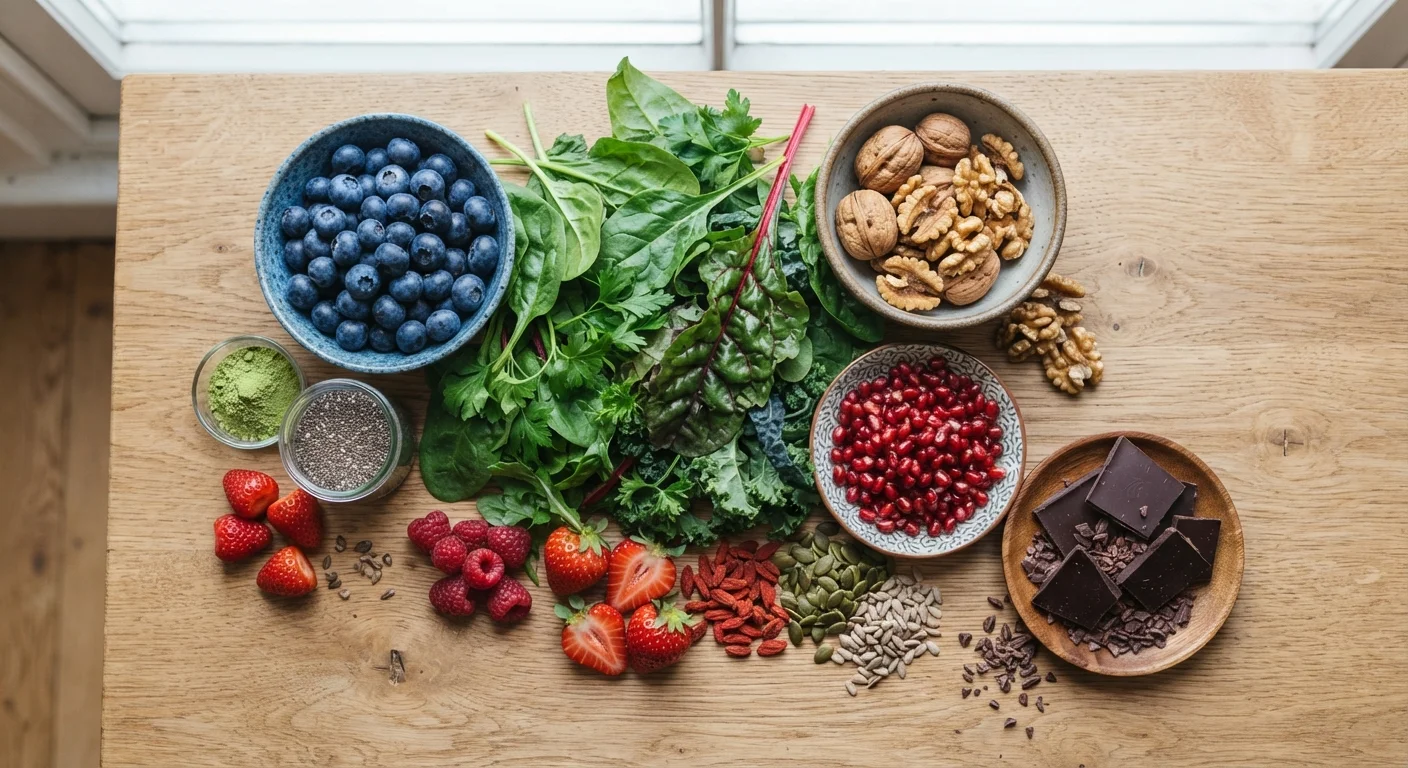
A practical way to diversify your antioxidant intake is to aim for a range of colors across your fruits and vegetables throughout the week. Red, orange, yellow, green, blue, and purple plant foods tend to get their pigments from different antioxidant families - carotenoids, anthocyanins, chlorophylls, and flavonoids - so variety naturally broadens your intake without needing to count specific compounds.
What Whole Foods Offer That Supplements Cannot Replicate
The most consistent finding across nutrition research is that diets built around whole, minimally processed foods rich in antioxidants are associated with better long-term health outcomes - while trials testing isolated antioxidant supplements have repeatedly disappointed. A landmark series of randomized controlled trials found that high-dose beta-carotene supplements increased lung cancer risk in smokers rather than protecting against it. Large vitamin E trials similarly failed to reduce cardiovascular events.
Researchers increasingly suspect this is because whole foods deliver antioxidants within a complex ecosystem of nutrients. Vitamin C in an orange comes alongside hesperidin, quercetin, folate, and potassium. The lycopene in a cooked tomato is better absorbed when consumed with a small amount of fat. These interactions - sometimes called the "food matrix effect" - may be what drives the population-level benefits seen in high-fruit-and-vegetable diets, rather than any single compound acting alone.
This is also why dietary guidelines from organizations like the U.S. Department of Agriculture consistently emphasize food patterns over individual nutrients. The guidance to eat a variety of colorful produce, whole grains, legumes, and nuts reflects the science of synergy, not a simple antioxidant-per-serving calculation. For a broader look at how specific nutrition claims stack up against the evidence, see what food science does and doesn't support about common dietary claims.
Putting Antioxidants in Daily Practice
You do not need to track antioxidant scores or shop for specialty products to meaningfully support your body's defenses against oxidative stress. The practical translation of current evidence is straightforward: eat a varied diet with plenty of colorful produce, whole grains, legumes, nuts, seeds, herbs, and spices.
Cooking method matters too. Some antioxidants - like the lycopene in tomatoes - become more bioavailable when cooked. Others, like vitamin C, degrade with heat. Steaming and roasting generally preserve more antioxidant activity than boiling, which can leach water-soluble compounds into cooking water. Using that cooking water in soups or sauces recovers some of what is lost.
Skepticism is warranted toward products marketed with antioxidant claims, particularly supplements and fortified foods promising outsized benefits. The evidence base supports the food, not the extracted ingredient in a capsule. If you are evaluating nutrition headlines or research studies about antioxidants and other compounds, these questions can help you assess what a study actually shows before changing your eating habits. Similarly, antioxidant marketing is one of many areas where popular belief outruns the science - a pattern explored in depth in common nutrition myths that refuse to die.
This article is for general informational and educational purposes only and is not a substitute for professional medical or dietary advice. Consult a qualified healthcare provider before making significant changes to your diet or beginning any supplement regimen.