

Key Takeaways
Salt Timing
Salt timing refers to the deliberate choice of when to add salt during cooking - before, during, or after - rather than treating it as a single step done at the end. Salt interacts differently with food depending on the stage of cooking, affecting moisture, texture, and how deeply flavor penetrates. Getting the timing right is one of the most practical skills any home cook can develop.
Salt works through osmosis and ion exchange: it draws moisture out of cells and, given enough time, allows that brine to be reabsorbed, carrying flavor deeper into the food's structure.
Why Timing Is the Missing Variable
Most home cooks think of salt as a seasoning they add at the end - a pinch over a finished dish, a shake from a shaker at the table. But professional cooks treat salt as an active ingredient whose effect changes depending on when it's introduced. Understanding this single idea can noticeably improve the food you cook every day.
Salt does more than make things taste salty. It enhances other flavors, suppresses bitterness, and - critically - interacts with the structure of food over time. Those interactions are time-dependent. That's why a chicken breast salted an hour before cooking tastes fundamentally different from one salted at the last second, even if the same amount of salt is used.
This is part of the broader idea behind building flavor through technique rather than relying on more ingredients. Salt timing is free, requires no special tools, and pays dividends across almost every category of cooking.
Use Your Hands to Salt More Evenly
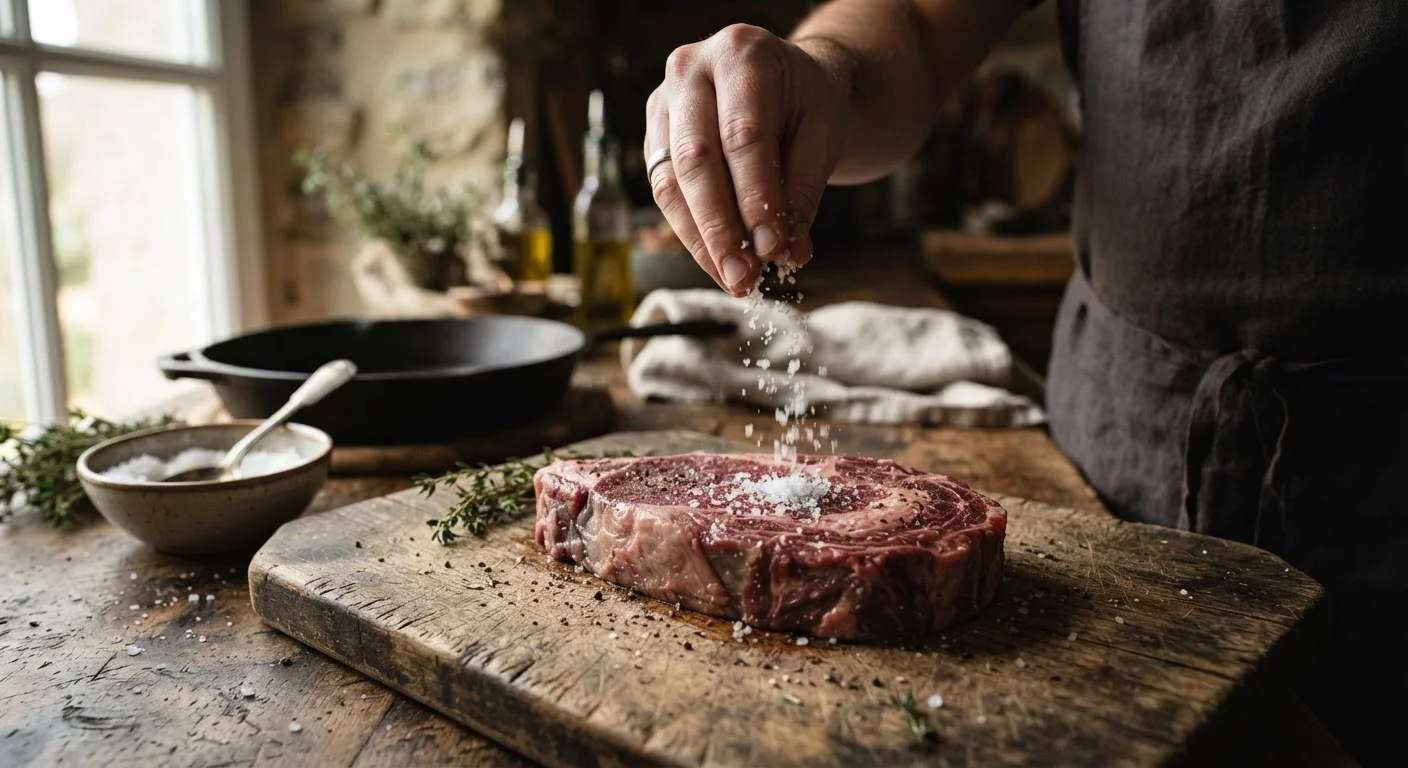
Rather than pouring salt directly from a container, hold a pinch between your fingers and distribute it from 6-12 inches above the food. This height gives the crystals time to spread, resulting in more even coverage across the surface. It's a simple habit that immediately improves consistency.
Meat: The Case for Salting Early
Salting raw meat and poultry well before cooking is one of the highest-impact habits you can build. When you apply salt to the surface of a steak or chicken thigh, osmosis initially pulls moisture toward the surface. Left to rest, that drawn moisture dissolves the salt, forming a light brine that is then reabsorbed back into the muscle tissue - seasoning it from the inside out.
This reabsorption also subtly alters protein structure, which can improve both tenderness and the ability of the surface to develop a proper sear. A dry surface browns; a wet surface steams. Early salting, followed by resting uncovered in the refrigerator, means you arrive at the pan with a drier exterior than last-minute salting produces.
The practical window: for a thick steak or bone-in chicken piece, salting 45 minutes to several hours ahead makes a real difference. Thinner cuts need less time. For a quick weeknight cook, even 15-20 minutes is better than nothing - just avoid the awkward zone of 5-10 minutes, when moisture has been drawn out but hasn't yet been reabsorbed.
~70%
Of sodium Americans consume from processed foods
According to the U.S. Centers for Disease Control and Prevention, the majority of dietary sodium comes from packaged and restaurant foods, not from the salt shaker used at home.
45+ min
Advance salting time recommended for thick proteins
Culinary science resources, including those referencing the work of food scientist Harold McGee, generally cite this window as sufficient for osmotic reabsorption to occur in proteins like steak or chicken thighs.
1 Tbsp
Kosher salt per gallon of pasta water (common starting point)
This is a widely cited baseline in culinary education; actual preference varies by cook and salt type, so tasting the water is always the reliable final check.
Vegetables: Matching the Method
Vegetables behave differently from proteins, and the right salt timing depends on what you're trying to achieve. Firm vegetables like eggplant, zucchini, and cucumber benefit from pre-salting when excess moisture is a problem. Salting sliced eggplant, letting it sit, and then patting it dry removes water that would otherwise make the vegetable steam instead of brown in a hot pan.
For sautéed or stir-fried vegetables, the guidance flips: add salt after the vegetables hit a hot pan. Adding salt too early draws moisture before cooking begins, which can result in limp, watery results rather than the caramelization you're after. Once vegetables are moving in a hot pan, salt can go in to season and help with any remaining moisture management.
Salad greens and dressed salads are the most time-sensitive: dress them and salt them just before serving. Dressed salad left to sit quickly becomes wilted and waterlogged - the opposite of the crisp texture most people want. This pairs naturally with the habit of tasting as you cook and adjusting at each stage.
Pasta Water and Finishing Salt
Pasta water is the most commonly under-salted element in the American home kitchen. Pasta absorbs water as it cooks - and if that water is underseasoned, the pasta itself will be bland regardless of what sauce goes on top. Salt the water generously before adding pasta, and bring it to a boil first. The salt doesn't raise the boiling point meaningfully, but it does ensure every strand of pasta is seasoned as it hydrates.
For more on how the temperature of cooking liquid affects your finished dish, see how simmering versus boiling changes results in soups and sauces.
Finishing salt occupies a different role entirely. Flaked salts applied at the end of cooking - over a finished steak, roasted vegetables, or even a dark chocolate dessert - deliver a bright, sharp hit of salinity and satisfying crunch that can't be replicated by salt applied earlier. It's textural contrast, not deep seasoning. Both have a place; they are not interchangeable.
Understanding salt timing connects to a broader principle explored throughout the food science of cooking: small, deliberate choices about how ingredients are handled change outcomes in measurable ways. Salt is one of the most powerful levers you have - and timing is how you control it.
This article is for general informational and educational purposes only. Individuals with dietary restrictions or health conditions affecting sodium intake should consult a qualified healthcare professional for guidance specific to their needs.