

Key Takeaways
The Maillard Reaction
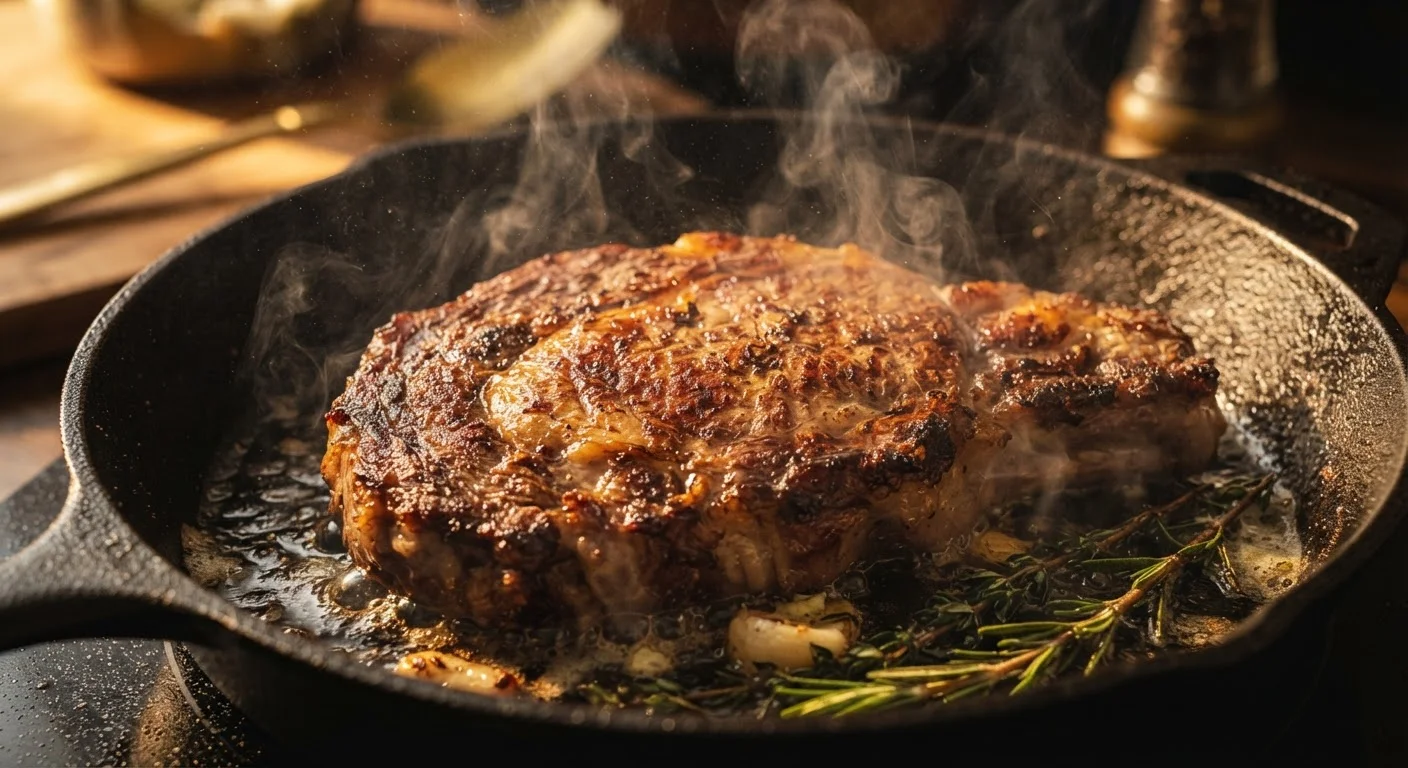
The Maillard reaction is a chemical process that occurs when amino acids (from proteins) and reducing sugars in food are exposed to heat, triggering a cascade of reactions that produce brown color and hundreds of new flavor and aroma compounds. It's responsible for the crust on seared steak, the golden color of toasted bread, the rich scent of roasted coffee, and the complexity of baked cookies. The reaction typically begins around 280-330°F (140-165°C) and accelerates with higher temperatures and drier surfaces.
Named after French chemist Louis-Camille Maillard, who first described it in 1912, the reaction is non-enzymatic browning - distinct from both enzymatic browning (like cut apples turning brown) and caramelization (which involves only sugars, not amino acids).
What Actually Happens When Food Browns
When heat meets food, a remarkable transformation begins at the molecular level. The Maillard reaction isn't a single chemical event - it's a complex chain of hundreds of simultaneous reactions producing an enormous variety of flavor molecules, pigments, and aromas. That's precisely why well-browned food tastes so much more interesting than its unbrowned counterpart.
The reaction requires three things: amino acids (the building blocks of proteins), reducing sugars (such as glucose and fructose), and enough heat. As temperature climbs past roughly 280°F, these molecules collide and rearrange into entirely new compounds called melanoidins - the brown pigments - along with a wide array of volatile aromatic molecules that give browned food its distinctive smell and taste.
Crucially, the Maillard reaction is not the same as burning. A lightly charred edge and a perfectly golden crust both involve heat, but controlled browning produces desirable flavors while true charring generates bitter, acrid compounds through different chemical pathways.
“The Maillard reaction is probably the most widely practiced chemical reaction in the world, and it's one of the most complex. When you brown food, you are creating hundreds of flavor and aroma molecules that simply did not exist before.”
— Harold McGee, Food scientist and author of 'On Food and Cooking'
Why Moisture Is the Biggest Obstacle
Water boils at 212°F - well below the temperature needed to trigger meaningful Maillard browning. As long as a food's surface is wet, evaporation keeps the surface temperature capped at 212°F, no matter how hot your pan gets. This is why steamed chicken looks pale and boiled potatoes never develop a crust: the water prevents the surface from getting hot enough.
This principle has direct, practical consequences in the kitchen. Crowding a hot pan lowers its temperature and traps steam from multiple pieces of food, turning a sear into a braise. Patting protein dry before cooking, using a preheated pan, and avoiding overcrowding are all strategies that promote the dry, hot surface conditions the Maillard reaction needs.
Pat It Dry Before You Sear
For the best crust on any protein, pat the surface thoroughly dry with paper towels immediately before it goes into the pan. Even a small amount of surface moisture will delay browning significantly. For chicken pieces, a few uncovered hours on a rack in the refrigerator produces an even drier surface and crispier result.
The same logic applies to roasting vegetables. Spreading them in a single layer on a sheet pan - rather than piling them together - allows moisture to escape and surfaces to brown. Overcrowded vegetables steam in their own moisture and turn soft rather than caramelized and flavorful. Our guide to roasting, baking, and broiling explains how oven heat works differently across these three techniques.
How to Apply This in Your Kitchen
Understanding the Maillard reaction turns abstract chemistry into actionable cooking technique. A few consistent habits make the difference between pale, flat-tasting food and deeply flavored results.
- Dry surfaces first: Pat proteins dry with paper towels before searing. For poultry skin, leaving it uncovered in the refrigerator for several hours removes additional moisture.
- Use high, dry heat: Cast iron pans, carbon steel, and preheated sheet pans retain heat well and promote browning. Lower-heat cooking is better suited to gentle methods where browning isn't the goal.
- Don't rush or crowd: Give food space and resist the urge to move it constantly. Letting it sit undisturbed allows the surface temperature to build and the crust to set.
- Sugar content matters: Foods or marinades with added sugars brown faster - useful for glazes, but easy to burn if heat is too high.
These techniques underpin the kind of layered, complex flavor that requires no long ingredient list. As explored in our article on building flavor without a long list of ingredients, browning is one of the most powerful tools a cook has.
800+
Aroma compounds identified in roasted coffee
Food chemists have identified more than 800 volatile aroma compounds in roasted coffee, the majority formed through the Maillard reaction during roasting.
280-330°F
Temperature range where Maillard browning begins
Food science research consistently places the onset of significant Maillard reaction activity between approximately 280°F and 330°F (140-165°C) under typical cooking conditions.
1912
Year the reaction was first described
French physician and chemist Louis-Camille Maillard first published his description of the amino acid-sugar reaction in 1912, though its culinary importance was recognized much later.
It's also worth noting that browning affects more than flavor. The Maillard reaction alters certain amino acids in the process - something worth keeping in mind if you're curious about the broader relationship between cooking and nutrition. Our piece on why cooking destroys some nutrients but unlocks others covers that trade-off in detail.
This article is for informational purposes only and does not constitute medical or dietary advice. Consult a qualified nutrition or healthcare professional for guidance specific to your individual health needs.