

Key Takeaways
Start here
What Defensive Driving Actually Is
Next
The Core Habits: Scanning, Spacing, and Anticipation
Then
Managing Your Own Behavior Behind the Wheel
Apply it
How to Build These Skills Over Time
What Defensive Driving Actually Is
The phrase "defensive driving" gets used loosely - often as a synonym for driving slowly or timidly. That's a misconception worth clearing up. Defensive driving is a structured approach to managing risk on the road by staying aware of hazards before they demand a reaction. It assumes that other drivers will make mistakes and prepares you to respond without a crisis.
The core philosophy: you cannot fully control other drivers, road conditions, or mechanical surprises - but you can control your positioning, attention, and decision-making. Defensive driving systematizes those variables.
Following distance
The gap between your vehicle and the one ahead, measured in time rather than car lengths. A safe following distance gives you enough room to stop or maneuver if the vehicle in front brakes suddenly.
Scanning
The habit of actively looking far ahead and checking mirrors in a regular pattern - not fixating on the car directly in front of you. Good scanning gives you earlier warning of developing hazards.
Hazard anticipation
Reading the road environment for cues that suggest a risk is developing - such as a vehicle edging toward your lane or a light turning yellow ahead - before that risk becomes an emergency.
Blind spot
An area alongside or behind your vehicle that your mirrors do not fully cover. Blind spots vary by vehicle size and mirror adjustment, and require a physical head check to confirm before lane changes.
Three-second rule
A simple method for estimating following distance: the time between when the vehicle ahead passes a fixed point and when you pass the same point should be at least three seconds under normal conditions.
This differs meaningfully from aggressive driving, which treats road frustrations as provocations. See how road rage and defensive driving diverge for a closer comparison of those two mindsets.
The Core Habits: Scanning, Spacing, and Anticipation
Three interlocking habits form the practical foundation of defensive driving:
Scanning Ahead - Not Just the Car in Front
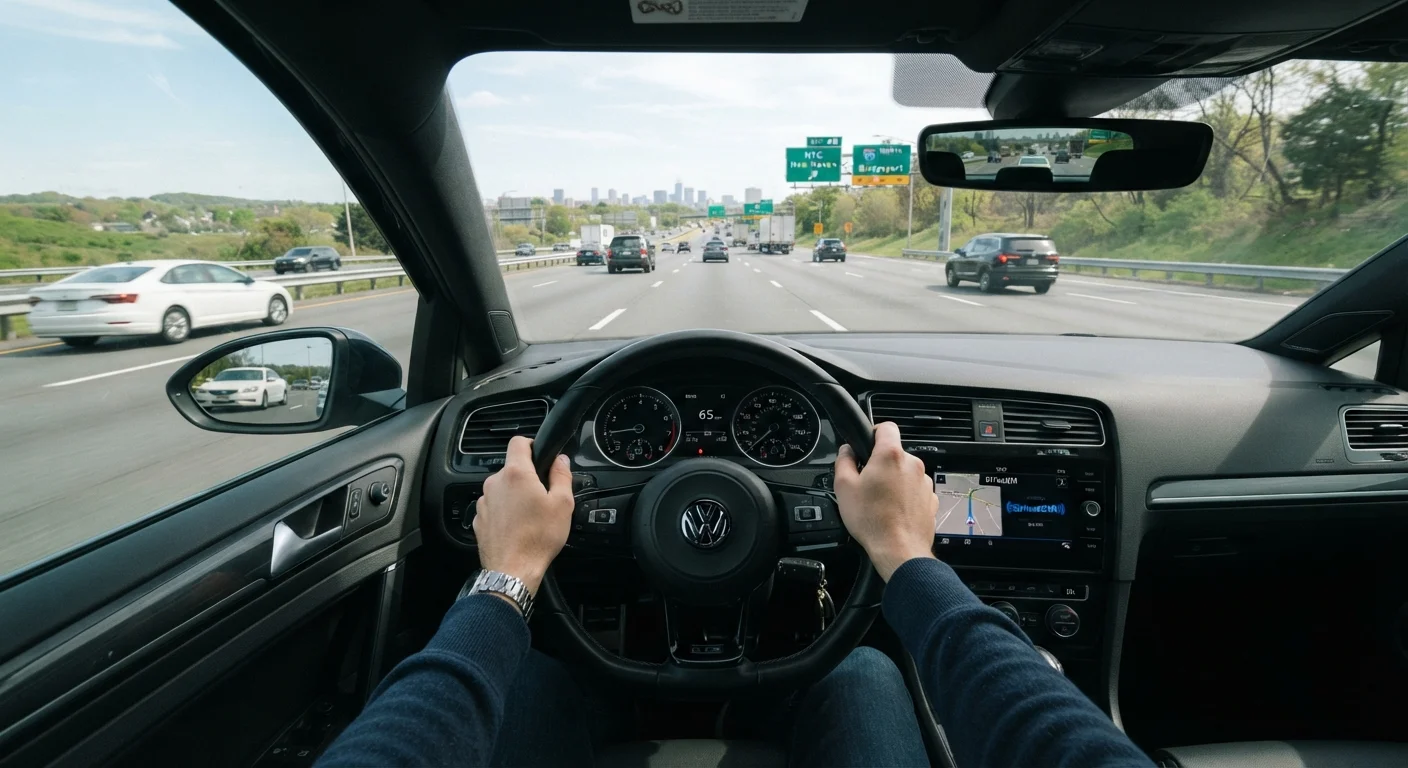
Most drivers focus on the vehicle immediately ahead. Defensive drivers scan 12-15 seconds down the road - far enough to notice brake lights clustering, a merging truck, or a pedestrian stepping toward the curb. This preview window is what converts a potential emergency into a manageable slow-down.
Maintaining a Proper Following Distance
The three-second rule gives you a minimum cushion: choose a fixed roadside marker and count the seconds between when the vehicle ahead passes it and when you do. Three seconds is a baseline for dry pavement at normal speeds. In rain, fog, or snow - conditions covered in detail in our guide on adjusting habits for low-visibility conditions - that gap should increase substantially.
Anticipating Rather Than Just Reacting
Watch for behavioral cues: a driver drifting toward your lane, a vehicle approaching a stop sign too fast, a cyclist riding near a parked car door zone. Anticipation means reading these signals early enough that you're already adjusting your speed or position before the risk materializes.
Practice Scanning on Routes You Know Well
Familiar roads can create a false sense of autopilot. Use well-known commute routes specifically to practice active scanning - you already know the layout, so your attention is free to focus on building the habit of looking 12-15 seconds ahead and checking mirrors in rotation.
Mirrors are essential but not sufficient. Every vehicle has blind spots that mirror adjustments cannot fully eliminate. Understanding blind spots and when to use head checks is a natural next step after mastering basic scanning habits.
Managing Your Own Behavior Behind the Wheel
Defensive driving isn't only outward-facing. Your own state matters just as much as what's happening on the road.
- Distraction: Phones are the most cited culprit, but adjusting navigation, eating, or managing passengers are equally attention-fragmenting. Defensive driving requires genuine cognitive availability - not just hands on the wheel.
- Fatigue: Drowsy driving impairs reaction time in ways that mirror alcohol impairment. Night driving compounds fatigue risks in ways many drivers underestimate.
- Emotional state: Frustration, rushing, or anxiety narrows your attention and increases the temptation to take risks. Recognizing that you're in an elevated emotional state - and consciously slowing your response - is itself a defensive skill.
The goal is to enter and maintain a calm, deliberate mode of attention throughout every trip, not just when traffic gets complicated.
How to Build These Skills Over Time
Defensive driving becomes automatic through deliberate repetition, not passive experience. A few practical approaches:
- Narrate hazards on familiar routes. Silently name what you're noticing - "pedestrian near crosswalk," "truck merging right" - to sharpen active scanning as a habit rather than an afterthought.
- Practice the three-second count consciously until maintaining appropriate following distance feels natural rather than something you have to remember.
- Vary your conditions intentionally. City and highway driving demand genuinely different attention patterns. Highway versus city driving skills covers the specific differences worth practicing in each environment.
- Consider a formal course. Many states recognize defensive driving programs for license points reduction or insurance purposes, though you should verify eligibility with your state DMV and insurer directly.
No single session embeds these habits permanently. They strengthen over time - and the investment is straightforward: most crashes involve at least one decision that could have been made differently.