

Key Takeaways
Why Bad Weather Demands a Different Driver
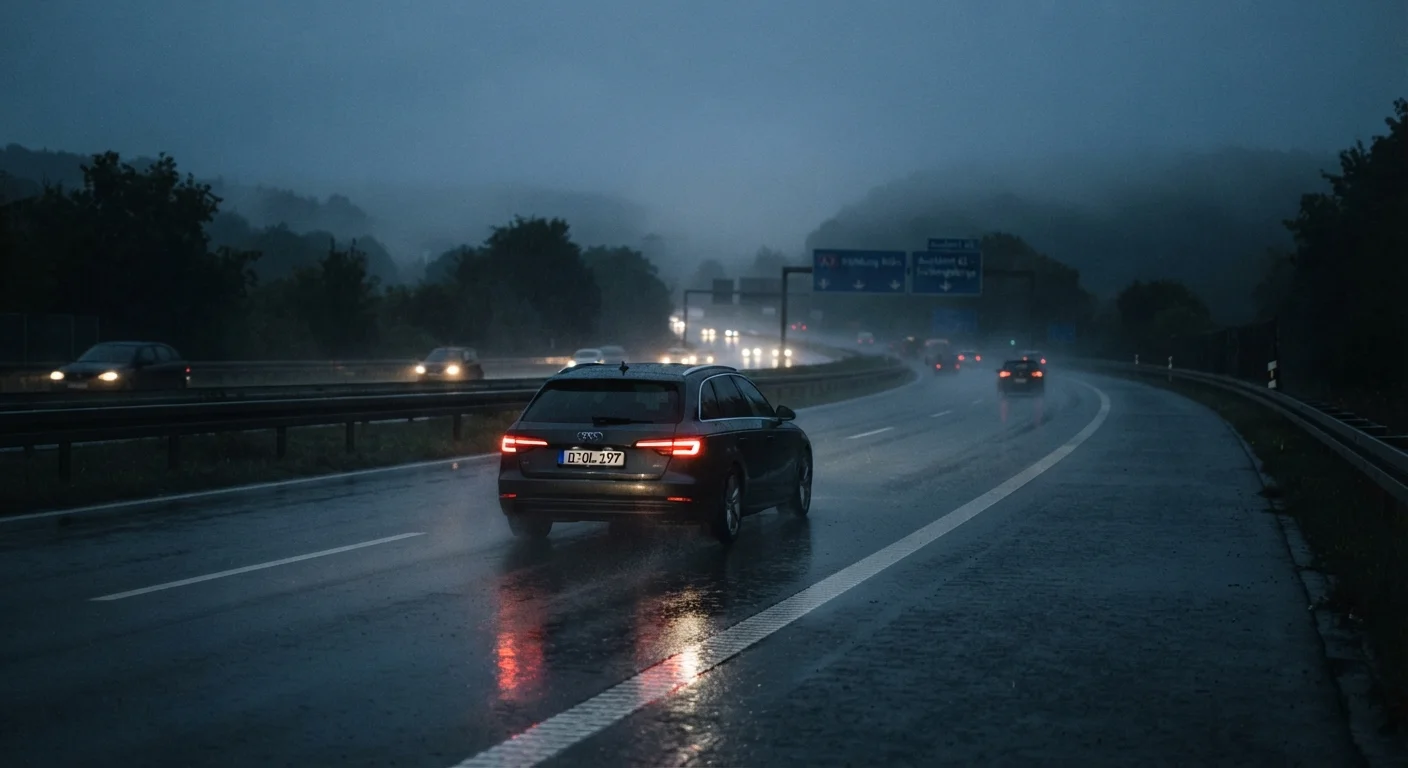
Most crashes in poor weather aren't caused by the weather itself - they're caused by drivers who didn't adjust. Rain, fog, and snow all shrink the margin for error that clear, dry roads provide. Visibility drops, reaction time matters more, and the physics of stopping change substantially.
Posted speed limits reflect ideal conditions. As our companion piece on safe speed vs. posted limits explains, a legally compliant speed can still be dangerously fast for current road conditions. Low-visibility driving demands that you recalibrate nearly every default habit behind the wheel.
Core Practices for Rain, Fog, and Snow
The following habits apply across all three conditions, though each scenario has its own nuances worth understanding. Taken together, they form a foundation for managing risk when the road environment works against you.
21%
US crashes linked to weather conditions
According to Federal Highway Administration data, approximately 21% of all vehicle crashes in the US involve adverse weather conditions annually.
~70%
Weather-related crashes on wet pavement
The Federal Highway Administration reports that roughly 70% of weather-related crashes occur on wet pavement, underscoring rain as the dominant hazard.
Condition-Specific Adjustments
Rain
Light rain is most dangerous in its first 10-15 minutes on dry pavement. Oil and dust mix with water to create slick surface film before it washes away. Reduce speed, avoid hard braking, and stay alert to hydroplaning risk - a condition where your tires ride on a layer of water and lose contact with the road surface. If you feel the steering go light, ease off the gas gently and hold a steady line. See our article on handling hydroplaning and skids for the correct immediate responses.
Fog
Switch to low-beam headlights - not high beams. High beams scatter off fog particles and actually reduce how far you can see. Use fog lights if your vehicle has them. If visibility drops below 100 feet, consider pulling safely off the road and waiting it out rather than crawling through near-zero visibility at highway speeds.
Snow and Ice
Fresh snow reduces traction significantly; packed snow reduces it further; black ice - a thin, nearly transparent glaze - can reduce it to near zero. Bridges and overpasses freeze before roadway surfaces because cold air circulates beneath them. Brake early, turn gently, and understand that all-wheel drive helps you accelerate but does nothing to help you stop faster.
All-Wheel Drive Doesn't Mean All-Weather Stopping
AWD and 4WD systems improve your ability to get moving on slippery surfaces, but they provide no advantage when braking. Drivers of AWD vehicles sometimes travel too fast in snow because they feel more confident - yet their stopping distance is identical to a two-wheel-drive vehicle on the same tires. Traction control systems help, but physics still apply.
Good tire and vehicle maintenance is a prerequisite for safe winter driving - worn tread depth dramatically worsens snow traction.
Space, Speed, and Sight Lines
The three most important variables in any low-visibility scenario are how much space you have, how fast you're going, and how far ahead you can see. These interact constantly. If your sight line drops to 200 feet in dense fog, you need to be traveling at a speed that lets you stop within 200 feet - full stop.
Stopping distances are longer than most drivers realize even on dry pavement. On wet roads, stopping distance typically increases by 50% or more. On ice, it can be 10 times longer than on dry asphalt. The standard 3-second following-distance rule should expand to 8-10 seconds in winter conditions.
Scanning well ahead - not just the car in front - gives you more time to react. This is the same principle that separates defensive drivers from reactive ones, as covered in our guide on what defensive driving actually means.