

Key Takeaways
Why the First Three Seconds Define the Outcome
Sudden loss-of-control events share a common pattern: the physical event itself lasts only a few seconds, but the driver's response in that window determines whether the situation resolves safely or escalates into a crash. Research by traffic safety agencies consistently points to overcorrection - not the initial event - as the proximate cause of many single-vehicle accidents involving skids and blowouts.
The human nervous system defaults to a fight-or-flight response under sudden threat. In a car, that typically means gripping the wheel harder, stamping on the brakes, and yanking toward or away from perceived danger. All three of those instincts are counterproductive in the scenarios described here.
Understanding why the correct technique works makes it far easier to remember under pressure. Each of the three procedures below is grounded in basic vehicle dynamics: tires can only do their job when they are rolling and not locked; weight transfer affects grip; and steering inputs must be proportional.
Panic Is the Real Hazard
In all three scenarios below, the most dangerous response is an instinctive overcorrection - jerking the wheel or slamming the brakes. Your vehicle's physics do not change because you're frightened. Reading and mentally rehearsing these responses before an event occurs is the single most effective preparation you can do.
Before a long drive - especially in unfamiliar conditions - it's worth running through a quick vehicle check. Our guide on pre-trip safety checks covers the basics most drivers overlook.
Step-by-Step: The Correct Responses
What you will need
The three procedures below are ordered by scenario. Work through each one mentally, not just as steps, but as a physical rehearsal - visualize your hands on the wheel, your foot moving deliberately. That mental imprinting is what makes the correct action available when adrenaline narrows your thinking.
Tire Blowout: Hold On, Don't Brake
The moment a tire blows, you will feel a violent pull toward the affected side and hear a rapid loss of road noise. Your instinct will be to brake - resist it.
- Grip the wheel firmly with both hands at the 9-and-3 position and counteract the pull with steady, controlled steering - not a jerk.
- Ease off the accelerator gradually. Let engine braking slow the car naturally rather than applying the brake pedal.
- Maintain your lane while the vehicle decelerates below 30 mph, then steer smoothly to the shoulder or nearest safe stopping point.
- Once stopped, turn on hazard lights and exit the vehicle away from traffic before assessing the damage.
Hydroplaning: Release, Steer Straight, Wait
Hydroplaning happens when a film of water separates your tires from the road surface. Steering and braking become largely ineffective until traction is restored. The event can last anywhere from a fraction of a second to several seconds depending on speed and water depth.
- Lift your foot off the accelerator immediately. Do not touch the brake pedal - braking while hydroplaning can lock the wheels and induce a spin.
- Keep the wheel pointed straight ahead or very slightly in your intended direction of travel. Avoid any sudden steering inputs.
- Allow the vehicle to decelerate until you feel the steering "weight up" again - that's the sensation of tires re-engaging the road surface.
- Only after traction returns, apply brakes gently if further slowing is needed.
Skid: Steer Where You Want to Go
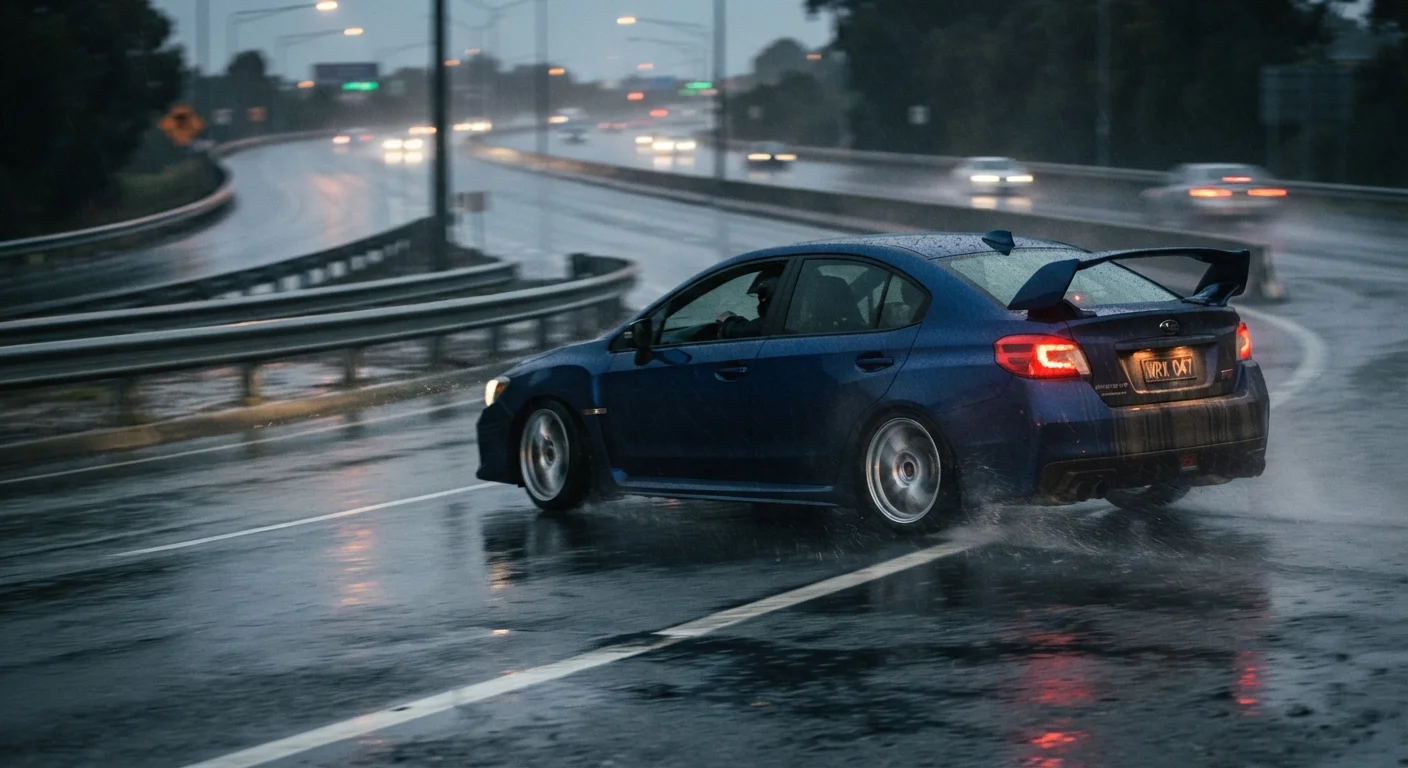
A skid occurs when your tires lose grip during cornering, braking, or acceleration. The two most common types are oversteer (rear slides out) and understeer (front pushes wide). The correction differs slightly, but the core principle is the same.
- For oversteer (rear-end slide): Ease off the gas and steer smoothly in the direction the rear is sliding - commonly called "steering into the skid." As the rear grip returns, gently straighten the wheel to avoid a counter-skid in the opposite direction.
- For understeer (front pushes wide): Ease off the gas, reduce your steering angle slightly, and allow the front tires to recover grip before steering toward your intended path.
- In both cases, avoid sudden brake applications. If your vehicle has ABS, you may apply firm, steady brake pressure without pumping - ABS prevents wheel lockup. Without ABS, apply brakes with a firm, threshold pressure just short of lockup.
- Once the vehicle is tracking straight, look and steer toward your intended exit path, not at obstacles.
Prevention Cuts Your Exposure Dramatically
Properly inflated, well-treaded tires are your first line of defense against all three events covered here. Check your tire pressure monthly and inspect tread depth regularly. Our complete tire maintenance reference covers every step in plain language.
For broader context on how nighttime and low-visibility conditions compound these risks, see common night driving mistakes that many drivers don't recognize as dangerous until it's too late.
After the Event: What to Do Next
Once you have regained control and safely reached the shoulder or a parking area, take a moment before exiting the vehicle. Your heart rate will be elevated and fine motor coordination temporarily reduced - both normal physiological responses to acute stress.
- Hazard lights on immediately. Do this before exiting, regardless of scenario.
- Exit away from traffic whenever possible. If you must exit on the traffic side, exit quickly and move behind a guardrail or barrier.
- Do not attempt roadside tire changes on active highway shoulders unless you are certain it is safe. Call for roadside assistance instead.
- After a blowout or skid, have the vehicle inspected before resuming a long drive - rim damage, alignment shifts, or suspension stress may not be immediately obvious.
Do Not Attempt Heroic Maneuvers
These steps are designed for public roads at normal highway and surface speeds. If your vehicle is equipped with stability control (standard on US vehicles since 2012), trust the system to work with your inputs - do not fight it. Attempting aggressive counter-maneuvers can overwhelm even modern safety systems.
Finally, consider that frequent near-misses with skids or handling problems may signal an underlying tire or suspension issue. Our tire pressure and tread reference can help you identify whether your tires are actually road-ready before the next trip.