

Key Takeaways
Summary
22 items · 30-60 minutes
Why the Check Most Drivers Skip Actually Matters
Most drivers pack bags, load the cooler, and program a destination - then head straight to the on-ramp. The vehicle itself rarely gets more than a glance. That's a significant gap, because the systems most likely to cause a highway emergency are also the ones most easily checked at home in under an hour.
This isn't about perfectionists running a 40-point diagnostic. It's about catching the straightforward problems - low tire pressure, a burned-out brake light, a battery on its last legs - before they strand you 200 miles from anywhere useful. If you're planning a longer drive, pairing this check with a solid trip planning routine gives you full coverage before you leave the driveway.
Most Breakdowns Are Preventable
Studies by roadside assistance organizations consistently find that the most common trip-disrupting failures - flat tires, dead batteries, and overheating - are the result of neglected maintenance that a pre-trip check would have caught. Spending 45 minutes in your driveway is a worthwhile trade for avoiding a multi-hour roadside wait.
The checklist below is organized by system, not by difficulty. Work through each group in order, and you'll have covered every major failure point. Most items require no tools beyond a tire gauge and a flashlight.
What to Check and How to Do It
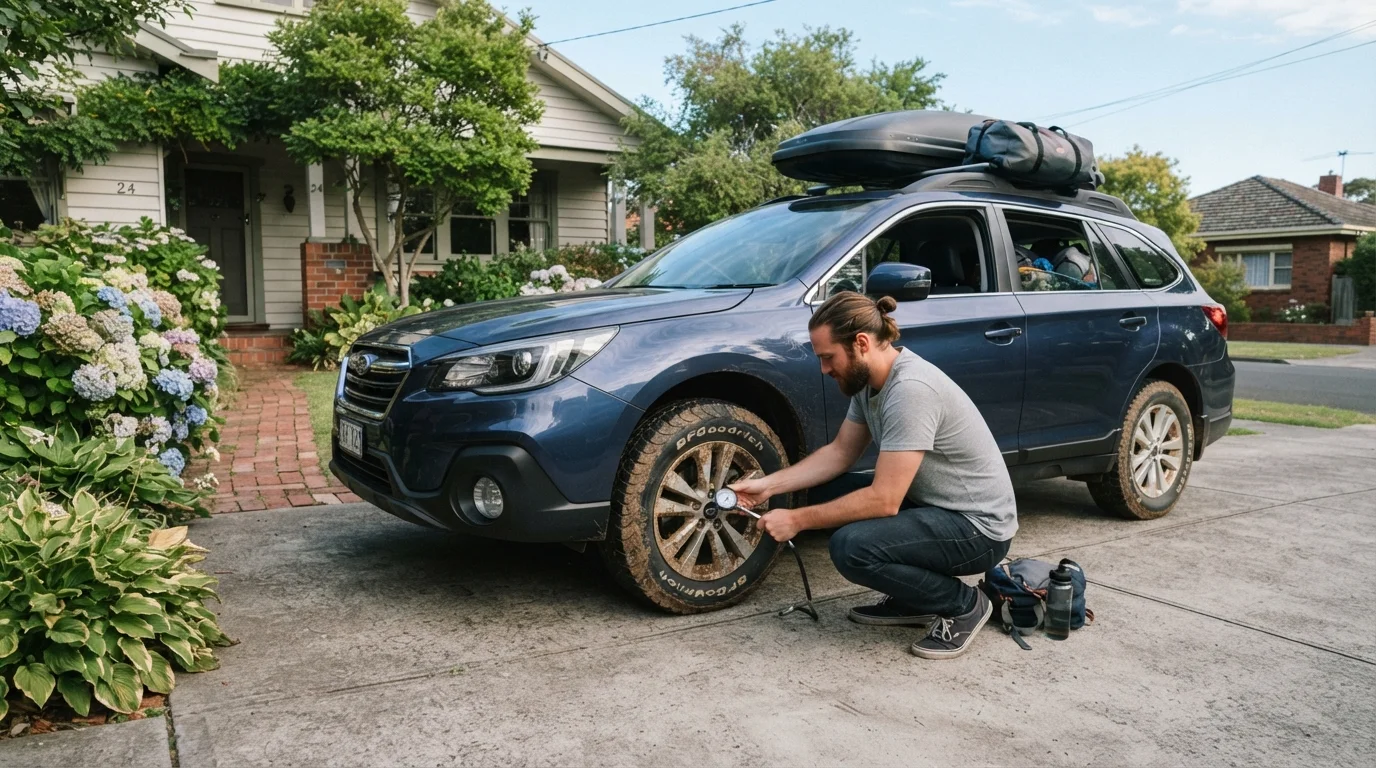
The groups below move from the outside of the vehicle in, which is the most efficient path for a solo inspection. Start with tires while the engine is still cold - tire pressure readings shift once heat builds up from driving.
Tire Pressure Gauge
Accurately measures PSI in each tire so you can match the manufacturer's recommended inflation level.
Penny (for Tread Test)
A quick, no-cost tool for checking whether tire tread has worn below the safe threshold.
Flashlight or Headlamp
Needed to inspect under the hood, check tire sidewalls, and test lights in darker conditions.
Jumper Cables or Portable Jump Starter
Allows you to restart a dead battery on the road without waiting for a tow.
Reflective Triangles or Road Flares
Warns other drivers if you're stopped on a roadway shoulder, reducing collision risk.
Basic First Aid Kit
Covers minor injuries that may occur during a breakdown or roadside stop.
Portable Phone Charger
Keeps your phone powered for navigation, emergency calls, and roadside assistance contact.
For a deeper look at tire maintenance year-round, the tire pressure, tread, and rotation reference walks through PSI targets by vehicle type, how rotation intervals work, and what uneven wear patterns actually mean.
Tires
Fluids
Lights and Visibility
Brakes and Steering
Belts, Hoses, and Battery
Emergency Kit and Documents
When you reach the lights check, recruit a second person to watch brake lights from behind while you press the pedal - or use a reflection in a garage door or wall. A burned-out brake light is invisible to the driver and is a common cause of rear-end collisions on highways. For more on nighttime visibility risks, see night driving mistakes that put drivers at real risk.
Don't Ignore Brake Warning Signs
Grinding, squealing, or a soft brake pedal are not symptoms to monitor - they're reasons to see a mechanic before departure. Brake failure at highway speeds is among the most dangerous situations a driver can face. If any brake concern surfaces during your check, get a professional inspection first.
Sidewall Damage Is Not Patchable
A bulge or deep cut in a tire's sidewall means the tire needs replacement, not repair. Unlike tread punctures, sidewall damage compromises the structural integrity of the tire and can lead to a sudden blowout. Do not attempt a long trip on a tire with visible sidewall damage.
After the Check: What to Do With What You Find
Not every issue demands a mechanic visit before you leave. Low washer fluid or a slightly dim interior light? Fix it in five minutes. But brake concerns, sidewall damage, a battery that cranks slowly, or a coolant level that keeps dropping are flags that should pause the trip until resolved.
If you're uncertain whether something is serious, a brief consultation with a trusted mechanic - even a quick call - is worth it. Most shops can do a focused inspection in under an hour. The preparing your car for a long road trip guide goes deeper on which issues typically need a shop versus which are safe DIY fixes at home.
For seasonal variation - summer heat stresses cooling systems, winter cold drains batteries faster - the seasonal car maintenance checklist layers in the right checks for your time of year. And if the unexpected happens on the road, knowing how to respond is just as important as preparation: tire blowouts, hydroplaning, and skids covers the correct first-three-seconds response to the most common sudden loss-of-control events.
The goal isn't zero risk - it's reducing the entirely avoidable kind. A vehicle that's been checked is one fewer variable on a long drive. That's worth the hour.