

| Red light urgency | Stop safely as soon as possible |
| Amber/yellow light urgency | Schedule service within days |
| OBD-II port location | Under dashboard, driver's side (required on US cars since 1996) (EPA OBD-II mandate) |
| Tire pressure location | Driver's door jamb sticker (not tire sidewall) |
| Owner's manual | Primary reference for your specific vehicle's symbols |
The Color Code: What Each Shade Means
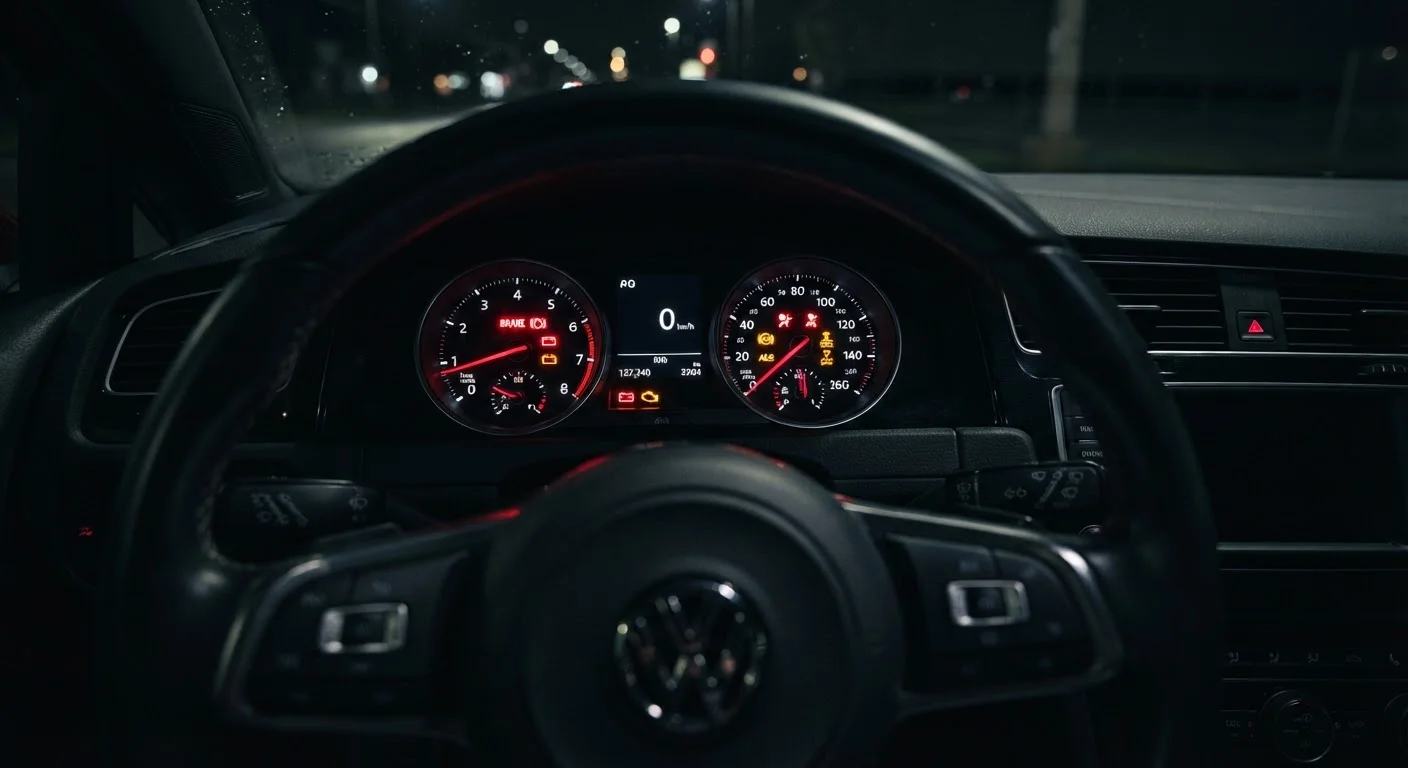
Your dashboard uses a traffic-light logic that makes severity easy to read at a glance. Red lights indicate a serious or potentially dangerous condition - stop safely and investigate immediately. Yellow or amber lights signal a problem that needs attention soon but may not require pulling over right now. Green or blue lights are simply status indicators (headlights on, turn signal active) and require no action.
This color system is broadly standardized across modern vehicles, though the exact symbols and their meanings can vary by make and model. Your owner's manual is the definitive reference - keep it in the glove box.
| Red light urgency | Stop safely as soon as possible |
| Amber/yellow light urgency | Schedule service within days |
| OBD-II port location | Under dashboard, driver's side (required on US cars since 1996) (EPA OBD-II mandate) |
| Tire pressure location | Driver's door jamb sticker (not tire sidewall) |
| Owner's manual | Primary reference for your specific vehicle's symbols |
Red Lights: Stop and Act
These warnings should never be ignored. Continuing to drive can cause serious engine damage, brake failure, or unsafe vehicle behavior.
OBD-II
On-Board Diagnostics, second generation. A standardized system required on all US vehicles sold since 1996 that records fault codes triggering the check engine light. A compatible scanner can read these codes to identify the issue.
TPMS
Tire Pressure Monitoring System. A federal safety requirement on all new US passenger vehicles since 2008 that alerts the driver when a tire drops significantly below recommended inflation.
Oil Pressure
The force at which engine oil is circulated through the engine. A drop below the safe threshold starves metal components of lubrication and can cause severe engine damage within minutes.
Fault Code
A diagnostic trouble code (DTC) stored by your vehicle's computer when a sensor detects an out-of-range reading. These codes correspond to specific systems and help technicians pinpoint the problem.
- Oil Pressure Warning (oil can icon): Engine oil pressure has dropped critically low. Pull over safely and shut off the engine. Check oil level before restarting. Driving further risks catastrophic engine damage. See our guide to reading fluid levels for how to check safely.
- Engine Temperature (thermometer in liquid): Your engine is overheating. Pull over, turn off the engine, and let it cool - do not open the radiator cap while hot. Low coolant is a common cause.
- Battery / Charging System: The battery is not charging. The vehicle may lose power to electrical systems soon. Drive directly to a mechanic if safe. Learn more about early battery warning signs before a breakdown happens.
- Brake System Warning: Could indicate low brake fluid, a hydraulic failure, or that the parking brake is engaged. Verify the parking brake is off first; if the light stays on, have brakes inspected before driving further.
Yellow Lights: Schedule Attention Soon
Amber warnings rarely mean stop immediately, but they do mean the clock is ticking. Leaving these unaddressed typically leads to higher repair costs or a cascading failure.
- Check Engine (engine outline): One of the most misunderstood lights. It can indicate anything from a loose gas cap to a misfiring engine. A OBD-II scanner - available at most auto parts stores - can read the stored fault code and narrow down the cause.
- Tire Pressure (TPMS - exclamation point inside a U-shape): One or more tires are significantly under- or over-inflated. Check pressures when tires are cold, using the recommended PSI found on the driver's door jamb sticker - not the maximum printed on the tire sidewall.
- Traction Control / Stability Warning: If it flashes briefly, the system is working normally in slippery conditions. If it stays on, the system may be disabled or faulty.
- Transmission Temperature: Transmission fluid is running hot. Reduce load (avoid towing) and have the fluid level and condition inspected promptly.
A Loose Gas Cap Can Trigger the Check Engine Light
One of the most common - and easily fixed - causes of a check engine light is a gas cap that wasn't tightened fully after refueling. After filling up, tighten the cap until it clicks. The light may take one or two drive cycles to clear on its own. If it doesn't clear within a few days, use an OBD-II reader to check for additional fault codes.
Staying current with your vehicle's service schedule reduces the likelihood of many amber lights appearing in the first place. The scheduled maintenance guide explains how to read your service intervals correctly.
When to Drive On vs. When to Stop
A practical rule: any red warning light that relates to engine oil, coolant temperature, or brake pressure warrants stopping as soon as it is safe to do so. Yellow lights generally allow you to complete a short, low-stress trip to a shop - but don't put it off for days.
If you're unsure what a symbol means and your owner's manual isn't handy, most automakers publish digital versions online. You can also use a free OBD-II reader app paired with an inexpensive Bluetooth adapter to pull diagnostic codes yourself.
~80%
Check engine lights tied to emissions-related faults
According to data from automotive diagnostic industry sources, the majority of check engine codes involve emissions or sensor issues, not catastrophic failures.
1 in 4
Vehicles on US roads with at least one underinflated tire
National Highway Traffic Safety Administration (NHTSA) surveys have consistently found widespread tire under-inflation among passenger vehicles.
Routine awareness of your vehicle's systems - fluids, tires, charging - puts you in a much stronger position to catch problems before they trigger a warning light at all. Good driving habits extend that awareness to the road itself; understanding road markings and nighttime driving risks is part of the same informed-driver mindset.