

Key Takeaways
Scheduled Maintenance Intervals
Scheduled maintenance intervals are the manufacturer-specified mileage or time points at which your vehicle needs particular services - such as oil changes, filter replacements, or fluid checks. These intervals are set during vehicle development and are based on engineering data for that specific engine, transmission, and drivetrain. Following them helps prevent premature wear and keeps your warranty intact.
Most modern vehicles use two service tracks - 'Normal' and 'Severe' - defined by operating conditions such as frequent short trips, towing, or extreme temperatures.
What a Maintenance Schedule Actually Is
When a vehicle is engineered, the manufacturer tests every major component under controlled conditions to determine how long it performs reliably before it needs attention. Those findings get translated into a maintenance schedule - a table of services tied to mileage milestones and elapsed time. It lives in your owner's manual, and it's the single most vehicle-specific piece of maintenance guidance you have.
The schedule typically lists items such as engine oil and filter, air and cabin filters, spark plugs, brake fluid, transmission fluid, coolant, drive belts, and tire rotation. Each line item shows either a mileage interval, a time interval (e.g., every 12 months), or both. The rule is straightforward: whichever threshold you hit first is when the service is due.
Generic Rules Often Don't Apply to Your Vehicle
Many drivers rely on generic mileage rules passed down from mechanics or prior vehicles. Because engine technology, oil formulations, and component materials have changed significantly over the past two decades, the only reliable guide is the manual for your specific make, model, and model year. See our look at common vehicle maintenance myths for more on outdated rules that still circulate.
Many drivers rely on generic mileage rules passed down from mechanics or prior vehicles. Because engine technology, oil formulations, and component materials have changed significantly over the past two decades, the only reliable guide is the manual for your specific make, model, and model year. See our look at common vehicle maintenance myths for more on outdated rules that still circulate.
Normal vs. Severe Service: Why Your Driving Habits Matter
Nearly every manufacturer's maintenance schedule includes two tracks: Normal and Severe (sometimes called 'Special Operating Conditions'). This distinction matters more than most drivers realize.
Normal service applies to consistent highway driving in moderate climates - the kind of conditions that keep engines at stable operating temperature and let fluids perform as designed. Severe service applies when your vehicle regularly experiences any of the following:
- Frequent short trips of five miles or less, especially in cold weather
- Prolonged idling or heavy stop-and-go traffic
- Towing, hauling, or driving on unpaved or dusty roads
- Extreme hot or cold climate operation
Short trips are particularly hard on engines because the motor never fully warms up, allowing condensation and combustion byproducts to accumulate in the oil. If several of these conditions apply to your regular driving, your owner's manual will typically direct you to a shorter service interval for oil, filters, and certain fluids.
5,000-10,000 mi
Typical synthetic oil change interval for modern engines
Many current manufacturer schedules for vehicles using full-synthetic oil specify intervals well beyond the old 3,000-mile benchmark, though the exact figure varies by make and model.
30,000 mi
Common spark plug replacement interval for standard plugs
Vehicles equipped with iridium or platinum spark plugs may have intervals of 60,000 to 100,000 miles; the owner's manual specifies which plug type applies.
2 tracks
Service schedules in most owner's manuals
Virtually all modern manufacturer maintenance guides distinguish between normal and severe operating conditions, each with different service intervals.
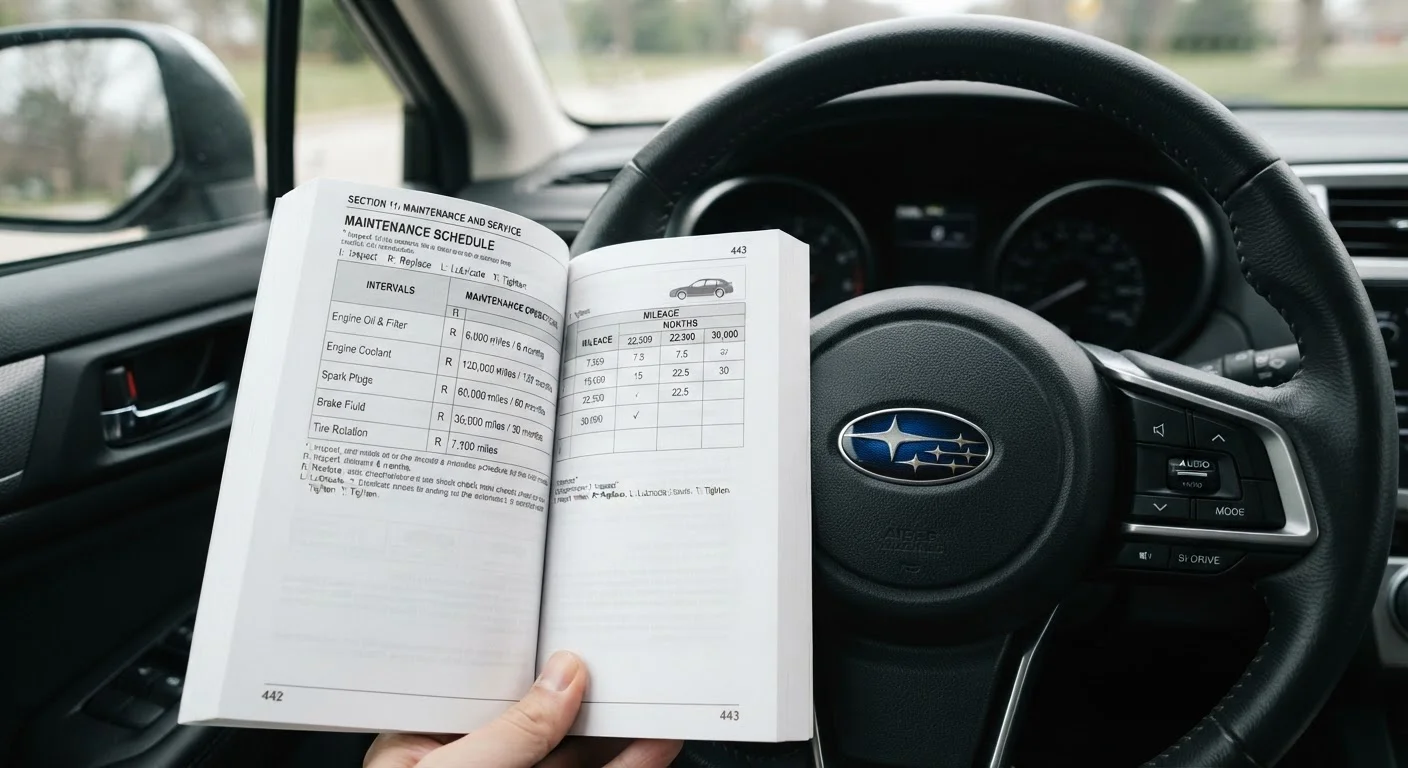
Reading the Owner's Manual Service Table
Opening the maintenance section of an owner's manual can feel like reading a spreadsheet - but the format is consistent once you know what you're looking at. Service items are usually organized in rows, with mileage columns across the top (e.g., 5,000 / 10,000 / 15,000 / 30,000 miles). A checkmark or letter code indicates what needs to be done at each interval.
Common codes include:
- I - Inspect
- A visual check; the item gets replaced only if found to be worn or failing.
- R - Replace
- Replacement is due regardless of apparent condition.
- L - Lubricate
- Applies grease or fluid to specific joints or components.
Pay attention to footnotes - they often contain conditions that modify the standard interval, such as adjustments for diesel engines, turbocharged models, or vehicles used for towing. For a practical way to track what you've completed, consider keeping a dedicated car maintenance log.
Photograph the Schedule for Quick Reference
Take a clear photo of your owner's manual's maintenance schedule table and store it in a notes app or cloud folder. This gives you instant access when you're at a service counter and need to verify whether a recommended service is actually due. Cross-referencing what the shop recommends against what the manufacturer specifies is one of the easiest ways to avoid unnecessary services.
Why Sticking to the Schedule Protects More Than Your Engine
Following the manufacturer's schedule does three things beyond preventing mechanical failure. First, it preserves your warranty. Certain powertrain and component warranties require documented adherence to the maintenance schedule - gaps in service records can complicate warranty claims. Under the Magnuson-Moss Warranty Act, you're not required to use a dealership for service, but you are expected to use qualified service and keep records.
Second, it supports resale value. A vehicle with a documented, consistent service history is easier to value accurately and generally more attractive to private buyers and dealers alike. Our guide to maintaining a complete service log explains what records matter most.
Third, it keeps costs manageable. Deferred maintenance has a compounding effect - worn brake fluid absorbs moisture and degrades braking performance; neglected coolant becomes corrosive; an overdue timing belt can fail catastrophically. Addressing items on schedule is nearly always less expensive than addressing failures after the fact.
If you're uncertain what a dashboard warning light is prompting you to check, understanding your car's warning lights can help you respond with the right level of urgency. And for a broader seasonal view of what to keep track of, see the seasonal car maintenance checklist.
“The owner's manual is the most underused document in most vehicles. Drivers who actually read the maintenance section often discover their car needs service less frequently than they've been told - or in different ways than they assumed.”
— Automotive Engineers and Consumer Advocates, General position held across independent automotive journalism and consumer advocacy organizations