

Key Takeaways
Start here
How Your Brakes Actually Work
Next
Warning Signs You Can Hear, Feel, and See
Then
Brake Fluid: The Overlooked Variable
When you're ready
Talking to a Technician with Confidence
For reference
How Often Brakes Typically Need Attention
How Your Brakes Actually Work
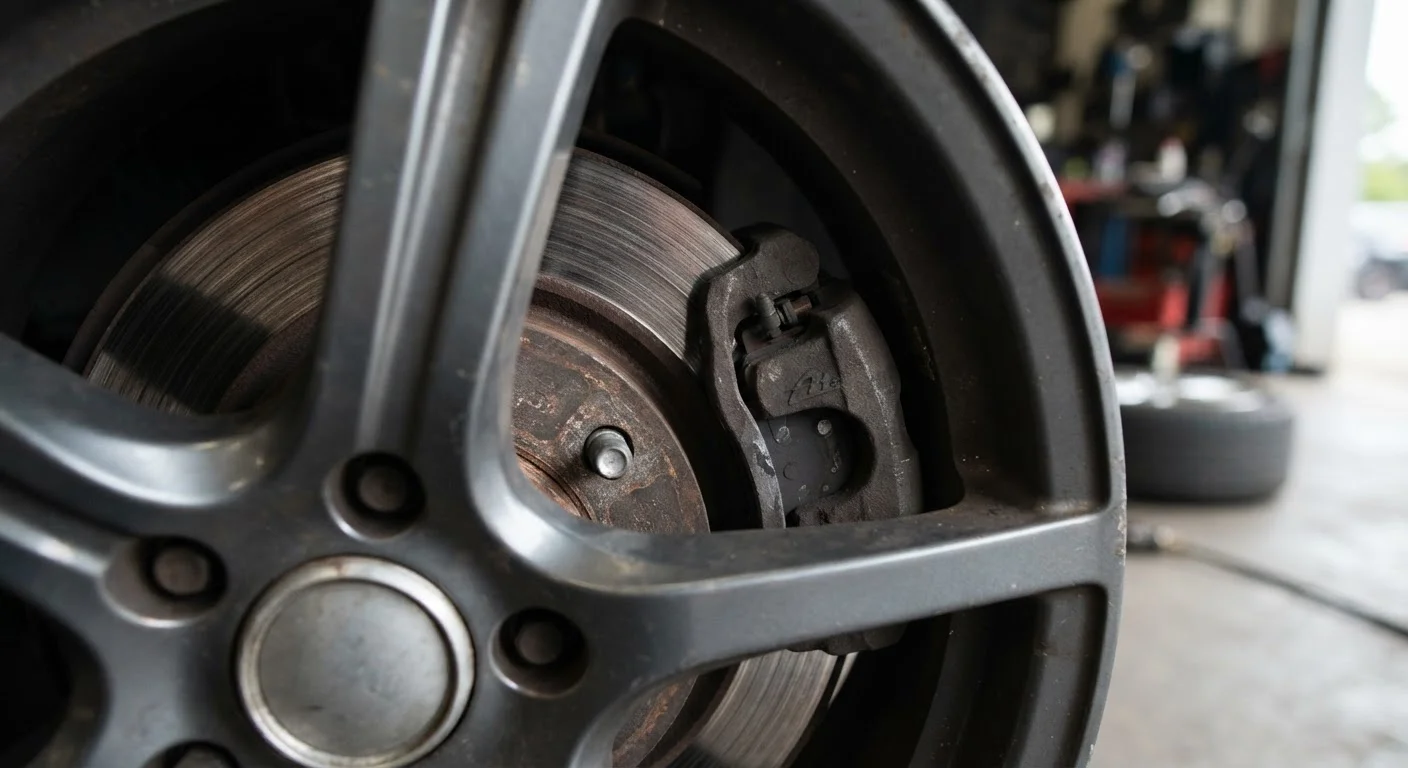
Your car's brakes convert kinetic energy - the energy of motion - into heat through friction. When you press the brake pedal, hydraulic fluid transmits that force to a caliper, which squeezes brake pads against a spinning metal disc called a rotor. That friction slows the wheel. It's a straightforward system, but it has several components that wear at different rates.
Brake pad
A replaceable friction material that presses against the rotor to slow the wheel. Pads are designed to wear out gradually over time.
Rotor (brake disc)
A flat metal disc attached to the wheel hub that the brake pads clamp against. Rotors can warp or wear if pads are neglected too long.
Caliper
The hydraulic clamp that squeezes the brake pads against the rotor when you press the pedal. A stuck caliper can cause uneven braking.
Brake fluid
The hydraulic fluid that transmits pedal force through the brake lines to the calipers. It absorbs moisture over time and should be monitored.
Wear indicator
A small metal tab built into the brake pad that produces a squealing sound when the pad wears down to a certain threshold - alerting you to seek service.
Drum brakes
An older brake design that uses curved shoes pressing outward against the inside of a drum. Still found on rear axles of some vehicles today.
Most passenger vehicles use disc brakes on all four wheels, though some older or smaller vehicles still have drum brakes on the rear axle. The concepts are similar: friction material contacts a rotating surface and converts motion to heat. The parts that bear the brunt of this are the pads (or shoes in drum systems), and they're designed to wear out so the more expensive rotor doesn't have to.
Understanding this basic chain - pedal, fluid, caliper, pad, rotor - helps you make sense of every warning sign and technician recommendation you'll encounter.
Warning Signs You Can Hear, Feel, and See
Your brakes communicate clearly when something is wrong. Learning to read those signals is the most valuable skill a non-mechanic driver can develop - and it could prevent a far more costly repair or an unsafe situation on the road.
What you'll hear
- Squealing or squeaking: A high-pitched noise during braking often means the wear indicator - a small metal tab built into the pad - is contacting the rotor. Think of it as a built-in alarm.
- Grinding: A metal-on-metal grinding sound typically means the pad material is fully gone. This damages rotors rapidly and requires immediate attention.
- Clunking: Can indicate a loose caliper or hardware - a safety concern that warrants prompt inspection.
What you'll feel
- Vibration through the pedal: Often points to warped rotors, which can result from repeated hard stops overheating the metal.
- Pulling to one side: May indicate a stuck caliper or uneven pad wear.
- Spongy or soft pedal: Suggests air in the brake lines or low fluid - reduces braking effectiveness and needs urgent evaluation.
Keep in mind that braking performance affects your ability to stop safely. Stopping distance is already longer than most drivers assume, so degraded brakes make that gap worse.
Don't Delay on Grinding Sounds
If you hear a consistent metal grinding when braking, stop driving the vehicle more than absolutely necessary and have it inspected promptly. Continuing to drive on metal-to-metal contact accelerates rotor damage and significantly increases repair costs. It also compromises your ability to stop safely.
Brake Fluid: The Overlooked Variable
Brake fluid is what transmits the force of your foot press through the hydraulic system. It's also hygroscopic - meaning it absorbs moisture from the air over time. As water content rises, the fluid's boiling point drops, which can reduce braking performance under hard or sustained use.
Checking fluid level is straightforward: the reservoir is a small translucent plastic container near the back of the engine bay, typically marked with MIN and MAX lines. You can read the level without opening it. If it's low, that could signal a leak or, more commonly, worn pads - as pads thin out, more fluid fills the caliper space, drawing down the reservoir level.
Fluid color matters too. Fresh brake fluid is typically light golden or clear. Dark brown fluid has absorbed significant moisture and should be evaluated for replacement. For a broader look at checking your vehicle's fluid systems, this guide to reading fluid levels at home covers the full picture.
Check Fluid Color at Your Next Oil Change
Ask the technician to note your brake fluid color during routine oil service - most shops can do this quickly at no charge. Dark or cloudy fluid is worth addressing before it affects system performance. Catching it early is far cheaper than addressing the downstream effects.
Talking to a Technician with Confidence
You don't need to diagnose your own brakes - that's what qualified technicians are for. But walking in with some vocabulary and a clear description of what you've noticed puts you in a much stronger position.
When describing the problem, mention:
- When the noise or sensation occurs (during braking, at highway speeds, when the car is cold)
- Whether it's consistent or intermittent
- Which end of the car it seems to come from
- How long it has been happening
Ask the technician to show you the worn parts before they're replaced, and request an explanation of what they found and why it needs addressing. A straightforward shop will welcome these questions. If a recommendation surprises you, it's reasonable to ask for a second opinion before authorizing work.
Brake service is also a logical time to check other maintenance items. A seasonal maintenance checklist can help you track what's due at the same visit, saving you extra trips.
How Often Brakes Typically Need Attention
There's no universal mileage number for brake pad replacement because wear depends heavily on driving style, traffic patterns, vehicle weight, and pad material. City driving with frequent stops accelerates wear significantly compared to highway commuting.
A general range often cited by automotive organizations is 25,000 to 65,000 miles for brake pads, but treat this as a starting point rather than a hard rule. Rotors typically last through multiple pad replacements unless damaged by severely worn pads or warped from heat.
Your owner's manual will include a service inspection interval - this is a better guide than mileage alone, as it's calibrated to your specific vehicle. For a broader understanding of how to read and use those schedules, understanding your car's scheduled maintenance intervals is a useful companion read.
Brakes are also worth reviewing any time you have tires inspected, since the wheel-off view gives technicians easy visual access to pad thickness and rotor condition. Tire maintenance visits and brake checks pair naturally for exactly this reason.
This article provides general educational information about vehicle brake systems and is not a substitute for inspection or advice from a qualified automotive technician. Always have brake concerns professionally evaluated before driving on a system you suspect is compromised.