

Key Takeaways
Travel Budget
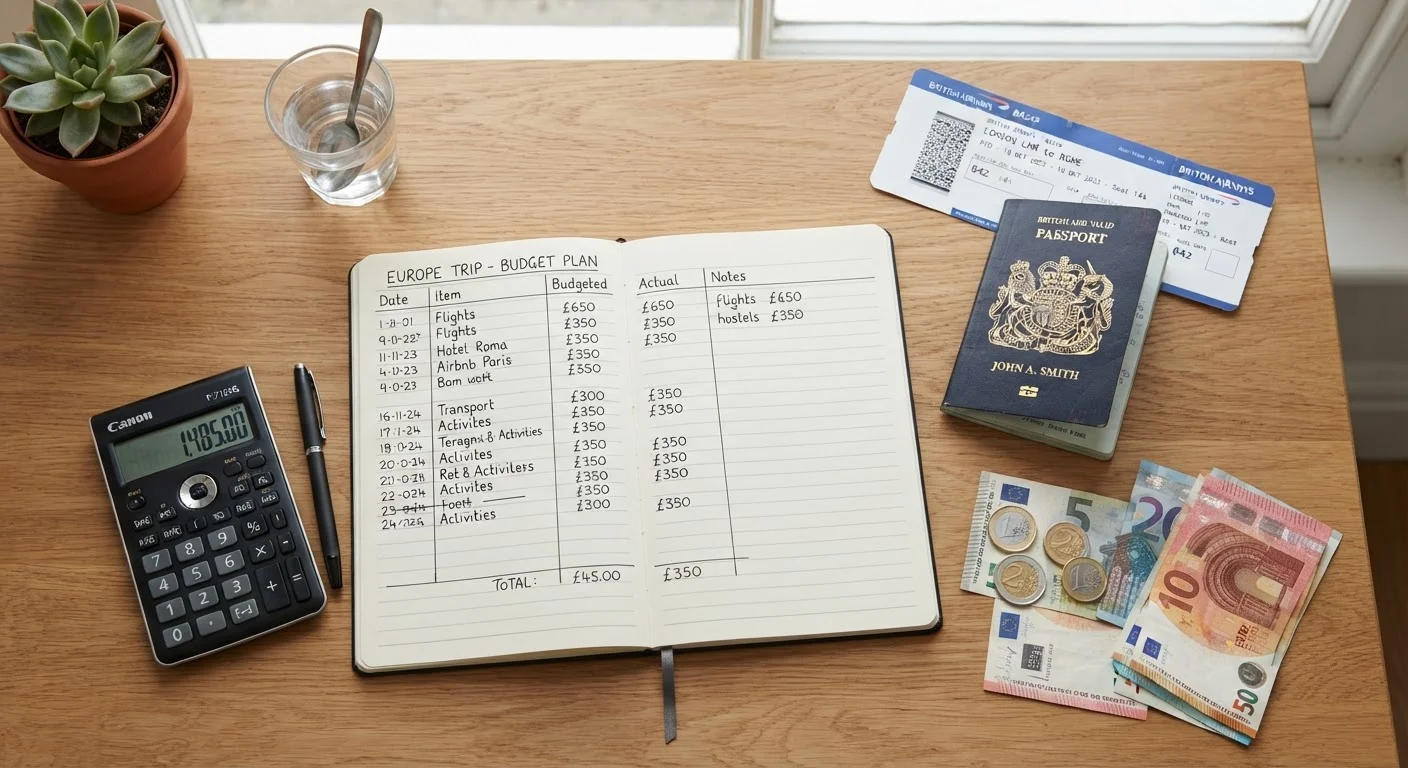
A travel budget is a structured plan that assigns estimated spending limits to every major category of a trip — flights, lodging, food, local transport, activities, and miscellaneous costs. It gives travelers a realistic picture of total trip cost before booking anything. A good travel budget accounts for both predictable expenses and the smaller costs that rarely get planned for.
Travel budgets are typically built per person per day (PPD), then scaled to the full trip duration and party size to produce a total figure that can be compared against available funds.
Why Most Travel Budgets Fail Before the Trip Starts
The typical travel budget starts and ends with flights and a hotel. Everything else gets handled "on the ground" — which is another way of saying it doesn't get planned at all. That gap between estimated cost and actual cost is where travel budgets consistently break down.
A realistic budget maps every category of spending in advance, from the obvious line items to the easy-to-ignore ones. If you've already started the broader planning process, our complete trip planning guide outlines how budgeting fits within the full pre-trip workflow.
Start With Anchors, Then Fill In
Begin your budget with the two largest fixed costs — flights and lodging — and treat them as anchors. Once those numbers are confirmed, allocate the remaining available funds across food, transport, activities, and contingency. This prevents the common mistake of underbudgeting every category because the total looks manageable on paper.
The Primary Cost Categories: Where the Big Money Goes
Two categories dominate almost every travel budget: transportation to the destination and lodging. Together, they routinely account for 50–70% of total trip spending.
Flights and Long-Haul Transport
Airfare is usually the single largest line item. Costs vary dramatically by route, timing, and booking window, but it's worth treating this as a fixed anchor cost around which everything else is built.
Lodging
Hotel, rental, hostel, or other accommodation costs compound daily. A trip that feels affordable at $120/night becomes a $1,200 line item over ten nights. Factor in taxes and resort fees, which are frequently excluded from advertised rates.
50–70%
Share of budget consumed by flights and lodging
Travel industry planning frameworks consistently place transportation and accommodation as the dominant combined cost across most trip types.
4–10%
Typical travel insurance cost as share of trip spend
Travel insurance premiums generally range from 4–10% of total prepaid, non-refundable trip costs, varying by policy type and traveler age.
10–15%
Recommended contingency buffer above total estimated cost
Financial planners and experienced travel writers commonly advise adding a 10–15% buffer to cover unexpected expenses and cost fluctuations.
The Middle Tier: Food, Local Transport, and Activities
Once primary costs are fixed, the middle tier is where day-to-day spending happens — and where most travelers lose track.
Food and Drink
Estimate per-meal costs for your destination tier, then multiply by days. Don't forget airport meals, which are consistently more expensive than anywhere else on a trip. Many travelers underestimate food spending by treating it as a rough guess rather than a category with its own daily cap.
Local Transport
Rideshares, subway fares, bus passes, ferry tickets, and rental cars all belong here. In a city like New York, daily transit costs are predictable; in destinations with limited public options, rideshare expenses can spike quickly. Our NYC planning breakdown illustrates how local transport choices reshape a city budget.
Activities and Entrance Fees
Museums, guided tours, national park passes, and ticketed experiences should be listed individually rather than lumped into a vague "fun money" category. Booking in advance also helps lock in costs before prices fluctuate.
The Overlooked Costs That Quietly Drain Budgets
This category is where realistic budgets separate themselves from optimistic ones. Small costs occur constantly throughout a trip and are almost never planned for individually.
- Baggage fees: Both checked and carry-on fees vary significantly by airline.
- Tips and gratuities: In the US and many international destinations, tipping is expected across dining, tours, and transportation.
- Travel insurance: A legitimate expense — particularly for trips with non-refundable bookings. Our guide on what travel insurance covers explains exactly what policies typically include.
- Medication, toiletries, and supplies: Items left at home or purchased in-destination often cost more than expected.
- Currency exchange and ATM fees: These can represent a meaningful cost on longer international trips.
- Souvenirs and gifts: Budget a fixed, pre-determined amount rather than shopping without a ceiling.
"Cheap" Destinations Aren't Always Cheap
A destination with a low daily cost-of-living doesn't automatically produce a low-cost trip. Getting there may require expensive long-haul flights, and popular budget destinations have seen prices rise significantly in recent years. Our piece on myths around cheap travel destinations examines this gap between perception and reality.
Building in a Contingency Buffer — and Tracking as You Go
A well-structured travel budget ends with a contingency allocation — typically 10–15% of total estimated costs — set aside for surprises. This isn't pessimism; it's the same logic that applies to any responsible financial plan. If you want to understand how this fits within broader spending discipline, the budgeting basics hub covers the underlying principles.
Planning the budget is only half the work. Tracking spending by category during the trip — even with a basic notes app — tells you whether you're on pace and where adjustments need to be made. A budget that isn't monitored is just a wish list.
For trips involving multiple people, cost-splitting adds another layer of complexity. Our group travel logistics guide covers strategies for keeping shared budgets transparent and equitable.