

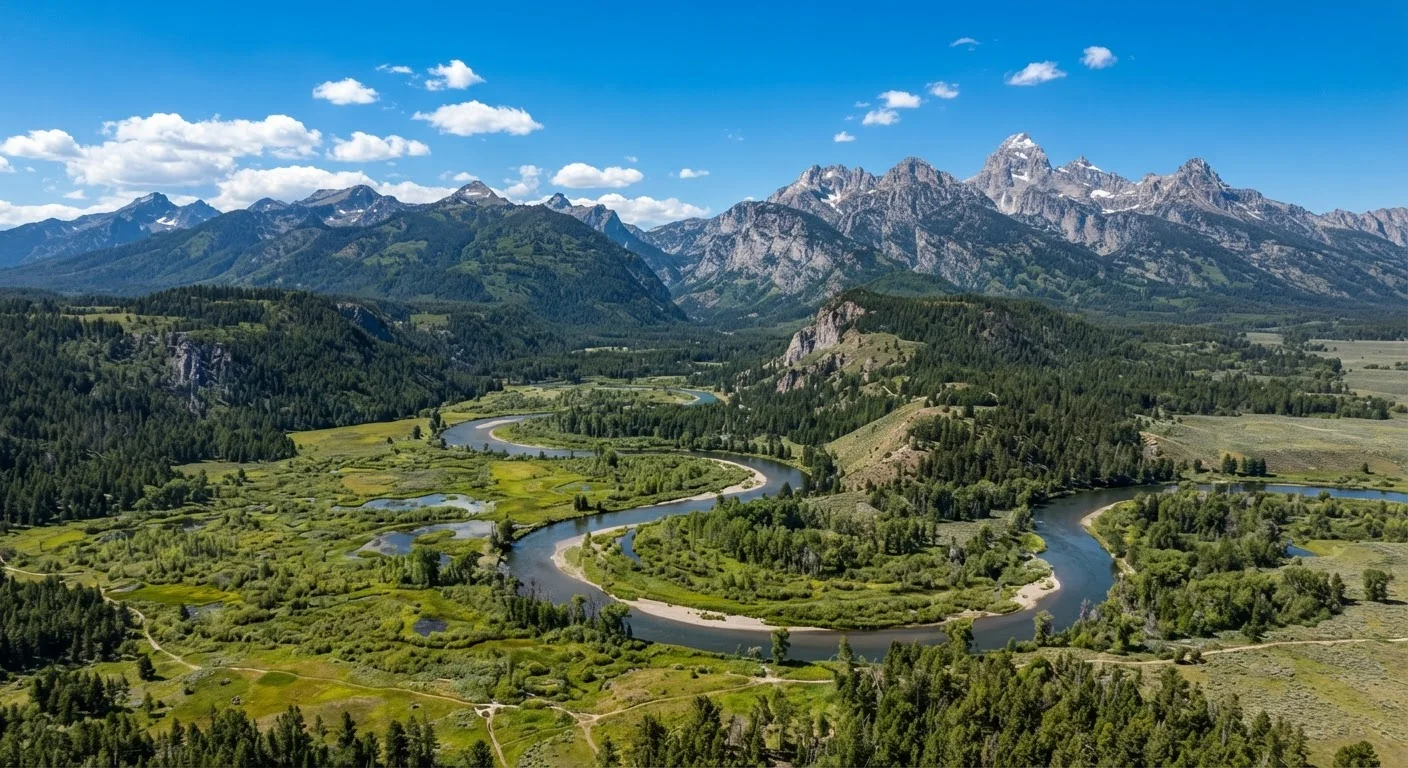
Why the Distinctions Matter
The United States manages roughly 640 million acres of public land — about 28% of the country's total landmass — spread across four major federal agencies. Each agency operates under a different mandate, which directly shapes what visitors can and cannot do on that land. Whether you're planning a weekend camping trip, a multi-day backpacking route, or a drive-through sightseeing stop, knowing which designation you're dealing with determines your permit requirements, camping rules, fire regulations, and even whether motorized vehicles are allowed.
Confusing one designation for another can mean arriving at a trailhead without the right permit, setting up camp in a restricted area, or missing out on access points that are perfectly legal on adjacent land. This reference guide breaks down the three most commonly visited categories — National Parks, National Forests, and Bureau of Land Management (BLM) land — so you can plan with confidence.
National Parks: Conservation First
National Parks are managed by the National Park Service (NPS), a bureau within the Department of the Interior. Their founding mandate, established by the Organic Act of 1916, prioritizes preserving natural and cultural resources in an unimpaired state for future generations. That conservation-first mission means National Parks carry the most regulated visitor experience of any public land category.
- Entry fees: Most units charge per-vehicle or per-person entrance fees. An annual America the Beautiful pass covers entrance to all NPS fee sites.
- Camping: Developed campgrounds are common and typically require advance reservations, especially at high-traffic parks. Backcountry camping almost always requires a permit obtained directly from the park.
- Activities: Hiking, wildlife viewing, and photography are standard. Off-road vehicles, mountain biking on trails, hunting, and wood collecting are generally prohibited unless explicitly permitted for a specific unit.
- Commercial use: Guided tours require concessioner permits; no freelance commercial activity is allowed.
For a deeper comparison of the visitor experience between Parks and Forests, see National Park vs. National Forest: What the Distinction Actually Means for Visitors.
National Forests: Multiple Use Land
National Forests are managed by the U.S. Forest Service (USFS), which sits under the Department of Agriculture — a meaningful institutional difference. The Forest Service operates under a multiple-use, sustained-yield doctrine, meaning the land is managed to serve a range of sometimes competing interests: recreation, timber harvesting, watershed protection, grazing, and mineral extraction.
- Entry fees: Many National Forests charge no entrance fee, though some recreation sites (trailheads, day-use areas) require a recreation pass or day-use fee.
- Camping: Developed campgrounds exist throughout, but dispersed camping — setting up camp outside of designated sites, typically for free — is widely allowed. Rules vary by forest and ranger district. See Car Camping vs. Dispersed Camping for what that shift in rules actually means on the ground.
- Activities: Hiking, mountain biking, off-highway vehicles (on designated routes), horseback riding, hunting (with appropriate state licenses), fishing, and firewood collection for personal use are generally permitted.
- Wilderness Areas: Some Forest Service land is designated as Wilderness, which then follows stricter rules similar to National Parks — no motorized vehicles or mechanized equipment.
Multiple-Use Mandate
A management philosophy directing that public land serve several simultaneous purposes — recreation, resource extraction, grazing, and conservation — rather than a single priority. Both the U.S. Forest Service and BLM operate under this doctrine.
Dispersed Camping
Camping outside of a designated, developed campground, typically on National Forest or BLM land. It is usually free but subject to stay limits and Leave No Trace requirements.
Wilderness Area
A federally designated zone within National Forests, National Parks, or BLM land where mechanized and motorized equipment is prohibited. Managed under the Wilderness Act of 1964.
America the Beautiful Pass
An annual interagency pass that covers entrance fees at National Parks, National Wildlife Refuges, and many other federal recreation sites. Sold by multiple federal agencies.
BLM Land: The Most Permissive Category
The Bureau of Land Management (BLM), also under the Department of the Interior, oversees approximately 245 million acres — the largest single portfolio of any federal agency. BLM land is concentrated in the American West, including vast stretches of the Southwest desert, the Great Basin, and Alaska. Like the Forest Service, BLM operates under a multiple-use mandate, but its land often carries even fewer developed facilities and, correspondingly, more open-ended access rules.
- Entry fees: Most BLM land has no entrance fee. Specific recreation areas or campgrounds may charge a nominal fee.
- Camping: Dispersed camping is broadly allowed on most BLM land, typically with a 14-day stay limit per location before you must move at least 25 miles. Some popular areas have established campgrounds with amenities.
- Activities: Off-highway vehicle use, target shooting (where legal and safe), rock hounding, gold panning, hunting, and grazing are all commonly permitted, subject to area-specific rules. BLM land is frequently open to activities that would be prohibited in a National Park.
- Seasonal and area closures: Closures for fire risk, wildlife protection, or resource management can occur with little advance notice. Always check with the local BLM field office before your trip.
Permit requirements across all three land types can also shift significantly by season and region. Seasonal Hiking Across the US offers a region-by-region look at how access and conditions change throughout the year.
Always Check with the Local Field Office
BLM land rules can vary significantly between field office jurisdictions, and closures can be issued on short notice for wildfire risk, wildlife nesting, or archaeological protection. The BLM's website allows you to find your nearest field office by state. Calling ahead or checking the office's website for a specific area is always advisable before a trip — particularly in the arid West during fire season.
Choosing the Right Land Type for Your Trip
The practical upshot of these distinctions is straightforward: match the land type to your intended activity and comfort level with self-sufficiency.
| If you want… | Best land type |
|---|---|
| Amenities, interpretation, iconic scenery | National Park |
| Dispersed camping, OHV trails, hunting | National Forest or BLM |
| Maximum freedom with minimal fees | BLM land |
| Developed campgrounds near wilderness | National Forest |
Before any trip, verify current rules directly with the managing agency — regulations change, fire closures emerge seasonally, and permit systems are updated regularly. The NPS, USFS, and BLM all maintain searchable websites and local field office contacts for up-to-date conditions.
This article provides general information about U.S. federal land designations and is not a substitute for official agency regulations. Always verify current rules, permit requirements, and closures with the relevant managing agency before visiting.