

Key Takeaways
Settings Most People Never Touch - But Should
Most of us tap through the initial setup of a new app and never revisit its settings again. That habit has real consequences. The defaults apps ship with are engineered to serve broad audiences - and often to maximize engagement - rather than to match what any individual actually wants. The result: notifications you didn't ask for, data usage you didn't budget for, and features quietly working in the background without your awareness.
Understanding what these settings actually control is less about being a power user and more about being an informed one. The options below appear across the most common everyday apps - messaging, email, maps, social media, productivity tools - and are consistently among the least understood. Adjusting them takes minutes but can meaningfully change how your phone behaves day to day. For a deeper look at what your apps are sharing beyond settings, see our guide to app permissions.
Background App Refresh
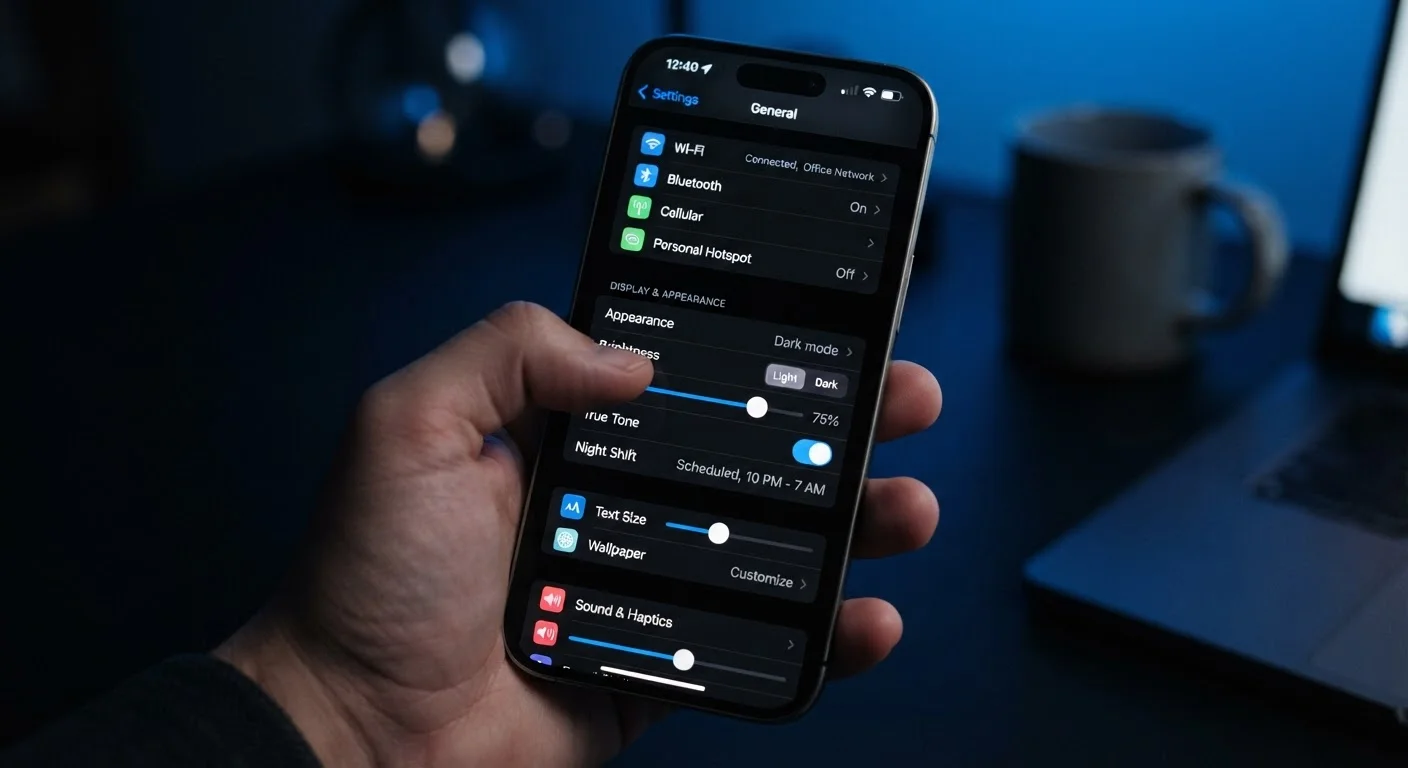
This setting - found in iOS under Settings > General and controlled per-app on Android via Battery settings - allows apps to fetch new content even when you're not using them. It's the reason your news app shows fresh headlines the moment you open it. It's also one of the most consistent contributors to unexpected battery drain and mobile data overages.
Many users leave this enabled for every app by default, including apps they open only occasionally. A practical approach: turn it off globally, then selectively re-enable it only for apps where real-time updates matter to you, such as messaging or navigation.
Background app refresh can silently consume data and battery across dozens of apps you rarely open.
Location Access: 'Always' vs. 'While Using'
When an app requests location access, most users grant it without inspecting the scope. "Always" means the app can track your location continuously - even when it's closed. "While Using the App" limits access to active sessions. A third option, "Only This Time," is available on both major mobile platforms and grants one-time access.
Navigation and weather apps often have legitimate reasons for broader access. But social, retail, and productivity apps rarely do. Review location permissions in your device's Privacy settings, and consider whether continuous access genuinely adds value for each specific app.
'Always On' location access means an app can track where you are even when you haven't opened it.
Notification Delivery Style vs. Notification Badges
These are two distinct settings that many users treat as one. Delivery style controls how a notification appears - as a banner that drops down, a persistent alert that requires dismissal, or silently in the notification center. Badges are the numbered red circles on app icons indicating unread counts.
You can receive badge counts without any banners, or get banners with no badge - they're independently configurable. For apps where you want to stay aware without being interrupted (email, for example), turning off banners while keeping badges active is a middle-ground option most users haven't considered.
Notification banners and badge counts are separate controls - you don't have to accept both or neither.
Sync Frequency and Manual vs. Automatic Sync
Email clients, calendar apps, and cloud storage tools typically let you choose how often they check for updates: every 15 minutes, every hour, manually, or as items arrive (push). Push delivery is fastest but consumes the most battery and data. Manual sync conserves resources but means data is only current when you open the app and trigger a refresh.
For most productivity apps, syncing every 30 minutes or hourly strikes a reasonable balance. For personal email accounts where real-time delivery isn't critical, switching from push to a scheduled fetch interval can extend battery life noticeably. Our guide to calendar app features covers sync options specifically for scheduling tools.
Switching email from push to scheduled fetch is one of the simplest ways to extend daily battery life.
Default App Associations
When you tap a web link in an email, which browser opens it? When you click a phone number, which dialer launches? These behaviors are controlled by default app settings, and they're frequently set to system defaults that users never explicitly chose.
Both iOS and Android allow you to reassign defaults for browsers, email clients, messaging apps, and more. If you use a third-party app as your primary tool for any of these categories - and most people do - verifying that it's set as the default prevents the friction of being constantly handed off to apps you don't prefer. This setting is typically found in the system Settings app under the specific app's listing.
Default app associations quietly determine which apps open your links, calls, and emails by default.
Auto-Play and Preload Settings in Streaming Apps
Video and music streaming apps commonly include settings that preload or auto-play content before you've chosen to watch or listen. This can consume significant data in the background - particularly relevant on metered mobile connections. Settings labels vary: "autoplay next episode," "video autoplay," "smart downloads," and "preload" are common terms to look for within each app's playback or data settings.
Separately, many streaming apps offer a "download quality" or "streaming quality" setting that defaults to high-definition regardless of whether you're on Wi-Fi or cellular. Lowering this setting while on mobile data - or restricting downloads to Wi-Fi only - can prevent unexpectedly large data charges.
Streaming apps often preload content by default, silently consuming mobile data you didn't budget for.
Small Adjustments, Measurable Differences
None of these settings require technical expertise to change - they're all accessible within any app's built-in options or your device's system settings. The challenge isn't finding them; it's knowing they exist and what they actually do. Misread settings also compound: an app left on background refresh, with location set to Always, syncing every 15 minutes, adds up to meaningful battery drain and data consumption that most users attribute to vague causes like "my phone is getting old."
Audit Your Settings Periodically
App settings can change after updates - developers sometimes reset or alter defaults when releasing new versions. Making a habit of briefly reviewing settings after a major app update helps you stay in control. Our article on what app updates actually change explains what typically shifts behind the scenes.
If you're navigating a new device and want to get settings right from the start, our guide on setting up a new smartphone walks through what to configure before anything else. And if sync behavior across multiple devices is part of your concern, syncing apps across devices explains how that actually works under the hood.