

Key Takeaways
Our Verdict
Plant-forward eating and full vegetarianism are distinct approaches that share common ground: both emphasize whole, minimally processed plant foods and are associated with positive dietary outcomes when well planned. Plant-forward eating offers more flexibility, making it accessible to a wider range of people, while vegetarianism provides clearer dietary boundaries that some find easier to follow consistently. Neither is universally superior - the most effective eating pattern is one that a person can realistically maintain over time.
| Best for | Recommended |
|---|---|
| Those seeking flexibility without giving up meat entirely | Plant-forward / Flexitarian |
| Those who want clear, consistent dietary rules | Full Vegetarianism |
| Those with ethical or environmental motivations around animal products | Full Vegetarianism |
| Those just beginning to shift toward more plant-rich eating | Plant-forward / Flexitarian |
What Each Approach Actually Means
The terms plant-forward, flexitarian, and vegetarian are frequently used interchangeably in popular media, but they describe meaningfully different eating patterns. Understanding those differences helps you evaluate which approach actually fits your life.
Plant-forward eating is a broad orientation, not a strict ruleset. It means structuring meals so that vegetables, fruits, legumes, whole grains, nuts, and seeds form the majority of what you eat - while animal products remain on the menu in smaller amounts and less frequently. The flexitarian pattern is a closely related term coined by registered dietitian Dawn Jackson Blatner; it formalizes the idea of mostly plant-based eating with occasional meat included intentionally rather than habitually.
Full vegetarianism removes all meat and seafood from the diet. Within vegetarianism, there are sub-types: lacto-ovo vegetarians include dairy and eggs; lacto-vegetarians include dairy but not eggs; ovo-vegetarians include eggs but not dairy. Veganism eliminates all animal-derived foods and is the most restrictive form. This article focuses on lacto-ovo vegetarianism as the most common vegetarian pattern in the U.S.
For a broader view of how these and other patterns compare, see popular diet patterns at a glance.
Nutritional Considerations Side by Side
Both approaches can support a nutritionally adequate diet, but each comes with specific nutrients that deserve attention.
| Plant-Forward / Flexitarian | Full Vegetarianism (Lacto-Ovo) | |
|---|---|---|
| Meat & seafood | Allowed occasionally, in small amounts | Excluded entirely |
| Dairy & eggs | Included freely | Included (lacto-ovo type) |
| B12 risk | Low - animal foods included | Moderate - supplement often advised |
| Iron intake | Heme iron available from meat | Non-heme iron only; absorption lower |
| Protein variety | Animal and plant sources both available | Plant proteins plus dairy and eggs |
| Social flexibility | High - no hard restrictions | Moderate - requires menu navigation |
| Long-term adherence | Generally easier for beginners | Easier when motivation is strong |
| Meal planning demand | Lower - more options available | Higher - requires deliberate planning |
For plant-forward eaters, the occasional inclusion of meat, fish, or poultry means nutrients like vitamin B12, heme iron, and complete protein are less likely to become deficient - but this isn't guaranteed. Portion balance still matters. For vegetarians, planning is more deliberate: pairing complementary plant proteins (e.g., beans with rice) and choosing fortified foods or supplements for B12 are practical strategies supported by major dietetic organizations, including the Academy of Nutrition and Dietetics.
Comparing animal and plant protein sources in depth can help both plant-forward and vegetarian eaters make smarter daily choices.
Maximize Plant Protein Absorption
Pairing plant-based iron sources (like lentils or spinach) with vitamin C-rich foods (like bell peppers or citrus) can meaningfully improve non-heme iron absorption. This simple habit benefits both plant-forward eaters and vegetarians. Soaking and cooking dried legumes also reduces phytic acid, which can otherwise inhibit mineral absorption.
This article is for general informational and educational purposes only. It is not a substitute for personalized medical or dietary advice. Consult a registered dietitian or healthcare provider before making significant changes to your eating pattern, especially if you have an existing health condition.
Practical Day-to-Day Differences
On a practical level, the two approaches feel quite different to live with.
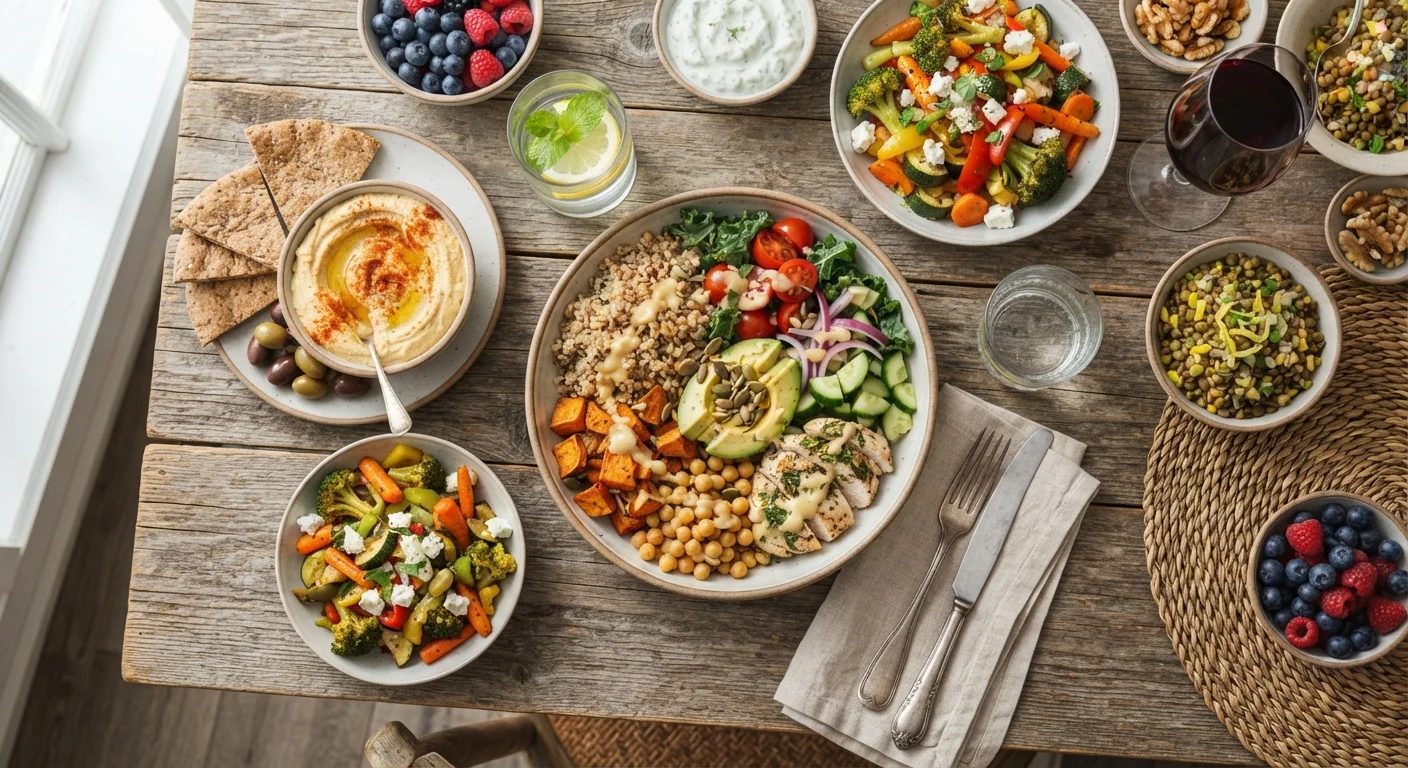
A plant-forward eater might fill three-quarters of their plate with roasted vegetables, lentils, and farro - and add a small portion of grilled salmon or chicken once or twice a week. Meals at restaurants or social events require less negotiation because the diet has no hard restrictions. This flexibility is a significant factor in long-term adherence for many people.
A vegetarian, by contrast, has a firm boundary: no meat or fish, regardless of context. This clarity can actually reduce decision fatigue for some - there's no weighing whether a particular situation warrants an exception. However, navigating menus, family meals, and travel may require more advance planning.
Starting to eat healthier without strict rules is a valid path - plant-forward eating is often where that gradual shift begins.
~5%
U.S. adults identifying as vegetarian
Gallup polling has consistently found roughly 5% of American adults describe themselves as vegetarian, a figure that has remained relatively stable over the past two decades.
~36%
Americans actively reducing meat intake
A Gallup survey found that approximately one-third of U.S. adults report trying to include less meat in their diet, reflecting broad interest in plant-forward eating without full vegetarianism.
For both patterns, the principles of balanced plate composition - proportioning vegetables, protein, and whole grains thoughtfully - apply equally and form a practical foundation.
How to Choose the Right Fit for You
Neither plant-forward eating nor full vegetarianism is inherently superior. Research consistently shows that the quality and variety of what you eat matters more than the precise label attached to your diet. A vegetarian who relies heavily on refined carbohydrates and processed foods is not necessarily eating better than a flexitarian who eats abundant whole vegetables, legumes, and grains with modest amounts of lean meat.
When deciding, consider:
- Your motivations: Environmental, ethical, health, cultural, or economic reasons all point toward slightly different solutions.
- Your social and family context: A more flexible approach may reduce friction in households with mixed eating preferences.
- Your relationship with food planning: Vegetarianism rewards advance meal prep; plant-forward eating rewards gradual habit-building.
- Your health status: Anyone with iron-deficiency anemia, a history of disordered eating, or specific medical conditions should consult a registered dietitian before adopting either pattern.
Because nutrition research evolves, it's worth developing the skill of evaluating food studies you read about in the news rather than reacting to each new headline about plant-based diets.
Don't Assume 'Plant-Based' Means Nutritionally Complete
Heavily processed plant-based products - including some meat substitutes - can be high in sodium and low in fiber or micronutrients. Reading nutrition labels and centering meals on whole foods matters as much as the dietary label you follow. If you are pregnant, breastfeeding, or managing a chronic condition, seek personalized guidance from a registered dietitian before making significant dietary shifts.