

| Average U.S. adult fiber intake | ~15-17 grams per day (Dietary Guidelines for Americans, 2020-2025) |
| Recommended daily intake (women) | 25 grams (National Academies of Sciences, Engineering, and Medicine) |
| Recommended daily intake (men) | 38 grams (National Academies of Sciences, Engineering, and Medicine) |
| Daily Value on Nutrition Facts label | 28 grams (FDA Nutrition Facts labeling rules) |
| Richest plant fiber source (per serving) | Legumes (10-16g per cooked cup) (USDA FoodData Central) |
| Primary function in the gut | Feeds beneficial bacteria; supports regularity |
Why Fiber Consistently Falls Short in the American Diet
Dietary fiber is one of the most studied and consistently recommended nutrients in nutrition science - and one of the most reliably under-consumed. According to the Dietary Guidelines for Americans, most U.S. adults get roughly half the fiber they need on a daily basis. This shortfall is so common it has a name: the fiber gap.
The gap exists largely because the modern American diet leans heavily on refined grains, processed foods, and animal proteins - all of which contain little to no fiber. Meanwhile, the foods richest in fiber - vegetables, legumes, whole grains, and fruit - tend to occupy a smaller share of most people's plates.
Understanding what fiber actually does in the body helps explain why this matters. Learn more about common misconceptions around food and health in our overview of persistent nutrition myths.
| Average U.S. adult fiber intake | ~15-17 grams per day (Dietary Guidelines for Americans, 2020-2025) |
| Recommended daily intake (women) | 25 grams (National Academies of Sciences, Engineering, and Medicine) |
| Recommended daily intake (men) | 38 grams (National Academies of Sciences, Engineering, and Medicine) |
| Daily Value on Nutrition Facts label | 28 grams (FDA Nutrition Facts labeling rules) |
| Richest plant fiber source (per serving) | Legumes (10-16g per cooked cup) (USDA FoodData Central) |
| Primary function in the gut | Feeds beneficial bacteria; supports regularity |
What Fiber Does in the Body
Fiber is a form of carbohydrate that the human digestive system cannot break down into sugar molecules. Instead of being absorbed, it passes through the small intestine largely intact and plays several important roles in the large intestine and beyond.
There are two primary categories - soluble and insoluble - and they behave quite differently. Soluble fiber dissolves in water to form a gel-like substance that slows digestion, helps regulate blood sugar response after meals, and can lower LDL (low-density lipoprotein) cholesterol levels. Insoluble fiber adds bulk to stool, supports regular bowel movements, and helps food move efficiently through the gut. For a deeper look at how these types differ, see our guide on soluble versus insoluble fiber.
Fiber also serves as the primary fuel source for beneficial gut bacteria. When these bacteria ferment fiber in the colon, they produce short-chain fatty acids that support colon cell health, reduce inflammation, and may influence immune function. This connection between fiber intake and gut microbiome health is an active area of nutrition research.
Fiber also plays a meaningful role in satiety - the feeling of fullness after a meal. Our guide to the science of satiety explains how fiber, protein, and meal composition interact to influence hunger signals.
Dietary Fiber
A type of carbohydrate found in plant foods that cannot be digested by human enzymes. It passes largely intact through the small intestine and has important effects on digestion, blood sugar regulation, and gut health.
Soluble Fiber
Fiber that dissolves in water to form a gel. It slows digestion, helps moderate blood glucose levels after meals, and may reduce LDL cholesterol. Found in oats, beans, apples, and citrus fruits.
Insoluble Fiber
Fiber that does not dissolve in water. It adds bulk to stool and speeds transit through the digestive tract, supporting regular bowel movements. Found in whole wheat, nuts, and many vegetables.
Short-Chain Fatty Acids
Compounds produced when gut bacteria ferment dietary fiber in the colon. They serve as a fuel source for colon cells and are associated with reduced intestinal inflammation.
Prebiotic
A type of dietary component - including certain fibers - that selectively feeds beneficial bacteria in the gut. A diet with adequate prebiotic fiber supports a healthy, diverse gut microbiome.
Daily Value (DV)
A reference amount used on U.S. Nutrition Facts labels to help consumers gauge how much of a nutrient a food contributes to a general 2,000-calorie daily diet. The DV for fiber is 28 grams.
How Much Do Adults Need - and Where to Get It
The Dietary Reference Intakes set by the National Academies of Sciences, Engineering, and Medicine recommend approximately 25 grams per day for adult women and 38 grams per day for adult men, with needs adjusting slightly as adults age past 50. The daily value used on U.S. Nutrition Facts labels is 28 grams, reflecting a general population average.
Increase Fiber Gradually to Avoid Discomfort
Adding large amounts of fiber too quickly can cause bloating, gas, or cramping as the gut adjusts. Nutritionists generally suggest increasing intake by a few grams per week and drinking plenty of water alongside higher-fiber meals. Most people adapt well within a few weeks. If you have a digestive condition, speak with a healthcare provider before making significant changes to your fiber intake.
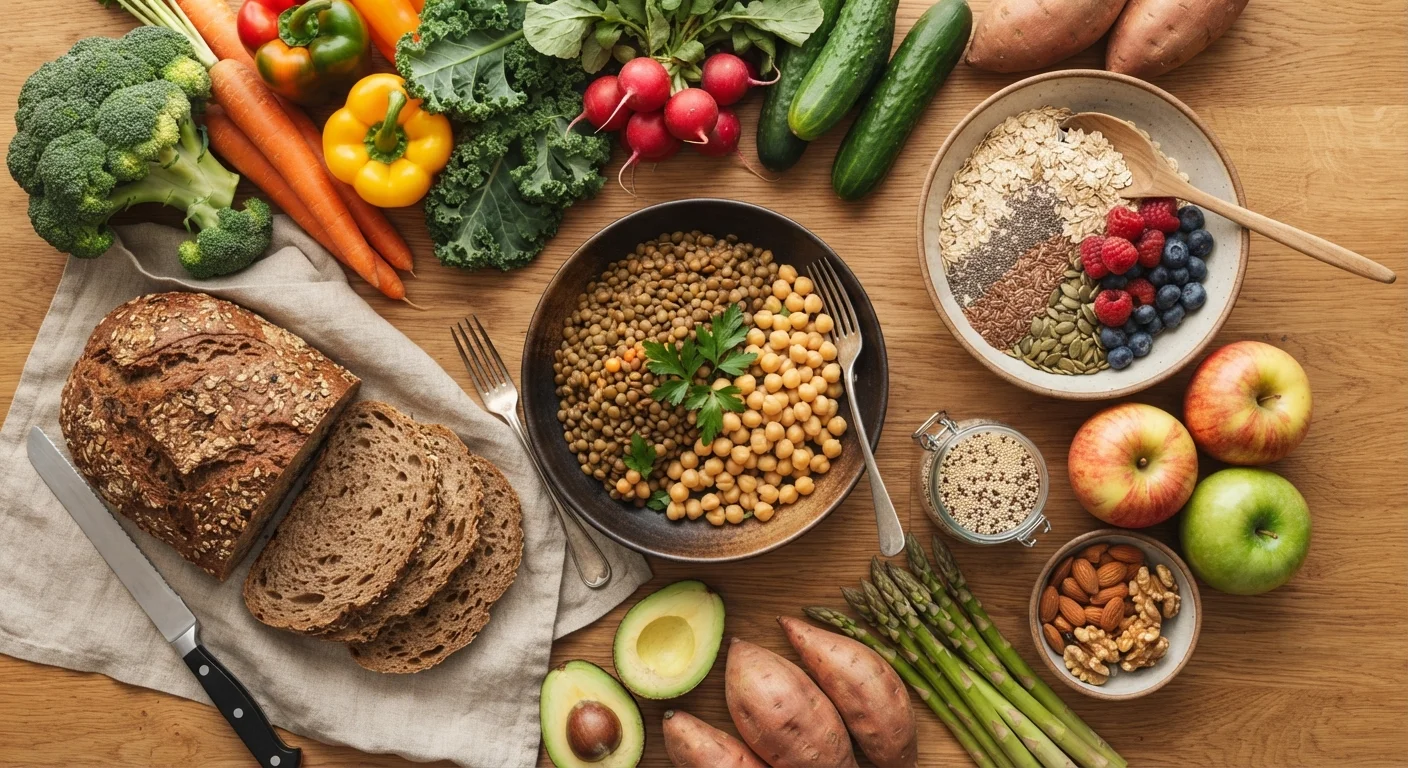
Reaching these targets is achievable with whole-food choices across the day. High-fiber foods include:
- Legumes: Cooked lentils, black beans, and chickpeas provide 10-16 grams of fiber per cooked cup.
- Whole grains: Oats, barley, and whole wheat bread contribute 3-6 grams per serving.
- Vegetables: Broccoli, Brussels sprouts, and carrots offer 3-5 grams per half-cup serving.
- Fruit: Pears, apples (with skin), and raspberries provide 4-8 grams per serving.
- Nuts and seeds: Chia seeds and flaxseeds are particularly concentrated sources, with up to 10 grams per two-tablespoon serving.
When reading packaged foods, the fiber content is listed on the Nutrition Facts label under Total Carbohydrates. Our walkthrough of the Nutrition Facts label can help you interpret this and other key lines at a glance.
One practical note: increasing fiber intake gradually - and drinking adequate water - helps minimize digestive discomfort that can occur when intake rises quickly. This is general information and not a substitute for personalized guidance from a registered dietitian or healthcare provider.
This article is for informational and educational purposes only and is not a substitute for professional medical or dietary advice. Consult a qualified healthcare provider for guidance specific to your health needs.