

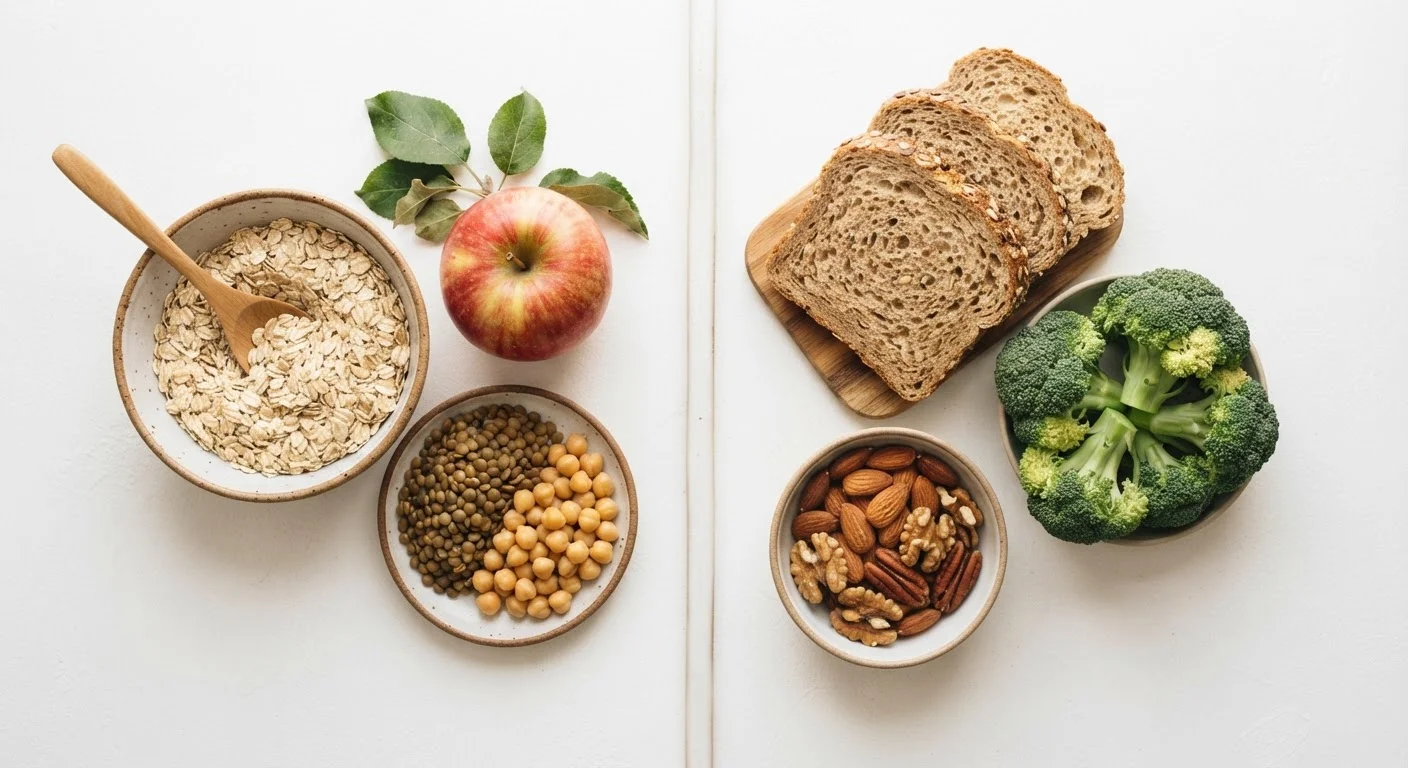
Key Takeaways
Option A
Soluble Fiber
The gut-health multitasker that dissolves and transforms.
Best for: People looking to support healthy blood sugar, lower LDL cholesterol, and feed beneficial gut bacteria.
Option B
Insoluble Fiber
The reliable bulking agent that keeps digestion moving.
Best for: Anyone seeking to prevent constipation, support regular bowel movements, and add lasting bulk to meals.
If your priority is managing blood sugar and cholesterol levels
Soluble Fiber
The gel formed by soluble fiber slows glucose absorption and binds bile acids, which research associates with lower LDL cholesterol readings over time.
If you struggle with constipation or irregular bowel movements
Insoluble Fiber
Insoluble fiber adds physical bulk and draws water into the colon, accelerating transit time and reducing straining.
If you want to support a diverse, healthy gut microbiome
Soluble Fiber
Fermentable soluble fibers - sometimes called prebiotics - serve as fuel for beneficial gut bacteria, producing short-chain fatty acids tied to gut lining health.
If you want overall digestive health without targeting a specific condition
Soluble Fiber
A varied diet rich in whole grains, legumes, fruits, and vegetables delivers meaningful amounts of both types, which work best together for long-term digestive wellness.
What Makes Fiber 'Soluble' or 'Insoluble'?
Dietary fiber is the collective term for plant-based carbohydrates that human digestive enzymes cannot break down. But that definition covers two structurally distinct families that behave very differently inside your gut.
Soluble fiber dissolves in water to form a thick, viscous gel in the digestive tract. Common forms include beta-glucan (found in oats and barley), pectin (in apples, citrus peel, and carrots), and inulin or fructooligosaccharides (in chicory root, garlic, and onions). This gel acts as a physical barrier that slows the rate at which nutrients - particularly glucose - are absorbed into the bloodstream.
Insoluble fiber does not dissolve in water. Instead, it retains its structure throughout digestion, absorbing water like a sponge and adding physical bulk to stool. Cellulose and lignin - found in wheat bran, vegetable skins, and the fibrous strings of celery - are classic examples. Because insoluble fiber speeds the movement of material through the large intestine, it is most closely associated with bowel regularity.
Most whole plant foods deliver a mixture of both. An apple, for instance, contains pectin (soluble) in its flesh and cellulose (insoluble) in its skin. The ratio varies by food, which is why dietary variety matters. For a broader look at how total fiber intake stacks up against national recommendations, see our guide on why most Americans fall short of fiber goals.
Head-to-Head: How Each Type Works in the Body
Understanding the distinct physiological roles of each fiber type helps explain why nutrition guidance emphasizes variety rather than simply eating more of one source.
| Criterion | Soluble Fiber | Insoluble Fiber |
|---|---|---|
| Behavior in water | Dissolves, forms a gel | Does not dissolve, retains structure |
| Primary digestive effect | Slows digestion and nutrient absorption | Speeds transit, adds stool bulk |
| Effect on blood sugar | Blunts post-meal glucose spikes | Minimal direct effect |
| Cholesterol impact | May lower LDL cholesterol | Little direct cholesterol effect |
| Gut microbiome role | Fermented by bacteria; prebiotic effect | Largely not fermented |
| Best-known food sources | Oats, legumes, apples, psyllium | Wheat bran, vegetable skins, nuts |
| Key health association | Heart health, blood sugar regulation | Bowel regularity, digestive comfort |
Soluble fiber's cholesterol-lowering effect is one of its most studied benefits. When this fiber forms a gel in the small intestine, it binds to bile acids - compounds made partly from cholesterol - and carries them out of the body through stool. The liver then draws on circulating cholesterol to produce more bile acids, which can modestly reduce LDL cholesterol levels. The U.S. Food and Drug Administration has authorized a health claim linking adequate beta-glucan intake from oats and barley to reduced risk of coronary heart disease, based on this mechanism.
Insoluble fiber's primary strength is mechanical. By adding bulk and retaining water, it softens stool and shortens the time waste spends in the colon - a factor that has been studied in relation to colorectal health. It also contributes to satiety by adding physical volume to meals without adding calories.
Both Types Work Together
Research consistently shows that the benefits of dietary fiber are best observed when intake includes a range of plant foods rather than a single concentrated source. Supplements like psyllium can be useful in certain situations, but whole foods deliver fiber alongside vitamins, minerals, and phytonutrients that act synergistically. If you are considering a fiber supplement, discuss it with a healthcare professional, particularly if you take medications, since fiber can affect how some drugs are absorbed.
One practical implication: significantly increasing fiber intake too quickly can cause gas and bloating, regardless of type. Nutrition professionals typically recommend adding fiber gradually over several weeks and pairing it with adequate fluid intake.
Best Food Sources for Each Fiber Type
No single food delivers only one fiber type, but certain choices skew more heavily toward one or the other, making them useful tools when you have a specific goal in mind.
Rich in soluble fiber:
- Oats and oat bran
- Barley
- Legumes (lentils, black beans, chickpeas)
- Apples, pears, and citrus fruits
- Carrots and sweet potatoes
- Psyllium husk
Rich in insoluble fiber:
- Whole wheat bread and wheat bran
- Brown rice and whole grain cereals
- Nuts and seeds
- Broccoli, cauliflower, and leafy greens
- Potato skins
- Dried beans (also provide soluble fiber)
Whole grains are a particularly important source of both types. The refining process strips away the bran and germ - the layers where most fiber is concentrated. For a detailed breakdown of what that loss means for nutrition, see our article on what changes when wheat gets processed.
This article is for informational purposes only and does not constitute medical or dietary advice. Consult a registered dietitian or qualified healthcare provider before making significant changes to your diet, especially if you have a digestive condition or chronic health concern.