

Key Takeaways
Why the Label Exists and What It Can (and Can't) Tell You
The Nutrition Facts panel is a standardized, FDA-regulated snapshot of what a packaged food contains. It was redesigned in 2016 to reflect updated nutrition science, and most manufacturers were required to comply by 2020. Understanding its structure helps you comparison-shop, track nutrients, and spot marketing claims that don't hold up to scrutiny.
What it cannot do: tell you whether a food is healthy for you specifically, account for how nutrients interact once digested, or reflect the quality of ingredients. For a deeper look at that last limitation, see our piece on bioavailability and nutrient absorption. With those boundaries in mind, here's how to decode each section systematically.
What you will need
Step-by-Step: Reading Every Section of the Panel
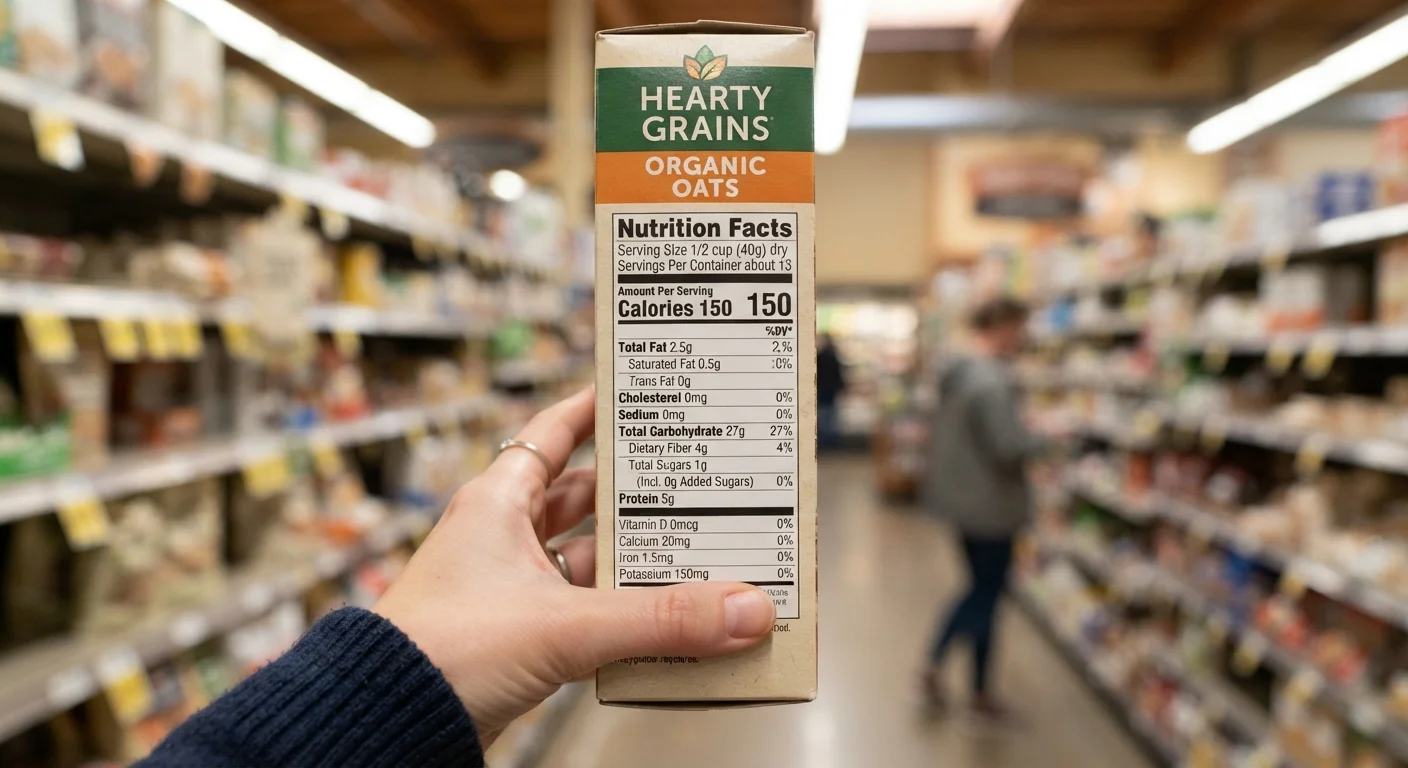
Work through the label top to bottom - each section builds on the one above it. The steps below follow the physical layout of a standard U.S. Nutrition Facts panel.
Start with Serving Size
The very first field on the panel - serving size - determines every number that follows. If a bag lists a serving size of 1 oz (about 28g) and you eat 3 oz, every nutrient value must be tripled. Servings per container, listed just below, tells you how many of these portions are in the whole package.
The 2016 label update required serving sizes to reflect amounts people actually eat, not idealized portions - so today's serving sizes are generally more realistic than older labels.
Note the Calories
Calories represent total energy per serving. This figure is large and bold on the updated label by design. Remember: calories alone don't indicate nutritional quality. 200 calories from almonds delivers a very different nutrient package than 200 calories from a sugary drink.
Identify Nutrients to Limit
The next section covers nutrients most Americans consume in excess. These include:
- Total Fat - broken down into saturated fat and trans fat. Saturated fat is linked to cardiovascular risk at high intake levels; trans fat has no safe intake level and should be minimized.
- Sodium - the Dietary Guidelines for Americans recommend adults stay under 2,300 mg per day; many packaged foods contribute a large share of that in a single serving.
- Added Sugars - listed separately from total sugars since 2020. The Dietary Guidelines suggest limiting added sugars to less than 10% of daily calories. For a closer look at how added sugar hides in ingredient lists, see how added sugar hides on labels.
Check Nutrients to Get Enough Of
Below the nutrients-to-limit section, the label highlights nutrients that many Americans under-consume:
- Dietary Fiber - supports digestive health, blood sugar regulation, and cardiovascular health. Most adults fall well short of the recommended 25-38g per day. See why fiber is the nutrient most Americans under-eat for context.
- Vitamin D, Calcium, Iron, and Potassium - these four are required on all labels because deficiency is a public health concern. Higher % DV values here are generally desirable.
Use % Daily Value as a Quick Benchmark
The % Daily Value (% DV) column on the right expresses each nutrient as a share of the daily reference amount for a 2,000-calorie diet. It's a relative tool, not an absolute prescription - your actual needs depend on age, sex, activity level, and health status. Use it to compare similar products quickly and to gauge whether a serving is a little or a lot of a given nutrient.
Read the Ingredient List Alongside the Panel
The ingredient list, printed separately from the Nutrition Facts panel, reveals what's actually in a food and in what relative order - ingredients are listed by weight, from most to least. If sugar or a refined grain appears near the top of a long list, that tells you something the nutrition numbers alone won't. The ingredient list is also where you'll find additives, preservatives, and flavor types. For a detailed look at one common labeling distinction, see what natural vs. artificial flavors actually means.
Compare Per-Serving and Per-Package Numbers
If a product has two or fewer servings and is typically consumed in one sitting, the updated label format may show both per-serving and per-package columns side by side. When you see this dual-column format, use the per-package column if you'll eat the whole thing - it gives you the full nutrient picture without mental math.
Putting It All Together: What to Actually Prioritize
No single number on a label is decisive. Nutrition context matters: a food high in saturated fat may also be high in fiber and micronutrients; a food with zero grams of fat may be loaded with added sugar. The FDA's 5%/20% guideline for % Daily Value is a practical shortcut - 5% DV or less is generally considered low for a nutrient, 20% DV or more is considered high.
If you're building a broader picture of your diet, pair label-reading with an understanding of meal composition. Our guide on what a balanced plate actually looks like puts these individual numbers in a practical meal-level context. For a deeper dive into specific nutrients, the plain-language micronutrient reference covers vitamins and minerals in detail.
Front-of-Package Claims Can Mislead
Terms like "low-fat," "reduced sodium," or "multigrain" on the front of a package are regulated marketing claims - not a summary of overall nutritional quality. A food can be technically low in fat while being high in added sugar. Always turn the package over and read the actual Nutrition Facts panel before drawing conclusions.
This article is for general informational and educational purposes only and is not a substitute for personalized nutrition or medical advice. Consult a registered dietitian or qualified healthcare professional for guidance tailored to your individual health needs.